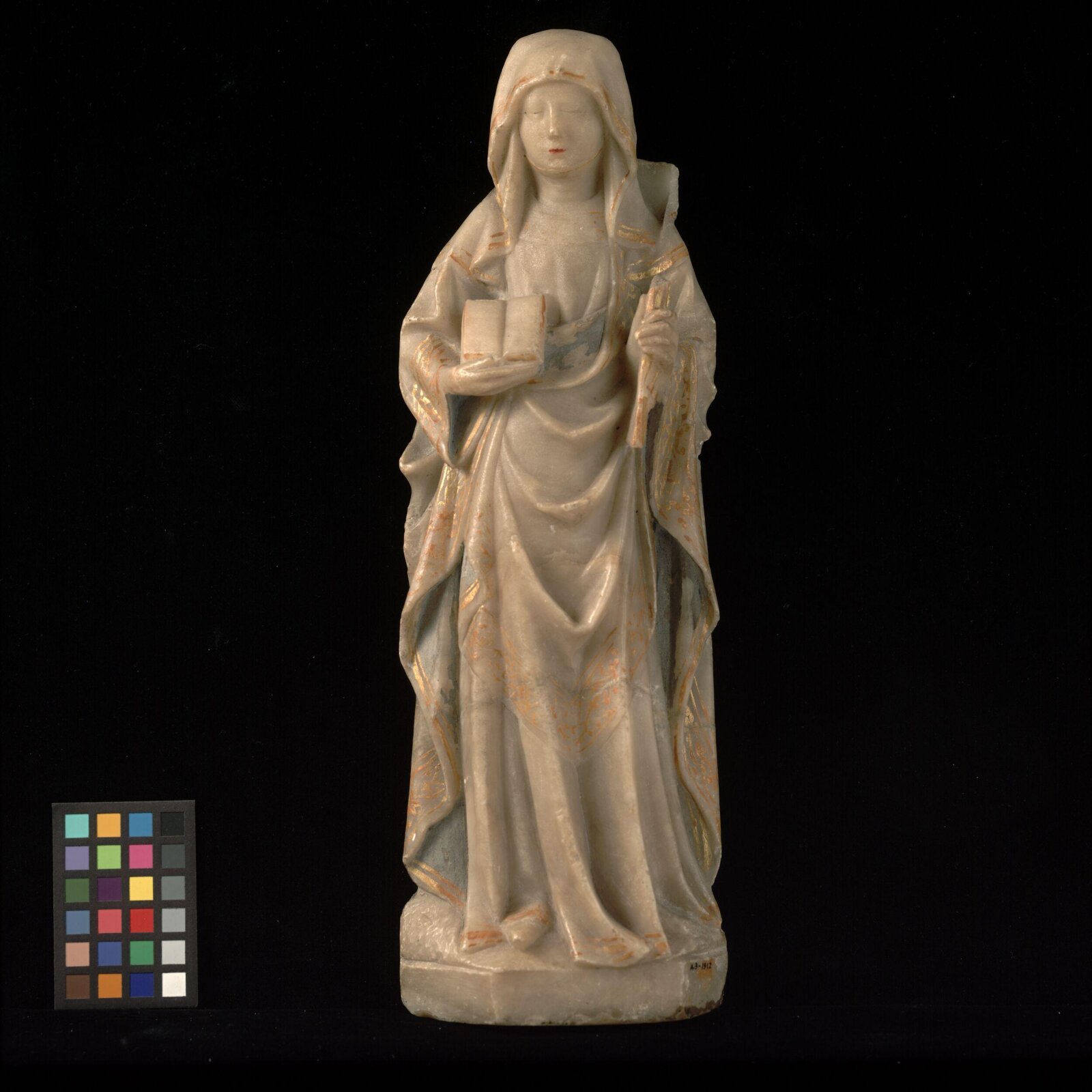
Female saint
Mag men het zien?
Ontvangt momenteel niet

Victoria and Albert Museum
Londen, Verenigd Koninkrijk
Het hoort bij de collectie, maar is momenteel niet tentoongesteld.
- Gecontroleerd
- 9 dagen geleden
- Ongewijzigd sinds
- 25 sep 2026
- Bron
- De eigen collectiegegevens van het museum
About the sculpture
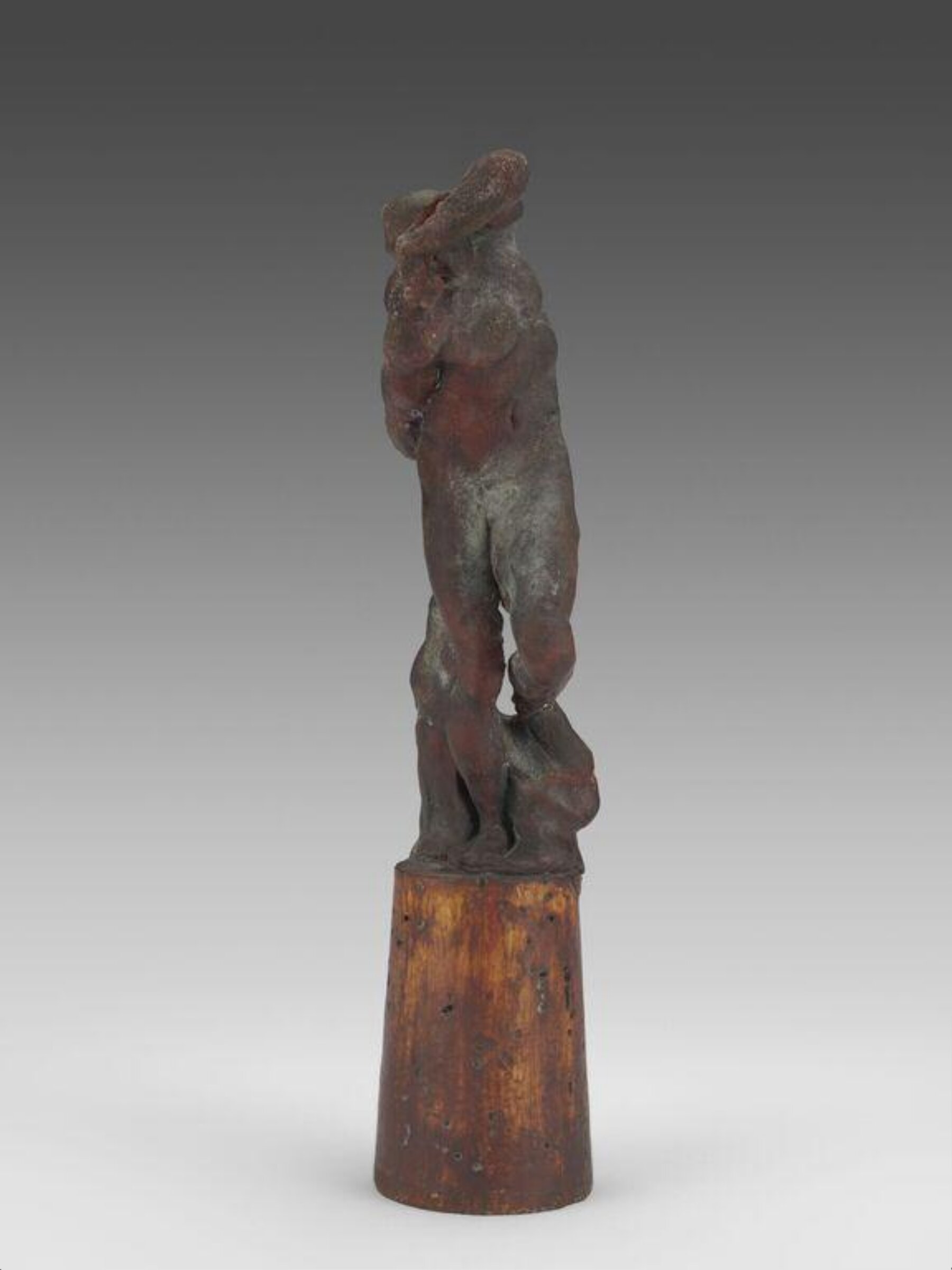
This is 15th century English alabaster figure of a female saint. This figure forms a pair with St. Christopher figure and may have been a terminal figure on an altarpiece. The description of the figure as St. Etheldreda is unlikely in view of the palm in her left hand, for she was not martyred, nor does the figure wear a crown, though Etheldreda was a royal princess.
There are two sorts of alabaster. Calcite alabaster is very hard and was used in ancient times. This object is made of gypsum alabaster which is a fine-grained, soft and smooth stone. Although at first glance it looks a little like marble, which it was intended to imitate, it was much easier to carve due to its softness, and alabaster objects were therefore significantly cheaper to produce. It probably originated in the large deposits found in Britain, in the Midlands, which were extensively worked from the 14th century.
Read on
England was a major centre for the production of objects such as this one. During period, they were exported in very large numbers to Europe where they survive, unlike many examples which remained in England and were destroyed or greatly damaged during the Reformation. This particular object depicts a Saint.
Victoria and Albert Museum
Gegevens
- Inventarisnummer
- A.3-1912
What it shows
In de catalogus
Bronnen
- Victoria and Albert Museum: the museum's own open data · opgehaald 9 dagen geleden
- Afbeelding: Victoria and Albert Museum — © Victoria and Albert Museum, London