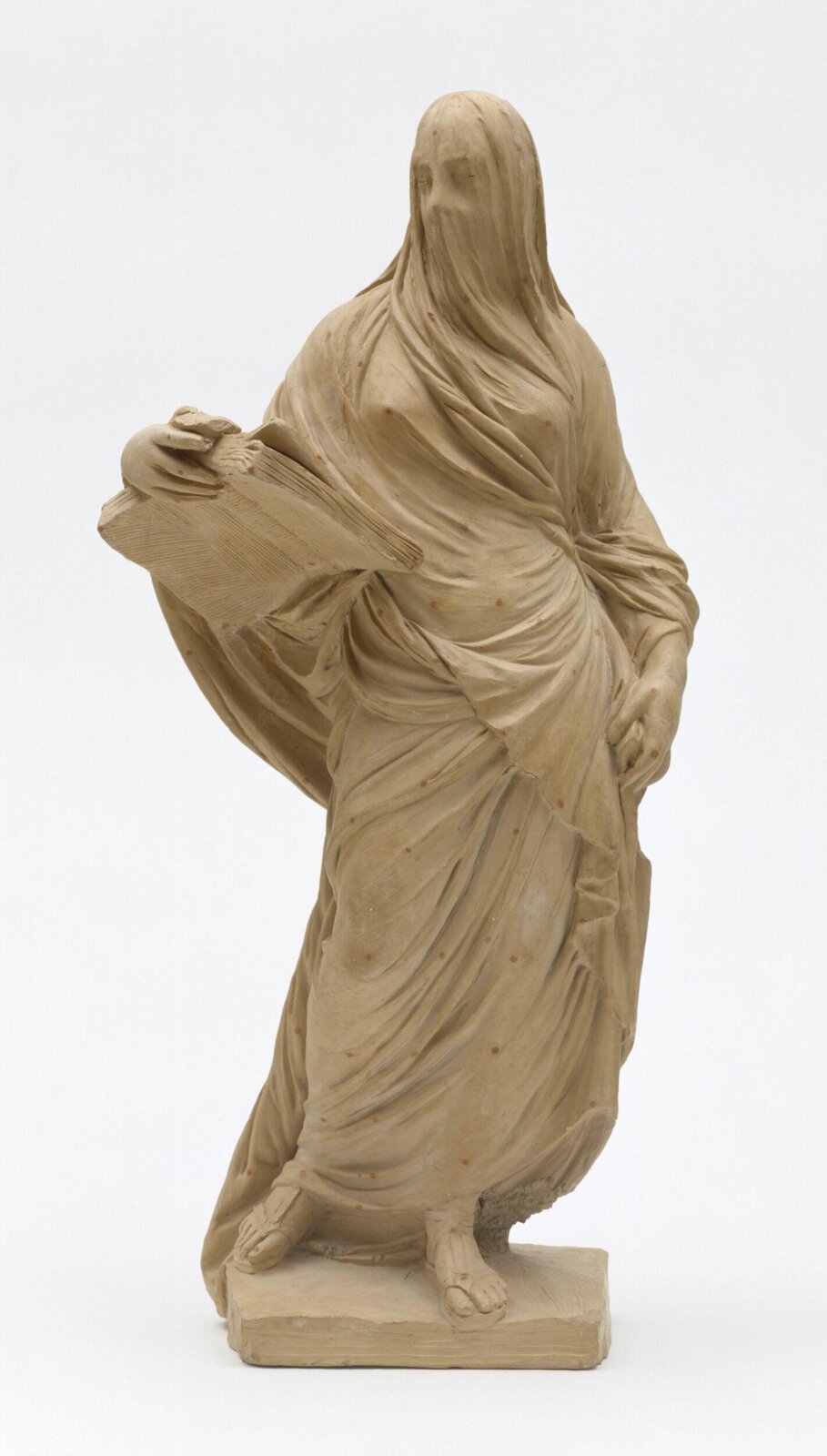
Innocenzo Spinazzi
Faith
Mag men het zien?
Ja, het ontvangt bezoek

Victoria and Albert Museum
Londen, Verenigd Koninkrijk
ZaalSculpture, Room 111, The Gilbert Bayes Gallery
Publiek tentoongesteld. Wie daarvoor instaat, staat hieronder.
- Gecontroleerd
- Ongewijzigd sinds
- Bron
- Het museum
Over de sculptuur
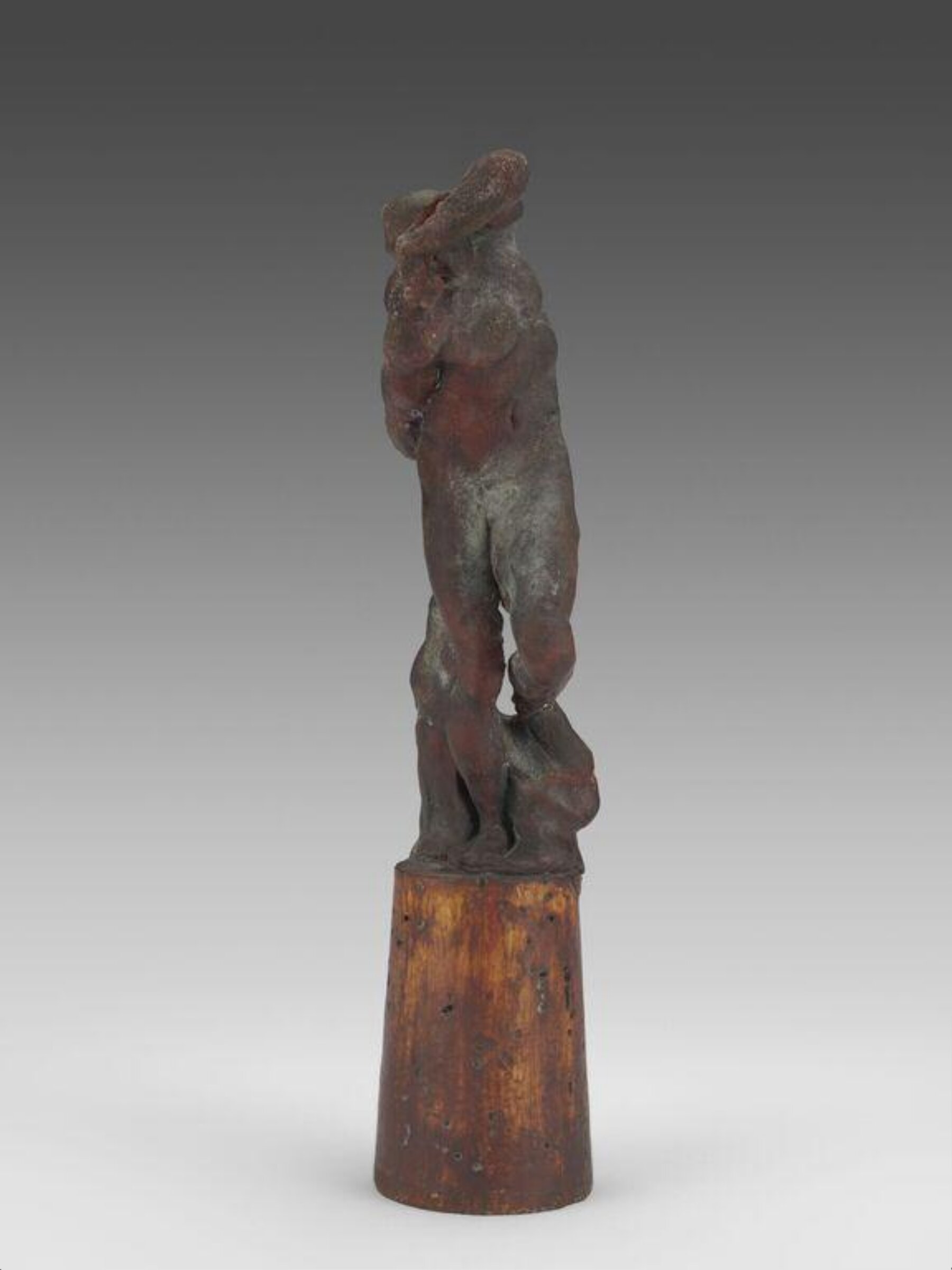
The terracotta has been modelled in one piece along with its rectangular base. Parts of the back are left rough, as they would be in the finished marble, which was to be placed in a niche. Toothed-tool marks are visible on the base and the back of the statuette. The red dots on the surface represent the key points required to scale up the model for transfer onto the marble block. This task was generally entrusted to assistants. These marks provide a notable example of the use of the pointing system, which became more widely used in the late 18th century. At this time the leading sculptors were increasingly focused on the invention and design of the statue rather than on carving. The use of small, accurate models, such as this, became more prevalent.
Verder lezen
The statuette represents a woman completely enfolded in a veil. In her right hand she holds a book and a chalice, both theological attributes of Faith. It served as the model for a statue of Faith, which, together with another one representing Penitence, was placed in the cappella maggiore (‘main chapel’) of the church of Santa Maria Maddalena de' Pazzi in Florence. Innocenzo Spinazzi commissioned them in 1781 as pendants to two other allegorical figures, Innocence and Religion. These were on the opposite side of the choir and had been carved by Giuseppe Montani at the end of the 17th century.
Victoria and Albert Museum
Gegevens
- Inventarisnummer
- A.5-1949
Wat het toont
In de catalogus
Bronnen
- Victoria and Albert Museum
- Afbeelding: Victoria and Albert Museum — © Victoria and Albert Museum, London