 Charles DemuthVerenigde Staten, 1883–1935
Dancing Sailors
Mag men het zien?
Ontvangt momenteel niet

Cleveland Museum of Art
Cleveland, Verenigde Staten
Het hoort bij de collectie, maar is momenteel niet tentoongesteld.
- Gecontroleerd
- eergisteren
- Ongewijzigd sinds
- 19 aug 2026
- Bron
- De eigen collectiegegevens van het museum
Over het werk
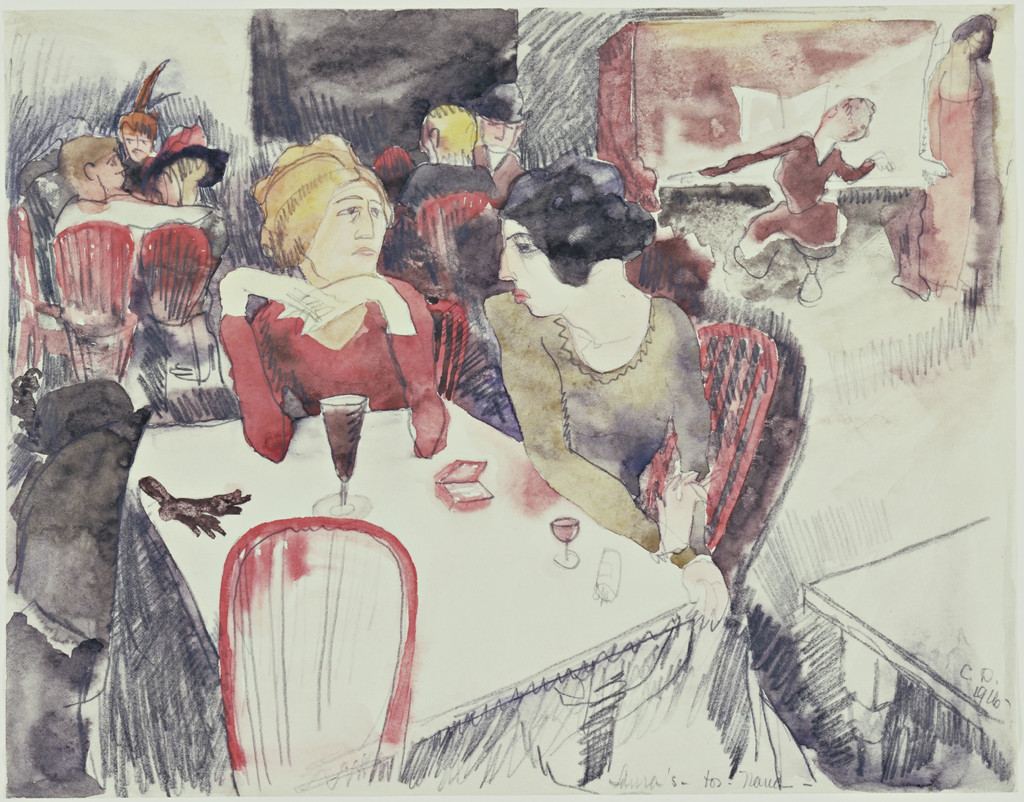
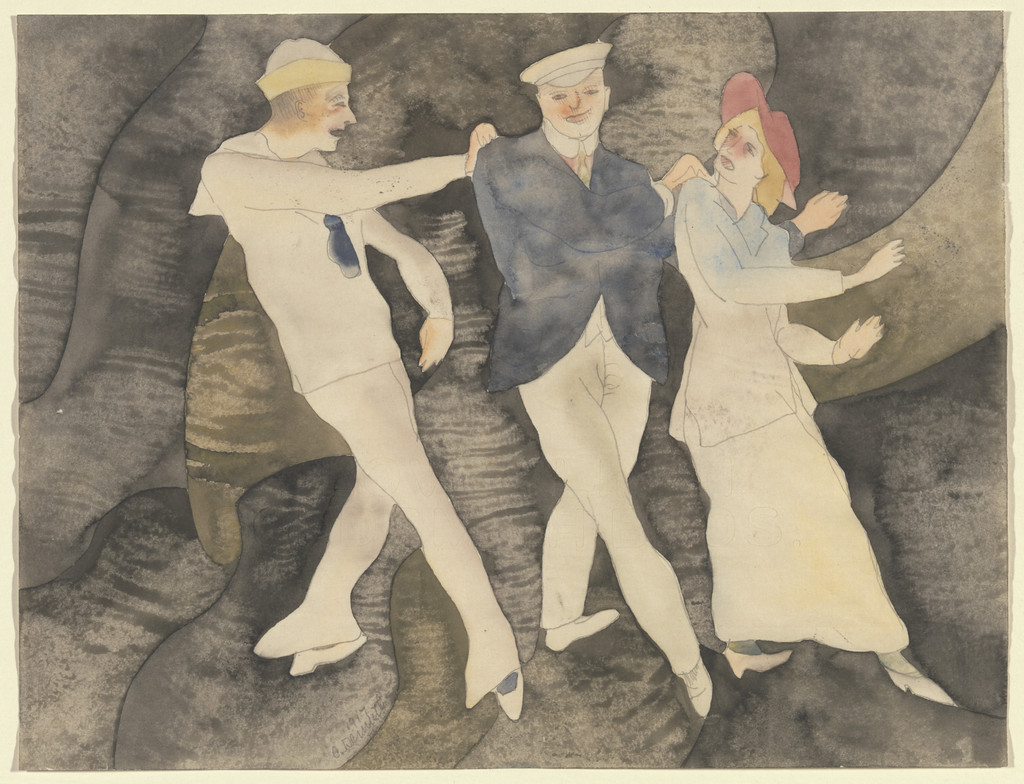
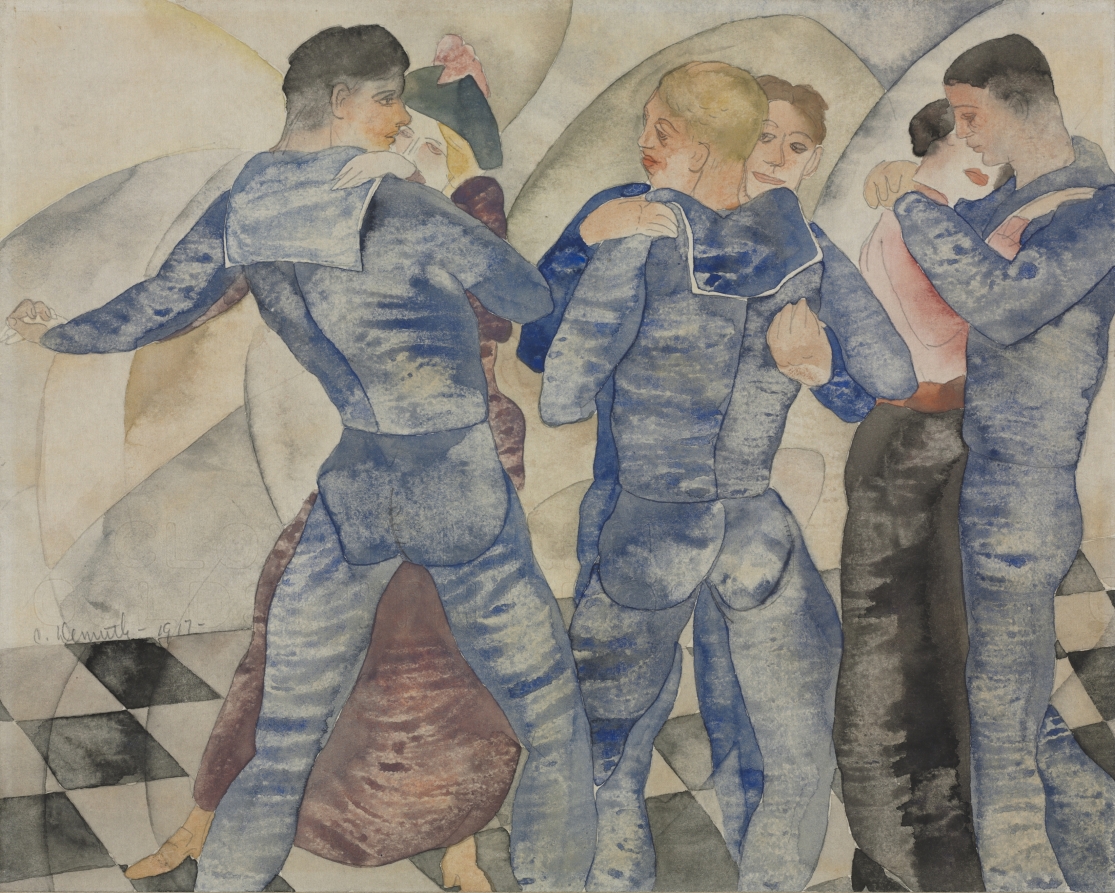
This drawing was inspired by Charles Demuth's participation in the nightlife of New York's Greenwich Village during the early 20th century. Around this time, the artist made numerous watercolors of nightclubs, performers, and bathhouses. Demuth created two almost identical compositions (the other is in the collection of the Museum of Modern Art, New York), which both show groups of three couples, with two sailors dancing together while others dance with women. Demuth kept these and other homoerotic watercolors private throughout his career, and almost never showed them publicly. The sheet's planes of textured watercolor blur figure and background, presenting a subtle but pointedly erotic scene.
Cleveland Museum of Art
Gegevens
- Inventarisnummer
- 1980.9
In de catalogus
Bronnen
- Cleveland Museum of Art: the museum's own open data · opgehaald 6 dagen geleden
- Afbeelding: Cleveland Museum of Art — Museum open access
Intussen, in het leven van Charles Demuth
Het hele leven1907–1921
Encounters modernism on trips to Europe
On trips to Europe between 1907 and 1921 he is introduced to modernism; in Paris he studies at the Académie Colarossi and the Académie Julian and joins the avant-garde scene, where his homosexuality is accepted. Before that he had studied in Philadelphia, at the Pennsylvania Academy of the Fine Arts under Thomas Anshutz, where he befriended the future poet William Carlos Williams — the two remained close for life.
1907–1921
Meets Hartley, and through him Stieglitz
In Paris he walks up to a table of American artists and asks to join them, and so meets Marsden Hartley; his humour, rich in double entendres, makes him a regular member of their group. Through Hartley he meets Alfred Stieglitz and joins the Stieglitz group; he is also a regular guest at Gertrude Stein’s salon.
c. 1915
Helps shape Precisionism
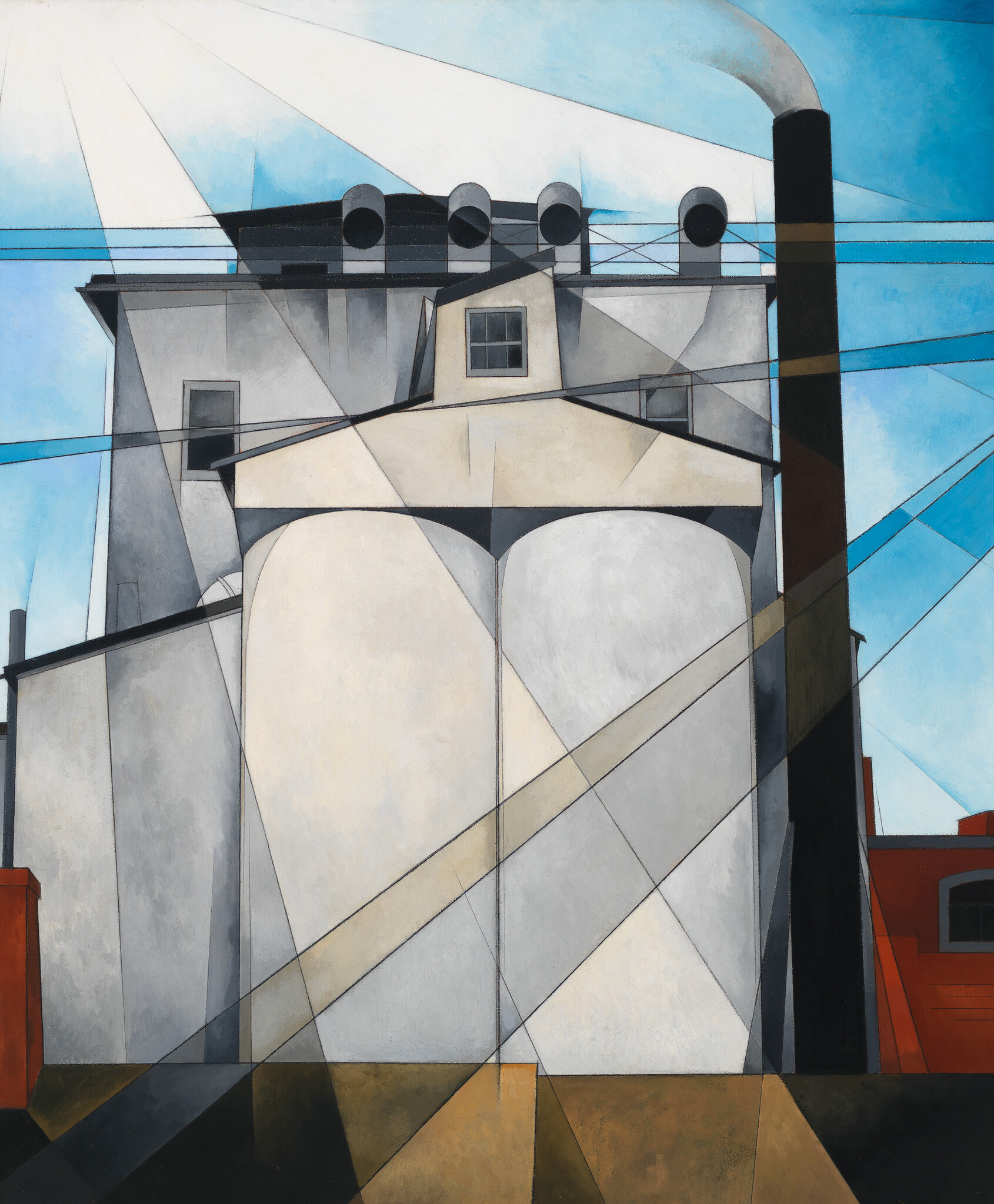
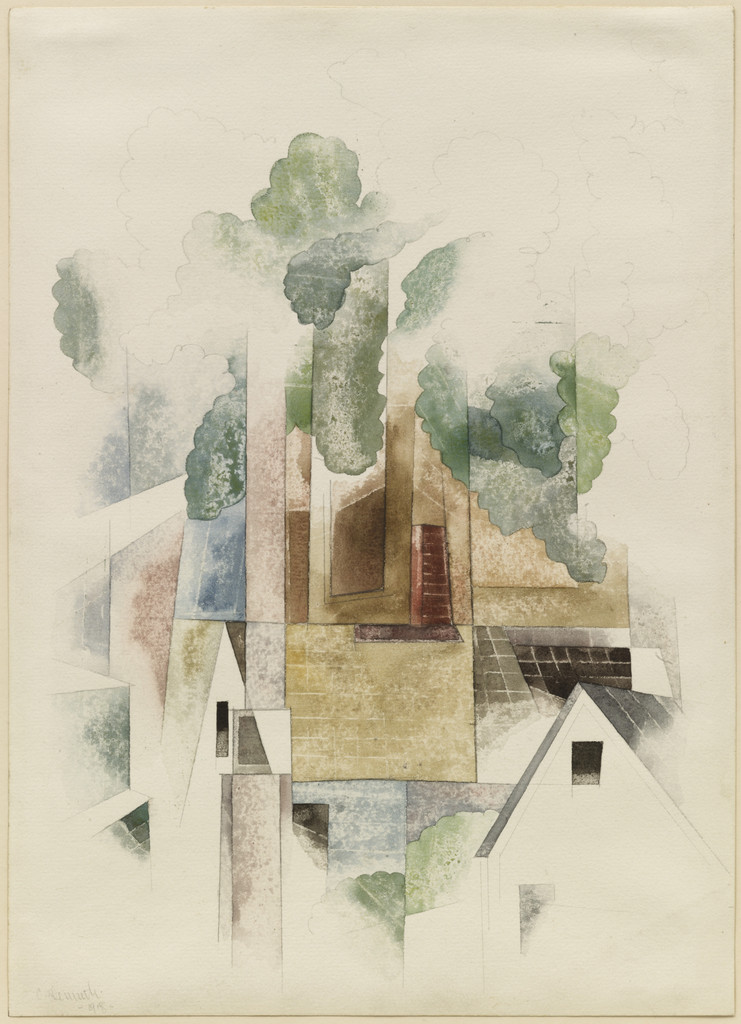
Around 1915 Precisionism begins to evolve in America, and Demuth, with Georgia O’Keeffe and Charles Sheeler, becomes one of its major contributors. His works typically show sharply defined, quasi-Cubist forms and urban and rural scenes with bridges, smokestacks and skyscrapers.