 Théodore GéricaultFrankrijk, 1791–1824
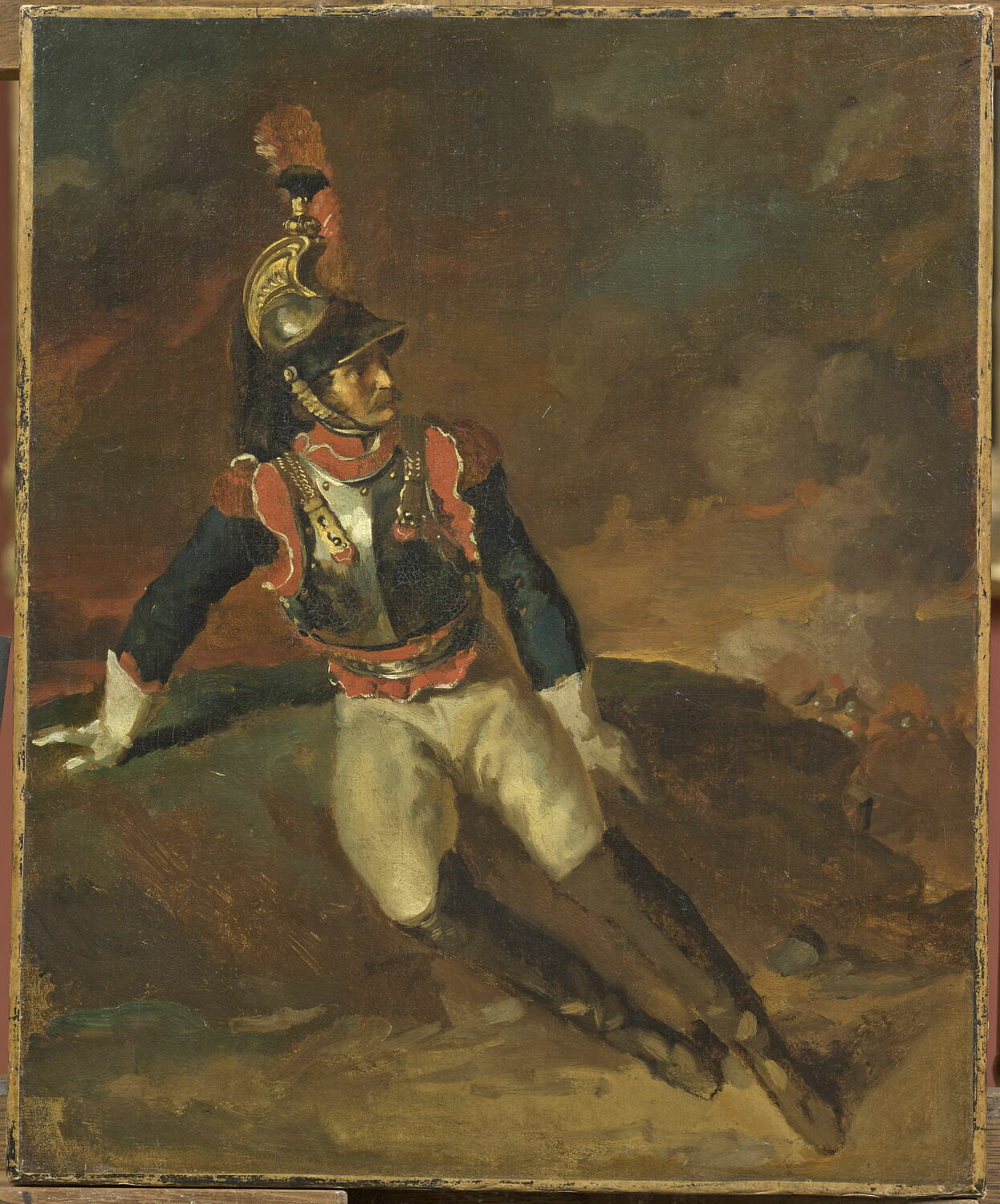
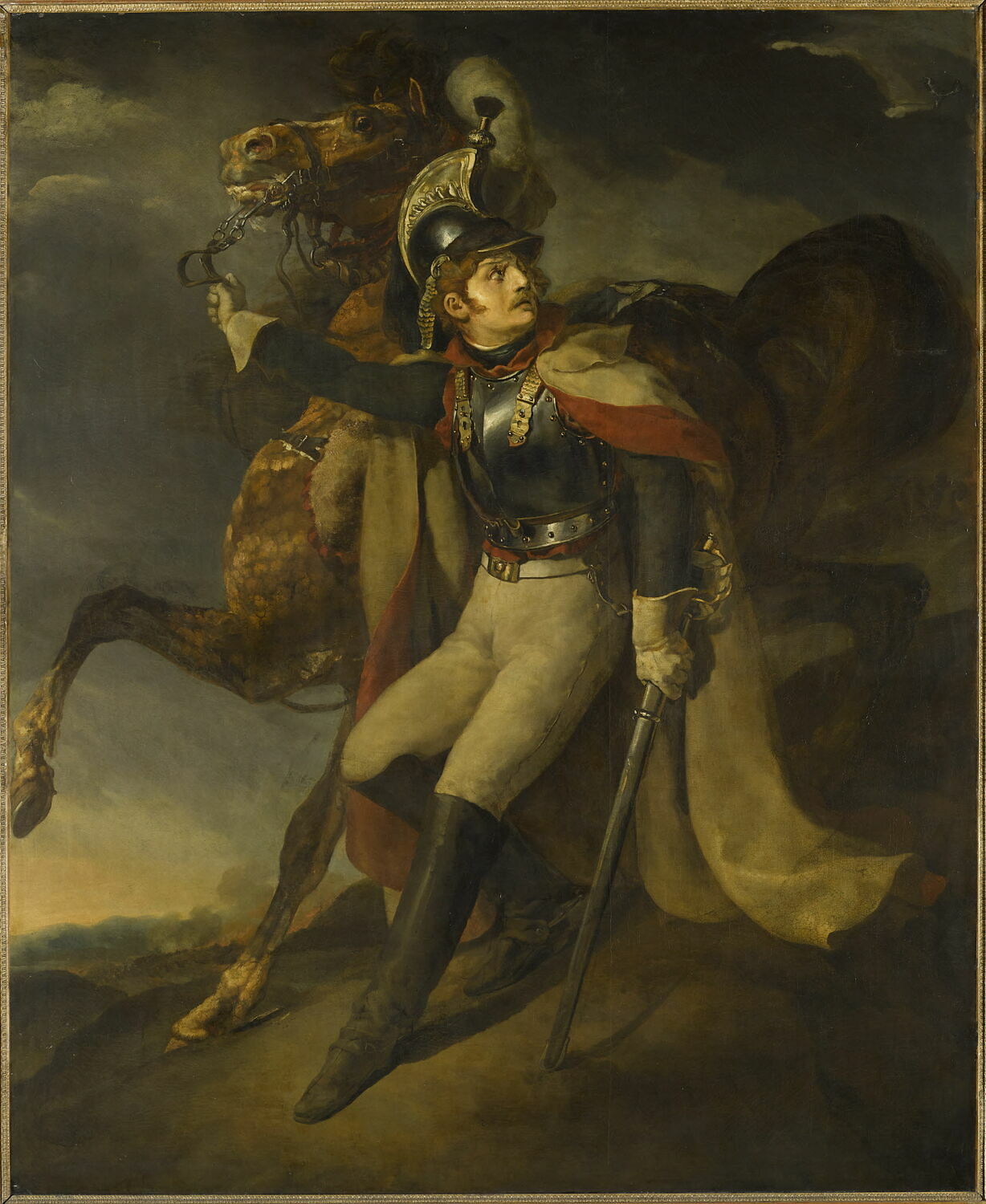
Cuirassier blessé, quittant le feu
Mag men het zien?
Ja, het ontvangt bezoek

Publiek tentoongesteld. Wie daarvoor instaat, staat hieronder.
- Gecontroleerd
- Ongewijzigd sinds
- Bron
- Het museum
Over het schilderij
The Wounded Cuirassier (French: Le Cuirassier blessé quittant le feu) is an oil painting of a single anonymous soldier descending a slope with his nervous horse by the French Romantic painter and lithographer Théodore Géricault (1791–1824). In this Salon of 1814 entry, Géricault decided to turn away from scenes of heroism in favor of a subject that is on the losing side of the battle. On display in the aftermath of France's disastrous military campaign in Russia, this life-size painting captured the feeling of a nation in defeat. There are no visible wounds on the figure, and the title has sometimes been interpreted to refer to soldier's injured pride. The painting stood in stark contrast with Géricault's Charging Chasseur, as it didn't focus on glory or the spectacle of battle. Only his Signboard of a Hoofsmith, which is currently in a private collection, bears any resemblance in form or function to this painting.
Verder lezen
The final salon version of The Wounded Cuirassier is at the Musée du Louvre and the smaller, study version, is located at the Brooklyn Museum.
Gegevens
- Inventarisnummer
- INV 4886
In de catalogus
Bronnen
- Louvre
- Afbeelding: Louvre — © 2018 GrandPalaisRmn (musée du Louvre) / Franck Raux
Intussen, in het leven van Théodore Géricault
Het hele leven1812
Salon debut: “Officer of the Imperial Guard Chasseurs”
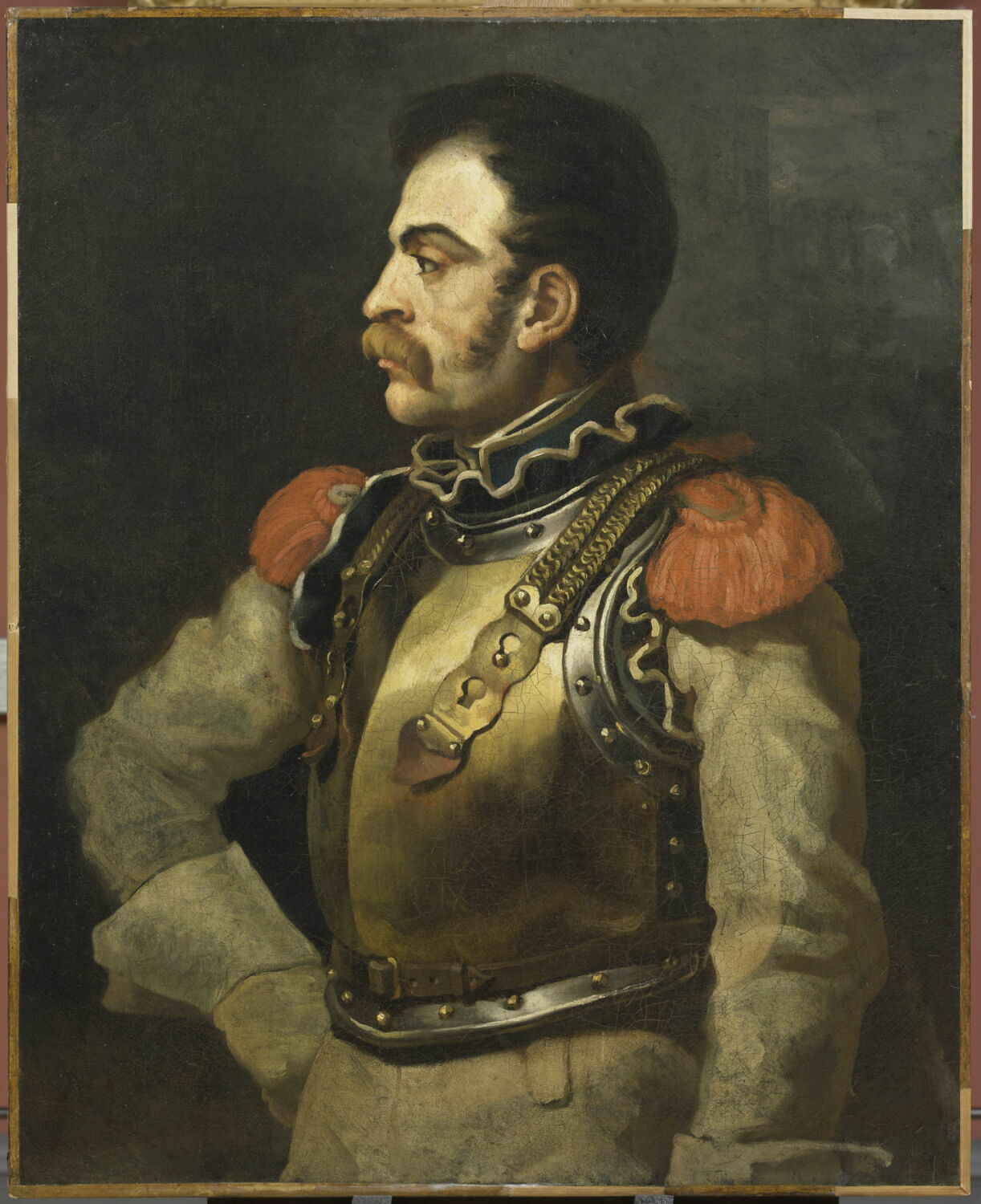
In 1812 Géricault sent “Portrait of Dieudonné” (now “Officer of the Imperial Guard Chasseurs Charging”, Louvre) to the Paris Salon. An artist unknown until then, said to have “hardly studied”, he at once drew the critics' attention: Boutard advised him to take up battle painting, Durdent called him “perhaps the best of all our painters”, and David himself noticed the picture.
1814
Salon of 1814: “Wounded Cuirassier” and cold reviews
At the Salon of 1814, held after Napoleon's fall, the “Officer” was shown paired with “Wounded Cuirassier Leaving the Field of Battle”, the only reminder of a passing tragic and glorious era among the neutral subjects chosen by other artists. Critics either said nothing of Géricault's pictures or received them unfavorably.
December 1814
He buys a commission as a musketeer
Having recently evaded military service, in December 1814 Géricault, with the help of his father and uncle, bought a commission in the musketeer company commanded by Lauriston, a privileged military unit. His biographers find it hard to explain what motivated him.
1815
The Hundred Days: Louis XVIII's escort and flight to Normandy
During the Hundred Days Géricault was in the escort of the fleeing Louis XVIII and then, disguised as a peasant, made his way to Normandy, where he probably stayed until the middle of the summer of 1815.
1816
An affair with his uncle's wife: another reason to leave
At that time Géricault began a love affair with his uncle's wife, Alexandrine-Modeste Caruel, and feared its discovery; it was another, personal reason for his departure for Italy.
1816–1817
Naples and Rome: the shock of Michelangelo
Géricault visited Naples, drawing the landscapes and people, but spent most of his time in Rome. The frescoes of the Sistine Chapel shook him: Michelangelo's monumentality of form inspired his pen drawings, such as “Man Felling a Bull”, among the most interesting made in Rome.