ART WIKI32.979 te zien
KaartCollectieKunstenaarsMuseaTentoonstellingenJournal
Inloggen

ART WIKI

Waar het meesterwerk hangt en wanneer men u toelaat.

Collecties: Art Institute of Chicago, Cleveland Museum of Art, Getty Villa, Harvard Art Museums, Hermitage, Hirshhorn Museum and Sculpture Garden, J. Paul Getty Museum, Louvre, Metropolitan Museum of Art, Minneapolis Institute of Art, Museum of Modern Art, National Gallery of Art, National Museum of Asian Art, National Portrait Gallery, Poesjkinmuseum, Rijksmuseum Amsterdam, Russisch Museum, Smithsonian American Art Museum, Statens Museum for Kunst, Tretjakovgalerij, Victoria and Albert Museum, Whitney Museum of American Art, Staatscatalogus van het Russische museumfonds (274 musea), Europeana (19 musea), Wikidata (6 musea), Paris Musées (12 musea) en Joconde, de museumdatabank van het Franse ministerie van Cultuur (495 musea). De afbeeldingen behoren toe aan hun rechthebbenden.

Rubrieken

  • Kaart
  • Zoeken
  • Collectie
  • Meesterwerken
  • Nu te zien
  • Kunstenaars

Meer

  • Musea & galerieën
  • Tentoonstellingen
  • Journal
  • Waar de gegevens vandaan komen
  • Privacy & cookies
StartpaginaKaartCatalogus
  1. Collectie/
  2. Cleveland Museum of Art/
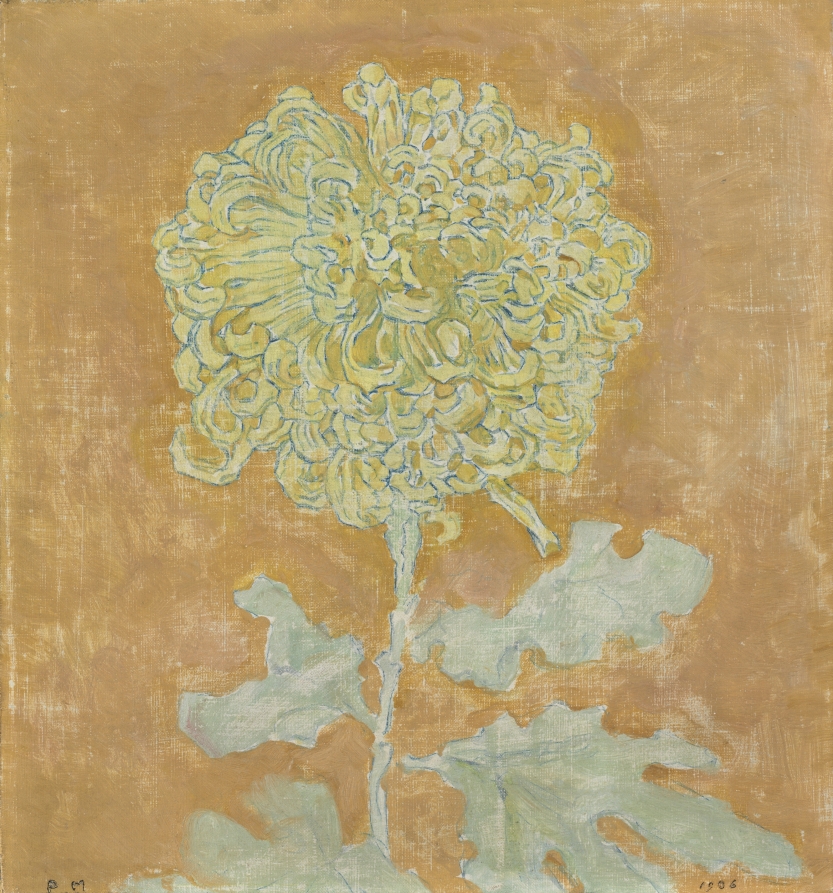
  3. Chrysanthemum
Chrysanthemum, Piet Mondrian, 1906–42
Piet Mondrian, portretPiet MondrianNederland, 1872–1944

Chrysanthemum

1906–42 · Painting

Mag men het zien?

Ontvangt momenteel niet

Cleveland Museum of Art

Cleveland, Verenigde Staten

Het hoort bij de collectie, maar is momenteel niet tentoongesteld.

Gecontroleerd
3 dagen geleden
Ongewijzigd sinds
19 aug 2026
Bron
Het museum
Op de kaartMuseumpagina

Over het schilderij

Fascinated by the complex structure of chrysanthemums, Mondrian painted these delicate flowers throughout his career. This single, frontal blossom recalls the stylized chrysanthemums of Japanese prints. Mondrian added the initials and date near the bottom edge sometime after painting the flower. Since he returned to this subject repeatedly, even during his later years, this painting may have been produced as late as 1942, the year Mondrian exhibited it in New York.

Cleveland Museum of Art

Gegevens

1906–42
18721944
Inventarisnummer
1958.38

In de catalogus

SchilderijenOlieverfNederlandse schilderkunstModernisme20e eeuwNederland

Bronnen

  • Cleveland Museum of Art
  • Afbeelding: Cleveland Museum of Art — Museum open access

Intussen, in het leven van Piet Mondrian

Het hele leven
  1. 1912–1914

    Move to Paris

    In 1912 Mondrian moved to Paris, where the Cubism of Picasso and Braque showed in his work almost at once: “The Sea” (1912) and his studies of trees from that year still keep a measure of representation but are increasingly dominated by geometric shapes and interlocking planes.

  2. 1913

    The final break with representation

    In 1913 Mondrian began to fuse his art and his theosophical studies into a theory that signalled his final break from representational painting.

  3. 1914

    The war catches Mondrian in the Netherlands

    While Mondrian was visiting the Netherlands in 1914, the First World War began, forcing him to stay there for the duration of the conflict; in isolation he began to create his own visual language, with works such as “Composition 10 in Black and White” (1915).

  4. 1915–1918

    Founding De Stijl with Van Doesburg

    With Theo van Doesburg Mondrian founded De Stijl, the journal of the De Stijl group, in which he first published essays defining his theory, which he called Neoplasticism.

  5. 23 September 1940

    Sailing from Liverpool to New York

    After the Netherlands were invaded and Paris fell, Mondrian left London and on 23 September 1940 sailed from Liverpool aboard the Cunard White Star liner RMS Samaria for New York, where he remained until his death.

  6. 1 februari 1944

    Died

Meer van Piet Mondrian

Alle werken
Oostzijdse Mill along the River Gein by Moonlight, Piet Mondriaan, c. 1903

Oostzijdse Mill along the River Gein by Moonlight

c. 1903 · Rijksmuseum Amsterdam

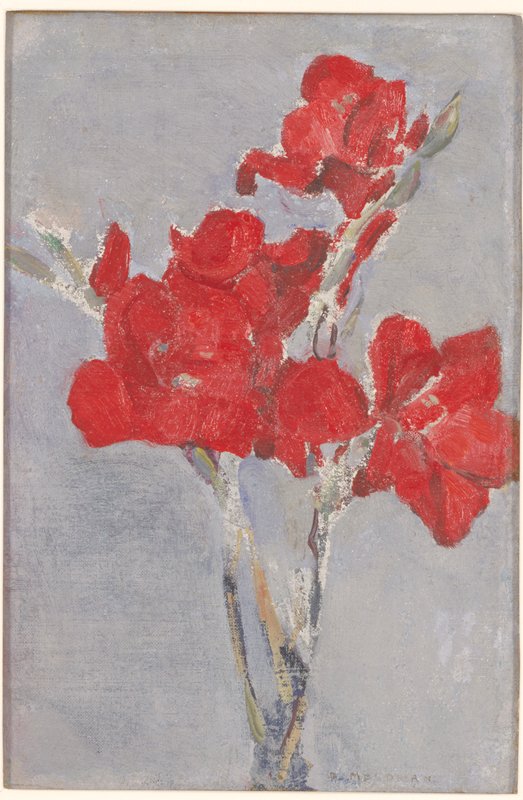
Red Gladioli, Piet Mondrian, c. 1906

Red Gladioli

c. 1906 · Minneapolis Institute of Art

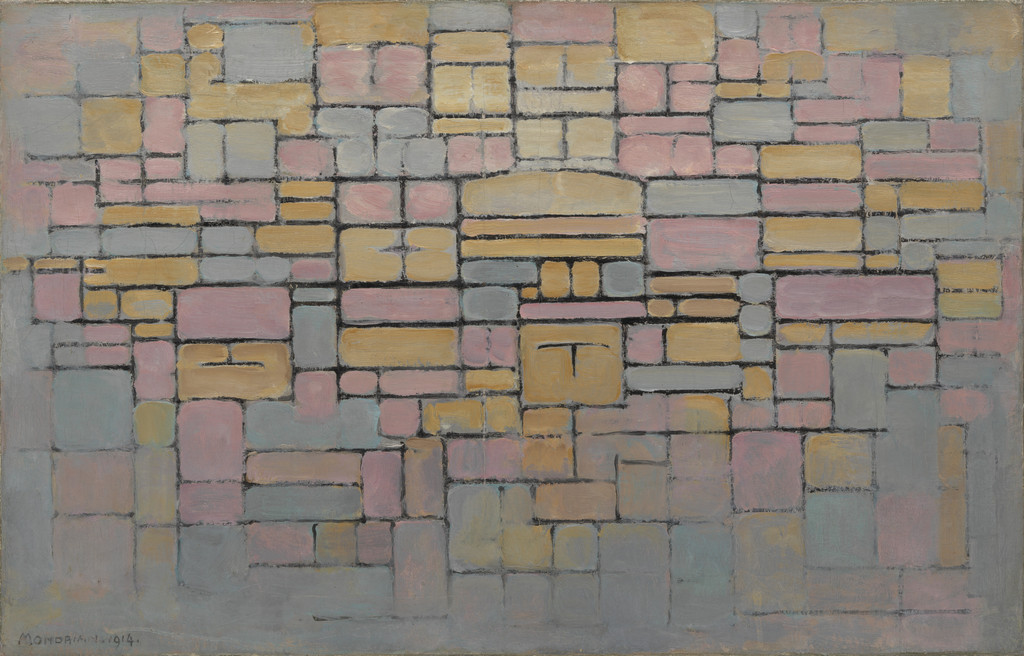
Tableau no. 2 / Composition no. V, Piet Mondrian, 1914

Tableau no. 2 / Composition no. V

1914 · Museum of Modern Art

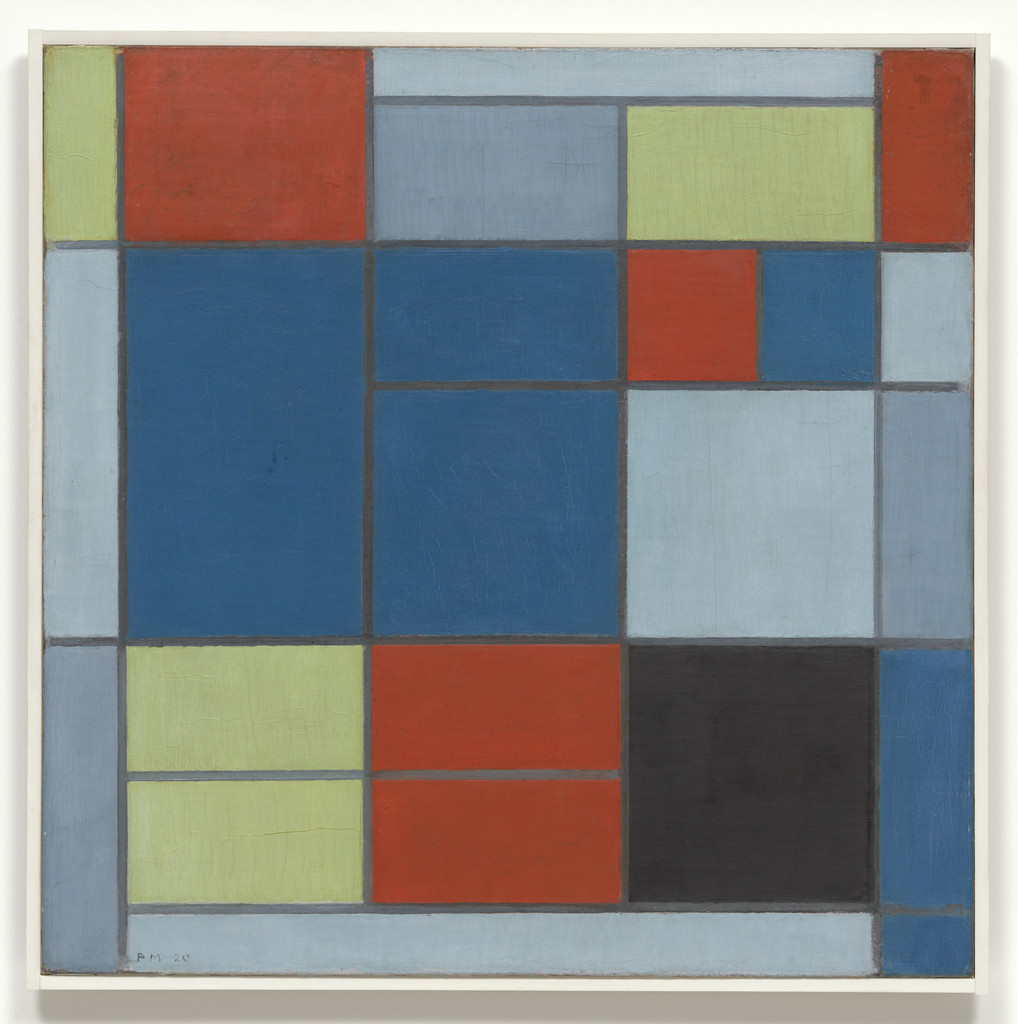
Composition C, Piet Mondrian, 1920

Composition C

1920 · Museum of Modern Art

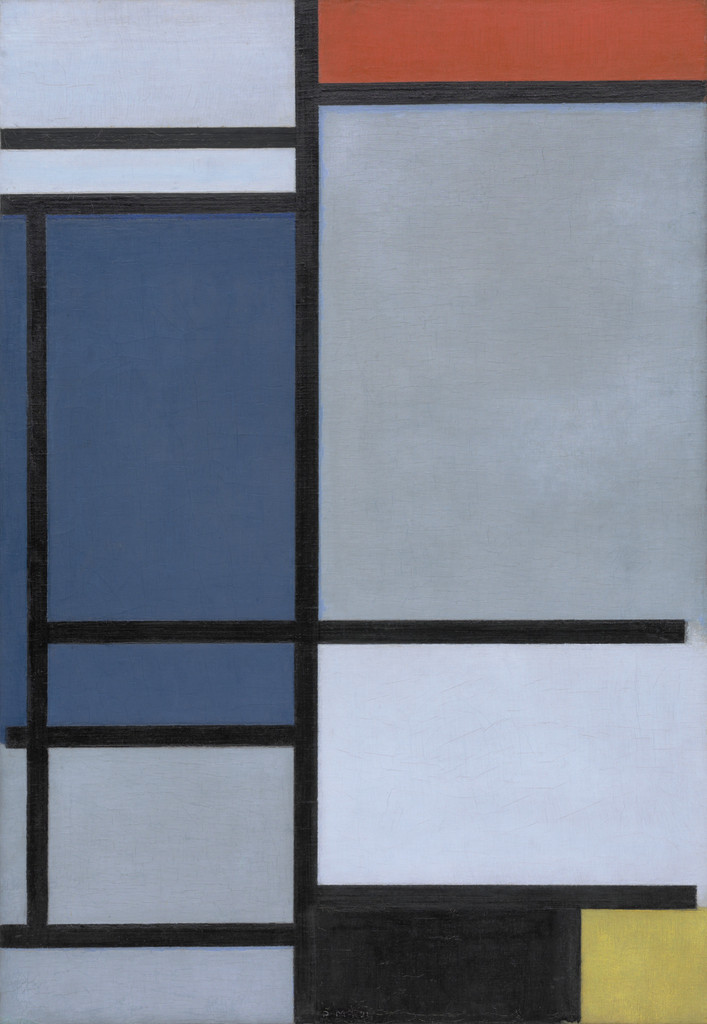
Composition with Red, Blue, Black, Yellow, and Gray, Piet Mondrian, 1921

Composition with Red, Blue, Black, Yellow, and Gray

1921 · Museum of Modern Art

Tableau No. IV; Lozenge Composition with Red, Gray, Blue, Yellow, and Black, Piet Mondrian, c. 1924/1925

Tableau No. IV; Lozenge Composition with Red, Gray, Blue, Yellow, and Black

c. 1924/1925 · National Gallery of Art

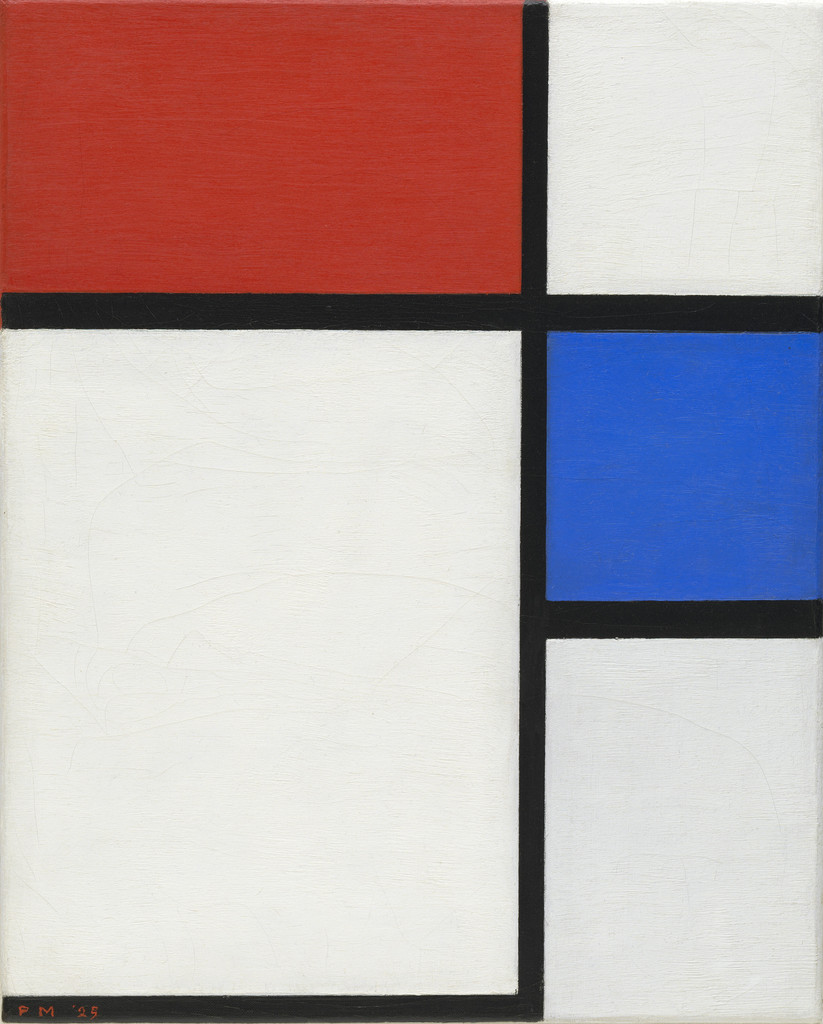
Composition No. II, with Red and Blue, Piet Mondrian, 1929 (original date partly obliterated; mistakenly repainted 1925 by Mondrian)

Composition No. II, with Red and Blue

1929 (original date partly obliterated; mistakenly repainted 1925 by Mondrian) · Museum of Modern Art

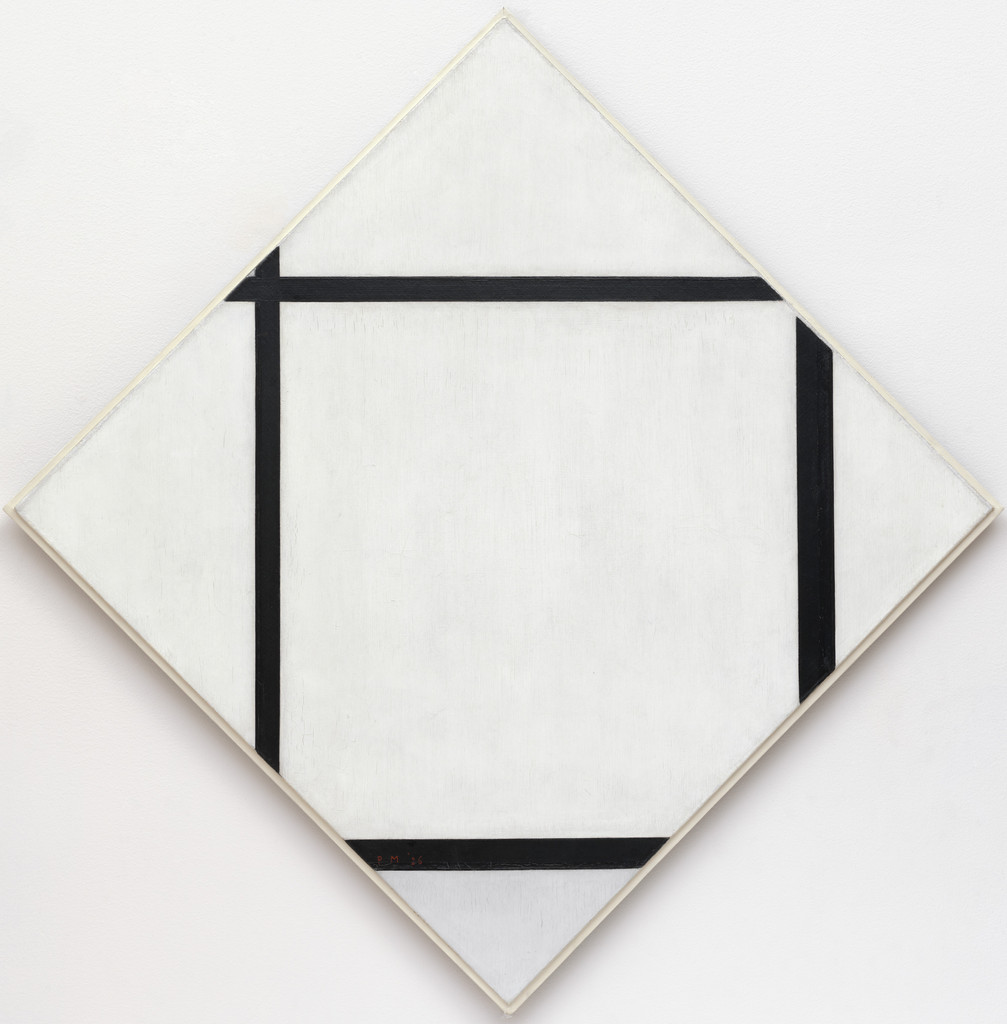
Tableau I: Lozenge with Four Lines and Gray, Piet Mondrian, 1926

Tableau I: Lozenge with Four Lines and Gray

1926 · Museum of Modern Art

Buren in huis: Cleveland Museum of Art

Museumpagina
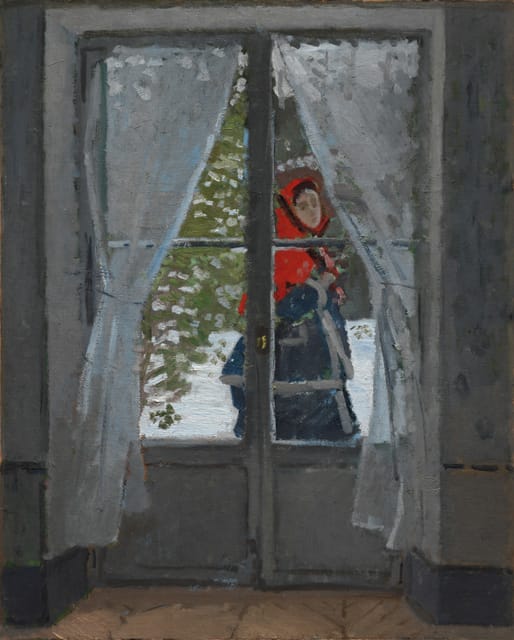
The Red Kerchief, Claude Monet, c. 1868–73

Claude Monet

The Red Kerchief, c. 1868–73

Melencolia I, Albrecht Dürer, 1514

Albrecht Dürer

Melencolia I, 1514

The Virgin and Child with the Pear, Albrecht Dürer, 1511

Albrecht Dürer

The Virgin and Child with the Pear, 1511

The Nativity, Albrecht Dürer, probably c. 1509/1510

Albrecht Dürer

The Nativity, probably c. 1509/1510

The Virgin and Child on a Crescent with a Starry Crown, Albrecht Dürer, 1508

Albrecht Dürer

The Virgin and Child on a Crescent with a Starry Crown, 1508

The Lamentation, Albrecht Dürer, 1507

Albrecht Dürer

The Lamentation, 1507

Large Horse, Albrecht Dürer, 1505

Albrecht Dürer

Large Horse, 1505

Nemesis (The Great Fortune), Albrecht Dürer, c. 1501/1502

Albrecht Dürer

Nemesis (The Great Fortune), c. 1501/1502