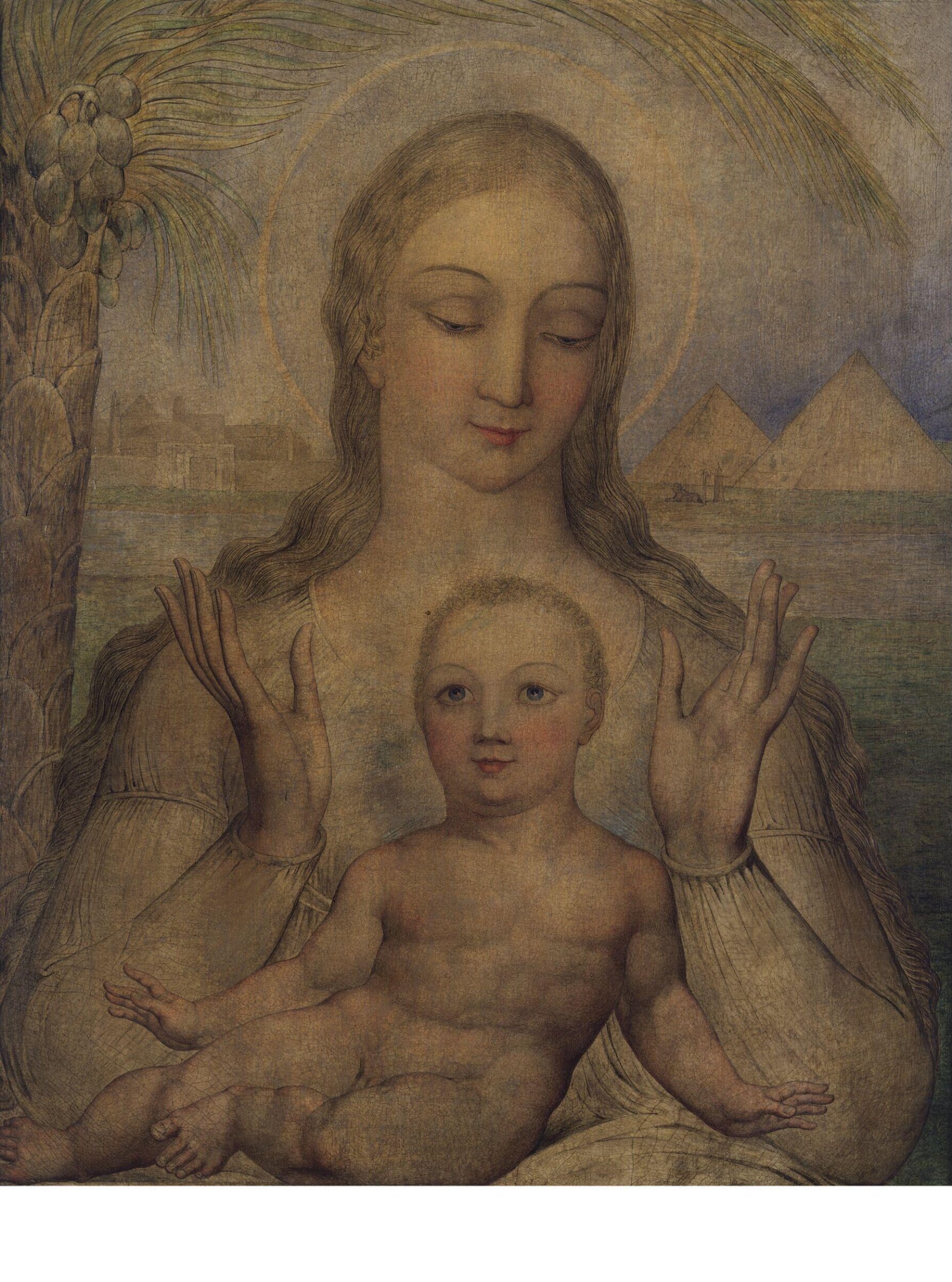
William BlakeVerenigd Koninkrijk, 1757–1827
Canto I
Kan ik het zien?
Nu niet te zien
Waar is „Canto I” nu? Collectie: National Gallery of Art, Washington D.C. Nu niet te zien. Gecontroleerd 23 november 2026.

Washington D.C., Verenigde Staten
Het hoort bij de collectie, maar is momenteel niet tentoongesteld.
- Gecontroleerd
- Ongewijzigd sinds
- Bron
- Het museum
Over het werk
Canto I, in 1787-1788 gemaakt door William Sharp naar Thomas Stothard, hoort bij de National Gallery of Art in Washington. Figuren verzamelen zich rond een groot gezicht dat uit de rots tevoorschijn komt, met een ander gevleugeld gezicht erboven tussen wolken. Ets en gravure zijn gecombineerd op velijnpapier. Het beeld, verbonden met William Hayleys The Triumphs of Temper, is slechts 10,5 bij 6,9 centimeter.
Gegevens
- Inventarisnummer
- 1983.103.2.c
Wat het toont
In de catalogus
Bronnen
- National Gallery of Art
- Afbeelding: National Gallery of Art — Museum open access
In het leven van William Blake
Het hele leven1779–1785
Rebelling against Reynolds at the Academy
At the Royal Academy Blake rebelled against what he regarded as the unfinished style of fashionable painters such as Rubens, championed by the first president, Joshua Reynolds, and over time came to detest Reynolds' pursuit of “general truth” and “general beauty”. Against Reynolds' fashionable oil painting he preferred the classical precision of Michelangelo and Raphael.
1780–1808
Exhibits six times at the Royal Academy
Despite his antagonism towards Reynolds, Blake submitted works to the Royal Academy on six occasions between 1780 and 1808.
1784–1785 · Woonplaats
Broadwick Street
1785–1791 · Woonplaats
Poland Street
1788
Invents relief etching
In 1788, aged 31, Blake invented relief etching, or “illuminated printing”: text and designs are drawn on a copper plate in acid-resistant ink and etched so that the protected areas stand in relief, and the printed pages are coloured by hand in watercolours. He used it for most of his well-known works, including “Songs of Innocence and of Experience”, “The Book of Thel”, “The Marriage of Heaven and Hell” and “Jerusalem”.