ART WIKI32.963 te zien
KaartCollectieKunstenaarsMuseaTentoonstellingenJournal
Inloggen

ART WIKI

Waar het meesterwerk hangt en wanneer men u toelaat.

Collecties: Art Institute of Chicago, Cleveland Museum of Art, Getty Villa, Harvard Art Museums, Hermitage, Hirshhorn Museum and Sculpture Garden, J. Paul Getty Museum, Louvre, Metropolitan Museum of Art, Minneapolis Institute of Art, Museum of Modern Art, National Gallery of Art, National Museum of Asian Art, National Portrait Gallery, Poesjkinmuseum, Rijksmuseum Amsterdam, Russisch Museum, Smithsonian American Art Museum, Statens Museum for Kunst, Tretjakovgalerij, Victoria and Albert Museum, Whitney Museum of American Art, Staatscatalogus van het Russische museumfonds (274 musea), Europeana (19 musea), Wikidata (6 musea), Paris Musées (12 musea) en Joconde, de museumdatabank van het Franse ministerie van Cultuur (495 musea). De afbeeldingen behoren toe aan hun rechthebbenden.

Rubrieken

  • Kaart
  • Zoeken
  • Collectie
  • Meesterwerken
  • Nu te zien
  • Kunstenaars

Meer

  • Musea & galerieën
  • Tentoonstellingen
  • Journal
  • Waar de gegevens vandaan komen
  • Privacy & cookies
StartpaginaKaartCatalogus
  1. Collectie/
  2. National Gallery of Art/
  3. Boxeurs (The Boxers)
Boxeurs (The Boxers), Théodore Gericault, 1818

Boxeurs (The Boxers)

1818 · Print

Gegevens

1818 · op 27-jarige leeftijd
17911824
Inventarisnummer
1985.64.169

Intussen, in het leven van Théodore Géricault

Het hele leven
  1. 1816

    An affair with his uncle's wife: another reason to leave

    At that time Géricault began a love affair with his uncle's wife, Alexandrine-Modeste Caruel, and feared its discovery; it was another, personal reason for his departure for Italy.

  2. 1816–1817

    Naples and Rome: the shock of Michelangelo

    Géricault visited Naples, drawing the landscapes and people, but spent most of his time in Rome. The frescoes of the Sistine Chapel shook him: Michelangelo's monumentality of form inspired his pen drawings, such as “Man Felling a Bull”, among the most interesting made in Rome.

  3. autumn 1817

    The book on the wreck of the Méduse reaches Géricault

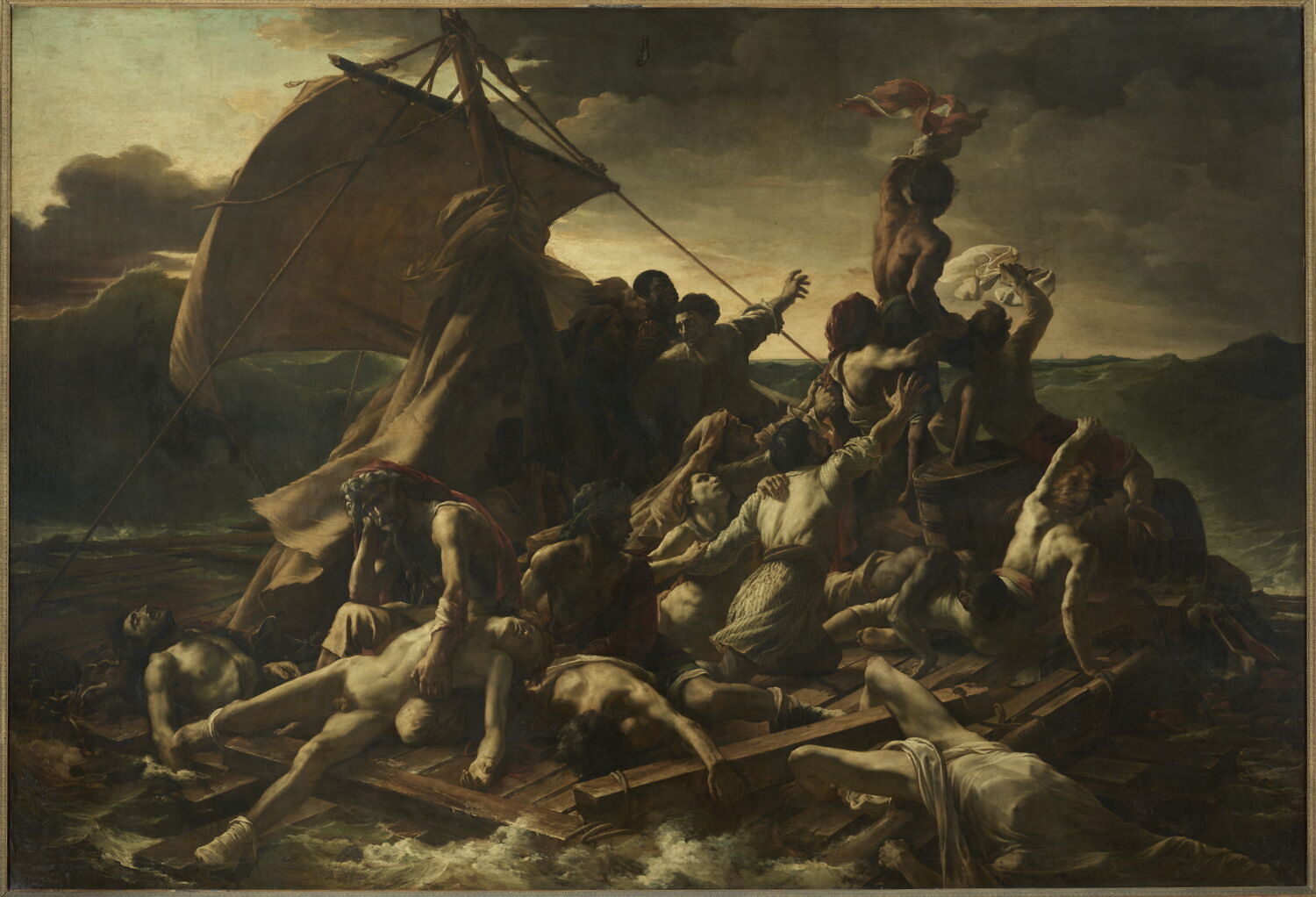
    In the autumn of 1817 the book “The Wreck of the Frigate Medusa” appeared, in which the eyewitnesses, the geographer-engineer Alexandre Corréard and the physician Henri Savigny, described the thirteen-day drift of the raft after the ship ran aground off the coast of Mauritania. The book reached Géricault, who saw in it the subject for the large painting he had long dreamed of.

  4. 1817–1818

    Investigating the disaster: survivors, a model raft, morgues

    Géricault re-created the event by studying the available materials and meeting witnesses: he got to know Corréard and Savigny, a carpenter from the Méduse made a scale model of the raft for him, and the artist modelled wax figures himself. He visited hospital morgues, drawing dead heads, emaciated bodies and severed limbs, and the preparation ended with a trip to Le Havre, where he painted studies of sea and sky.

Meer van Théodore Géricault

Alle werken

Buren in huis: National Gallery of Art

Museumpagina

Over hetzelfde thema · Sports

Alle werken over dit thema

1819

“The Raft of the Medusa” sparks a political controversy at the Salon

When first exhibited at the Paris Salon of 1819, “The Raft of the Medusa” ignited political controversy: it indicted a corrupt establishment, in which the captain had left the crew and passengers to die, but also dramatized the eternal struggle of man against nature.

  • 12 June – 30 December 1820

    London: 50,000 visitors and 20,000 francs

    The entrepreneur Bullock exhibited “The Raft of the Medusa” in London from 12 June to 30 December 1820; about 50,000 people saw it, critics called it a masterpiece, and its author was compared to Michelangelo and Caravaggio. Géricault was entitled to a third of the ticket receipts and received 20,000 francs.

  • Théodore Géricault, portretThéodore GéricaultFrankrijk, 1791–1824

    Mag men het zien?

    Ontvangt momenteel niet

    National Gallery of Art

    Washington D.C., Verenigde Staten

    Het hoort bij de collectie, maar is momenteel niet tentoongesteld.

    Gecontroleerd
    3 dagen geleden
    Ongewijzigd sinds
    19 aug 2026
    Bron
    Het museum
    Op de kaartMuseumpagina

    Wat het toont

    SportsBoxing

    In de catalogus

    PrentenLithografieNeoclassicismeRomantiek19e eeuwFrench

    Bronnen

    • National Gallery of Art
    • Afbeelding: National Gallery of Art — Museum open access
    Le radeau de la Méduse, Géricault, Théodore, 1e quart du XIXe siècle (1818 - 1819)

    Het vlot van de Medusa

    1e quart du XIXe siècle (1818 - 1819) · Louvre

    Flayed Horse III, Théodore Gericault, model c. 1820/1824, cast 1959-1960

    Flayed Horse III

    model c. 1820/1824, cast 1959-1960 · National Gallery of Art

    La tempête ou L'épave, Géricault, Théodore, 1e quart du XIXe siècle (1800 - 1825)

    La tempête ou L'épave

    1e quart du XIXe siècle (1800 - 1825) · Louvre

    Un carabinier, vu à mi-corps., Géricault, Théodore, 1e quart du XIXe siècle (1800 - 1825)

    Un carabinier, vu à mi-corps.

    1e quart du XIXe siècle (1800 - 1825) · Louvre

    Cuirassier blessé, Géricault, Théodore, 1e quart du XIXe siècle (1800 - 1825)

    Cuirassier blessé

    1e quart du XIXe siècle (1800 - 1825) · Louvre

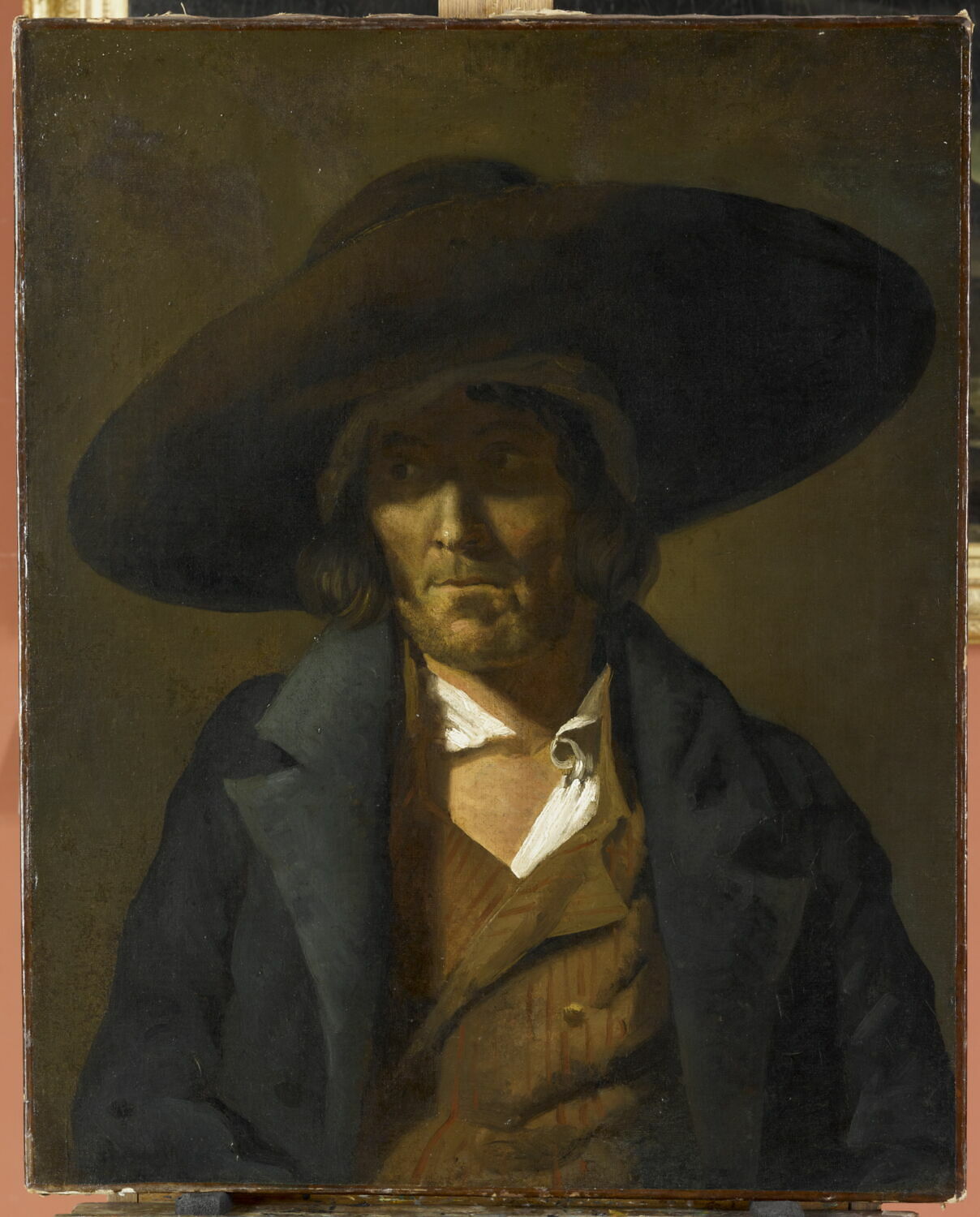
    Portrait d'homme, dit le Vendéen, Géricault, Théodore, 1e quart du XIXe siècle (1800 - 1825)

    Portrait d'homme, dit le Vendéen

    1e quart du XIXe siècle (1800 - 1825) · Louvre

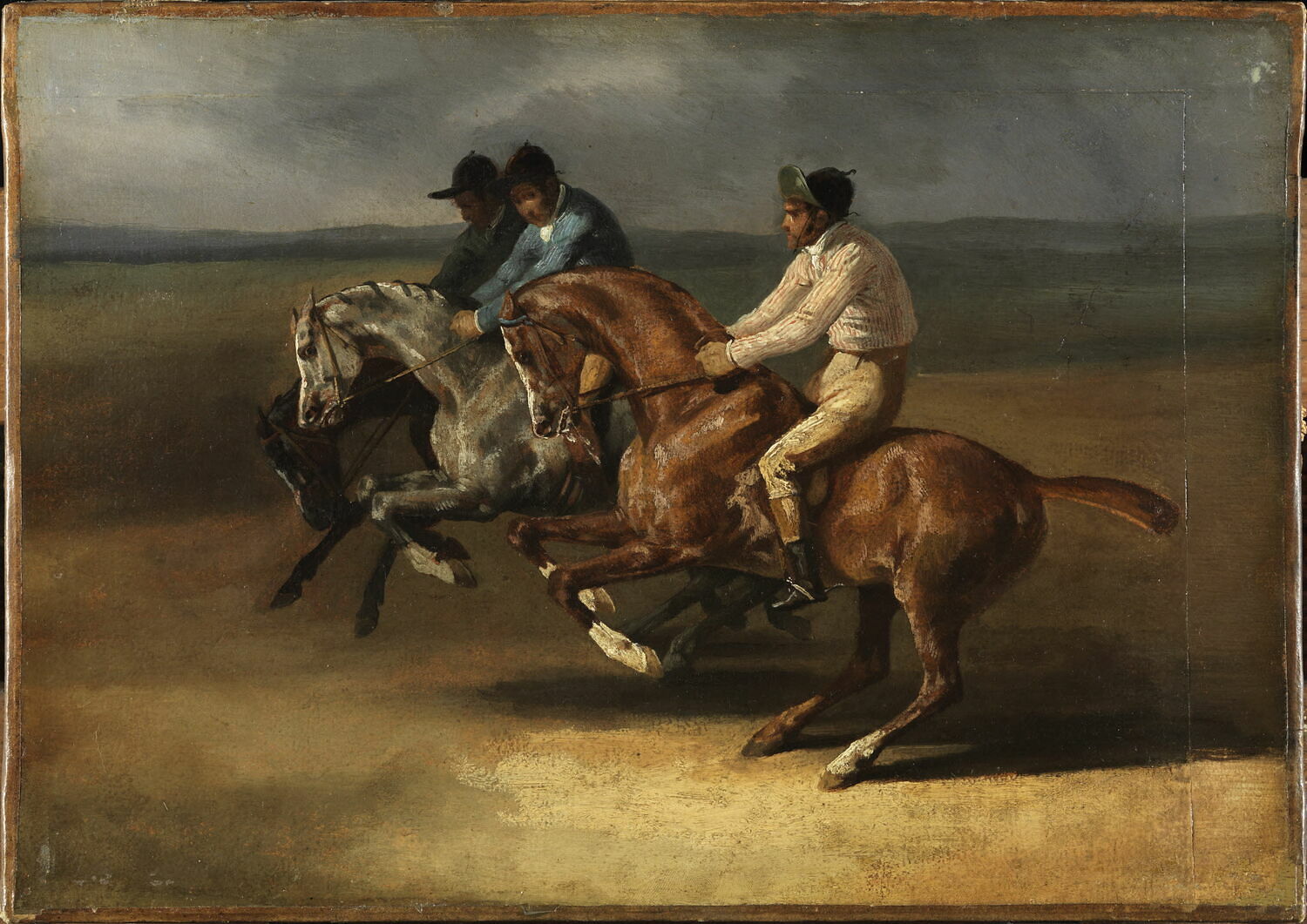
    Course de Chevaux montés allant à gauche, au moment du départ., Géricault, Théodore, 1e quart du XIXe siècle (1800 - 1825)

    Course de Chevaux montés allant à gauche, au moment du départ.

    1e quart du XIXe siècle (1800 - 1825) · Louvre

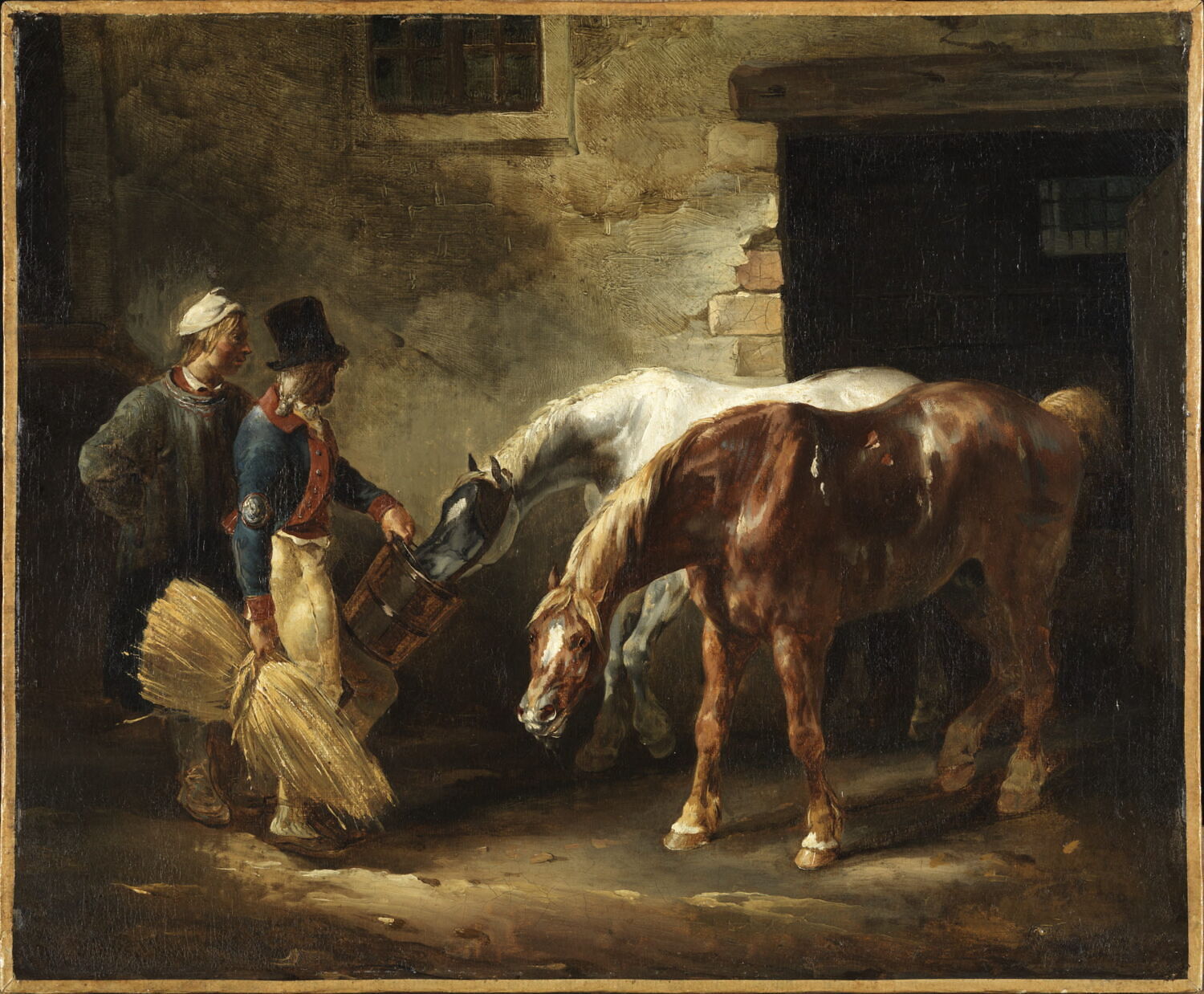
    Deux chevaux de poste à la porte d'une écurie, Géricault, Théodore, 1e quart du XIXe siècle (1800 - 1825)

    Deux chevaux de poste à la porte d'une écurie

    1e quart du XIXe siècle (1800 - 1825) · Louvre

    Ginevra de' Benci [obverse], Leonardo da Vinci, c. 1474/1478

    Leonardo da Vinci

    Portret van Ginevra de' Benci, c. 1474/1478

    Wreath of Laurel, Palm, and Juniper with a Scroll inscribed Virtutem Forma Decorat [reverse], Leonardo da Vinci, c. 1474/1478

    Leonardo da Vinci

    Wreath of Laurel, Palm, and Juniper with a Scroll inscribed Virtutem Forma Decorat [reverse], c. 1474/1478

    Green Wheat Fields, Auvers, Vincent van Gogh, 1890

    Vincent van Gogh

    Green Wheat Fields, Auvers, 1890

    Girl in White, Vincent van Gogh, 1890

    Vincent van Gogh

    Meisje in Wit, 1890

    Roses, Vincent van Gogh, 1890

    Vincent van Gogh

    Roses, 1890

    Self-Portrait, Vincent van Gogh, 1889

    Vincent van Gogh

    Self-Portrait, 1889

    Farmhouse in Provence, Vincent van Gogh, 1888

    Vincent van Gogh

    Boerderij in de Provence, 1888

    La Mousmé, Vincent van Gogh, 1888

    Vincent van Gogh

    La Mousmé, 1888

    Pique I, Pablo Picasso, 1959

    Pablo Picasso

    Pique I, 1959

    Niet te zien · National Gallery of Art

    Pique I, Pablo Picasso, 1959

    Pablo Picasso

    Pique I, 1959

    Niet te zien · National Gallery of Art

    Pique I, Pablo Picasso, 1959

    Pablo Picasso

    Pique I, 1959

    Niet te zien · National Gallery of Art

    Pique I, Pablo Picasso, 1959

    Pablo Picasso

    Pique I, 1959

    Niet te zien · National Gallery of Art

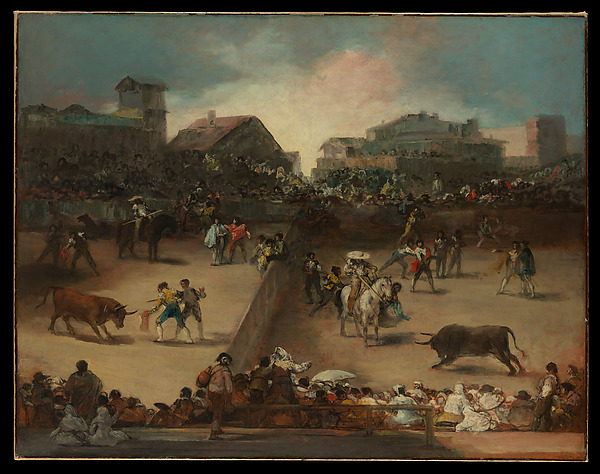
    Bullfight in a Divided Ring, Goya, ca. 1810

    Francisco de Goya

    Bullfight in a Divided Ring, ca. 1810

    Metropolitan Museum of Art

    Lion Hunt, Pieter Claesz Soutman and Sir Peter Paul Rubens, c. 1615-1618

    Peter Paul Rubens

    Lion Hunt, c. 1615-1618

    Niet te zien · National Gallery of Art

    At the Races, Edouard Manet, c. 1875

    Édouard Manet

    At the Races, c. 1875

    Niet te zien · National Gallery of Art

    Untitled (man with racket and ball), Mark Rothko, 1939

    Mark Rothko

    Untitled (man with racket and ball), 1939

    Niet te zien · National Gallery of Art