Gerard ter BorchNederland, 1617–1681
Benen van een man
Kan ik het zien?
Onbekend
Waar is „Benen van een man” nu? Collectie: Rijksmuseum Amsterdam, Amsterdam. Onbekend.

Amsterdam, Nederland
De eigenaar is bekend; of het werk nu te zien is, is onbekend.
- Bron
- Het museum
Gegevens
- Inventarisnummer
- RP-T-1969-217(V)
In de catalogus
Bronnen
- Rijksmuseum Amsterdam
- Afbeelding: Rijksmuseum Amsterdam — public domain
In het leven van Gerard ter Borch
Het hele leven1636–1643
Journeys through Italy, Spain and France
According to the biographer Arnold Houbraken, in 1636–1643 he travels through Italy, Spain, France and the Southern Netherlands; in Madrid he paints a portrait of Philip IV (not preserved) and comes under the influence of Velázquez. Other accounts say he was invited to Madrid later, where Philip IV gave him employment and a knighthood, but an intrigue forced him to return to the Netherlands.
1640–1645
Works as a portraitist in Amsterdam and Haarlem
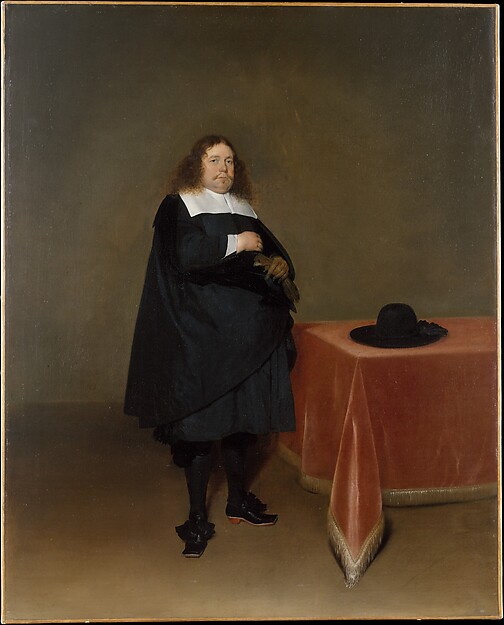
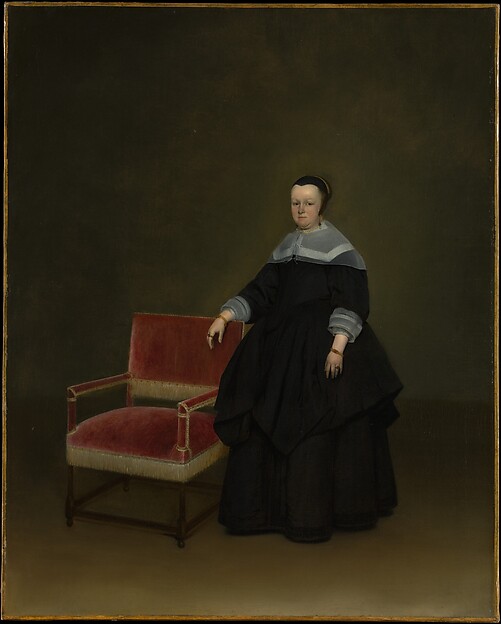
From 1640 to 1645 he lives in Holland, mainly in Amsterdam and Haarlem, and makes a name as a portraitist: small full-length portraits, possibly influenced by Hendrick Pot and Pieter Codde, and “soldier scenes” (kortegaardjes), groups of guardsmen. His portrait style takes shape by the early 1640s and hardly changes afterwards: sitters usually dressed in black against a neutral, mostly grey background.
1646
Travels to Münster for the peace negotiations
In 1646, at the invitation of the Dutch ambassador Adriaen Pauw, he travels to Münster, where peace between Holland and Spain is being negotiated, paints portraits of the diplomats and attracts the attention of the Spanish ambassador, Count Peñaranda, who takes him into his service.
1648
Turns to interior scenes
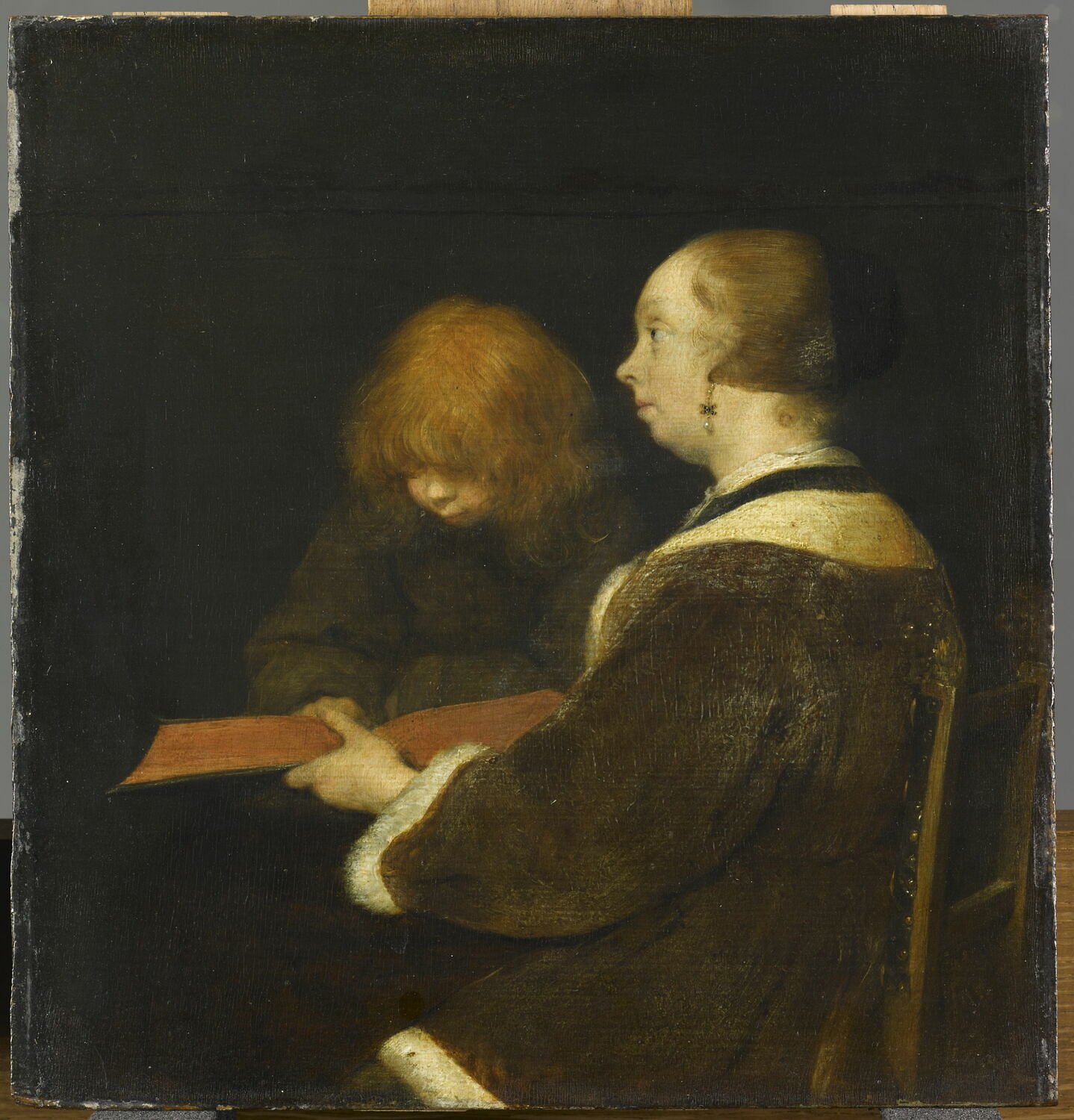
Whereas earlier he painted mainly scenes of peasant and military life, from 1648 he gives more attention to domestic interiors with few figures: gallant couples, ladies reading a letter or making music.
1648
Returns to Holland
In the same year he returns to Holland and lives by turns in Amsterdam, The Hague, Haarlem, Kampen and Zwolle; in a short time he gains the reputation of Europe’s foremost master of genre painting. One of his great patrons is the Amsterdam burgomaster Andries de Graeff.
15 May 1648
Present at the ratification of the Peace of Münster
In the service of Count Peñaranda, he is present at the conclusion of the Peace of Münster between Holland and Spain on 15 May 1648 and records the event in his celebrated little picture, painted on copper, “The Ratification of the Treaty of Münster” (De bezwering van de vrede van Münster).