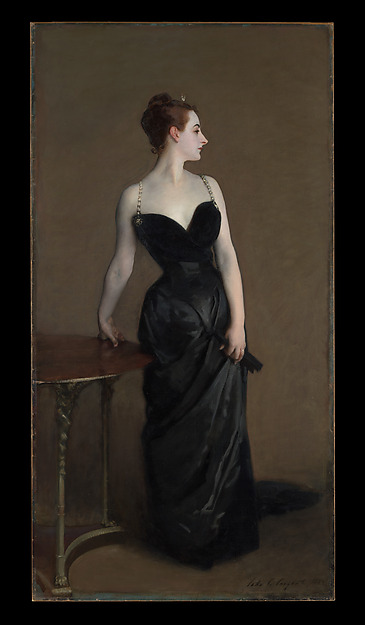
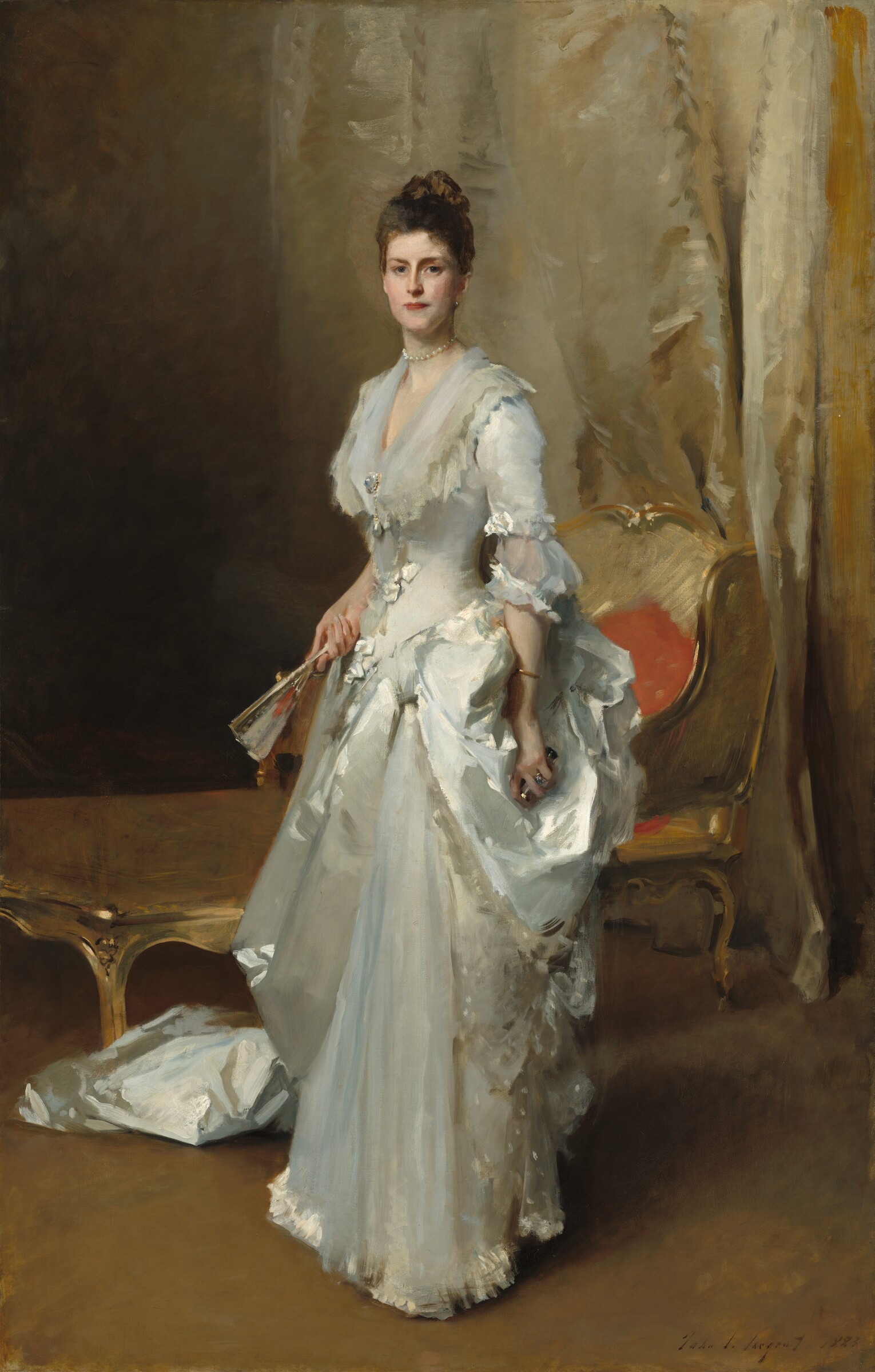
John Singer SargentVerenigde Staten, 1856–1925
Anamorphic Skull
Mag men het zien?
Ontvangt momenteel niet

Harvard Art Museums
Cambridge, Verenigde Staten
Het hoort bij de collectie, maar is momenteel niet tentoongesteld.
- Gecontroleerd
- 4 uur geleden
- Ongewijzigd sinds
- 27 sep 2026
- Bron
- De eigen collectiegegevens van het museum
Gegevens
- Inventarisnummer
- 1937.7.11.32
In de catalogus
Bronnen
- Harvard Art Museums: the museum's own open data · opgehaald 6 dagen geleden
- Afbeelding: Harvard Art Museums — © President and Fellows of Harvard College
Intussen, in het leven van John Singer Sargent
Het hele levenc. 1890
Elected to the Royal Academy
Sargent is elected an associate of the Royal Academy and is made a full member three years later.
1890s
Fourteen portrait commissions a year
In the 1890s Sargent averages fourteen portrait commissions per year, among them the genteel “Lady Agnew of Lochnaw” (1892) and the equally well received “Mrs. Hugh Hammersley” (1892); as a portrait painter in the grand manner he is referred to as “the Van Dyck of our times”.
1893
Nine portraits at the Chicago World's Fair
In 1893 Sargent exhibits nine of his portraits in the Palace of Fine Arts at the World's Columbian Exposition in Chicago.
1895–1919
The “Triumph of Religion” murals for the Boston Public Library
From 1895 through 1919, for almost thirty years, Sargent works on his largest-scale work, the mural decorations “Triumph of Religion” for the Boston Public Library, showing religion's progress from pagan superstition to the ascension of Christianity; he never completes the final mural of the cycle.
1898
Asher Wertheimer commissions a dozen family portraits
In 1898 Asher Wertheimer, a wealthy Jewish art dealer living in London, commissions from Sargent a series of a dozen portraits of his family, the artist's largest commission from a single patron; most of them, bequeathed to the National Gallery, are now on display at Tate Britain.
1900
At the height of his fame: “An Interior in Venice”
By 1900 Sargent is at the height of his fame; although only in his forties, he begins to travel more and devote relatively less time to portrait painting. His “An Interior in Venice” (1900), a portrait of four members of the Curtis family in their palatial home, Palazzo Barbaro, is a resounding success, although Whistler disapproves of the looseness of his brushwork, summing it up as “smudge everywhere”.