Caravaggio이탈리아, 1571–1610
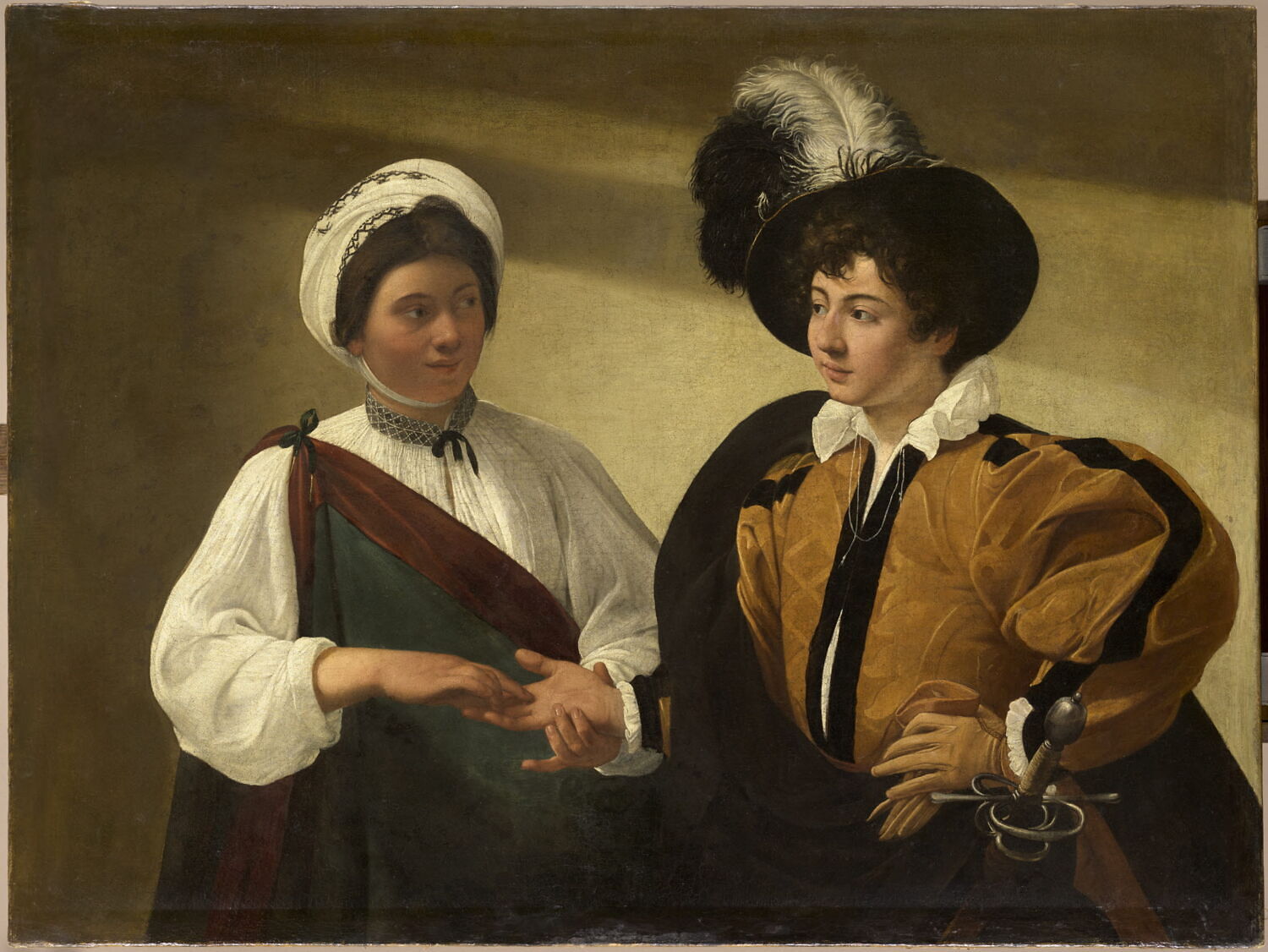
The Fortune Teller
볼 수 있나요?
확인되지 않았습니다
〈The Fortune Teller〉는 지금 어디에 있나요? 소장처: 카피톨리니 미술관, 로마. 오늘 전시 중인지는 확인되지 않았습니다.
로마, 이탈리아
소장자는 확인됐으나 오늘 전시 중인지는 알 수 없습니다.
- 이 상태가 시작된 날짜
- 출처
- 미술관
상세 정보
- 소장품 번호
- Inv. PC 131
목록에 등록됨
출처
- 위키데이터
- 이미지: 카피톨리니 미술관 — Caravaggio · Public domain · Wikimedia Commons
Caravaggio의 생애 속 이 작품
생애 전체 보기1592
Penniless in Rome, lodging with Pandolfo Pucci
The young artist arrived in Rome 'naked and extremely needy', with no fixed address or provision, and lodged with the miserly Pandolfo Pucci, known as 'Monsignor Insalata'. According to Bellori, he began by painting three heads a day for nominal pay for the minor painter Lorenzo Siciliano.
1592
Taken in by Antiveduto Grammatica
The homeless Caravaggio was taken in by the painter Antiveduto Grammatica, who would later become one of his followers.
1593
Roman fever: six months in hospital
Caravaggio fell ill with 'Roman fever' (malaria) and spent six months in hospital between life and death. Possibly under the impression of the illness he painted the 'Sick Bacchus', his first self-portrait.
1593
In the workshop of Cesari d'Arpino
Caravaggio joined the workshop of Cesari d'Arpino, who had him paint flowers and leaves on his frescoes; there the young provincial met influential patrons and artists, among them Jan Brueghel the Elder. In the same years, after yet another brawl, he landed in the Tor di Nona prison, where he met Giordano Bruno, and soon broke with d'Arpino.
autumn 1594
Under the patronage of Cardinal del Monte
Caravaggio began working on commissions for Cardinal Francesco del Monte and moved into his residence, the Madama, where he met Galileo Galilei, Tommaso Campanella, Giacomo della Porta and the poets Marino and Milesi. The period proved highly productive for him.
1595
Refused admission to the Academy of Saint Luke
Despite recommendations from Orazio Gentileschi, Grammatica and Prospero Orsi, Caravaggio was refused admission to the Academy of Saint Luke. His chief opponent was its president, Federico Zuccaro, who put the success of his pictures down to a mere 'touch of novelty' prized by rich patrons.