 Cinga Samson남아프리카 공화국, 1986
Inyongo 2
볼 수 있나요?
현재 전시하지 않습니다
〈Inyongo 2〉는 지금 어디에 있나요? 소장처: 미니애폴리스 미술관, 미니애폴리스. 현재 전시하지 않습니다. 확인일 2026년 11월 16일.

미니애폴리스, 미국
소장품이지만 현재 전시하지 않습니다.
- 확인일
- 이 상태가 시작된 날짜
- 출처
- 미술관
그림 소개
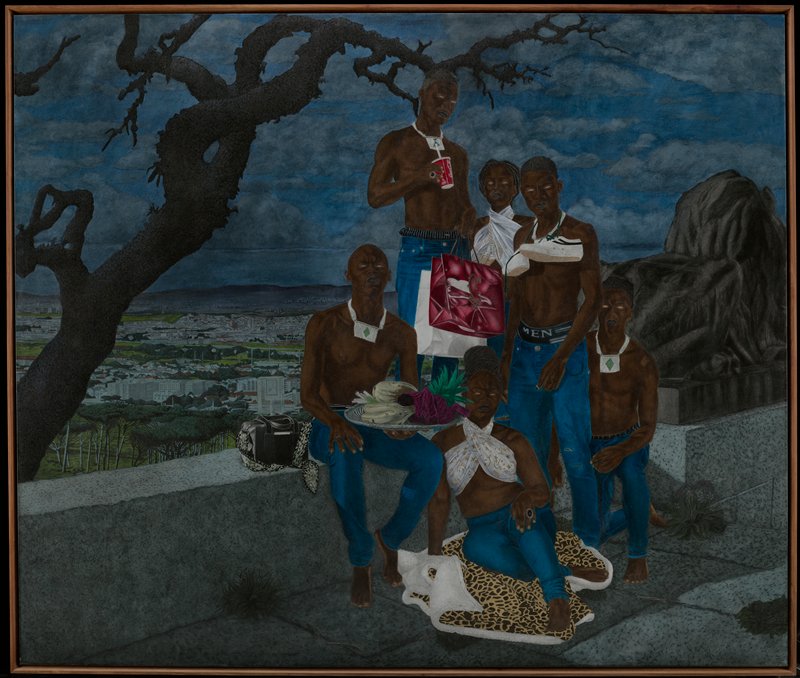
Young people pose at Cape Town's Rhodes Memorial in Cinga Samson's Inyongo 2 of 2020, at the Minneapolis Institute of Art, Minneapolis. Samson wanted Black figures to inhabit the site confidently and haunt the imperial legacy associated with Cecil Rhodes. Protests had already led to Rhodes's statue being removed from the University of Cape Town and broadened debate about decolonising education. In Xhosa and Zulu, inyongo can mean bile or gall-bladder, and figuratively bitterness or resentment. Gall-bladders also have a role in Xhosa divination ceremonies.
미술관의 설명
For Inyongo 2, South African artist Cinga Samson depicts a group of young men and women posing together at the Rhodes Memorial in Cape Town. Cecil John Rhodes was a British imperialist and mining magnet who has been at the center of discourse around decolonization. His statue was removed from Cape Town University, following a protest that subsequently sparked wider discourse around the decolonization of education across South Africa. Samson says, “My own thinking was that we are going to shoot at night and we’re going to haunt this space…this legacy. We’re going to haunt Rhodes. I wanted us [Black people] to look good in that space, to feel like we own it, like we belong—the way our ancestors might have felt.” The word inyongo can have several meanings in Xhosa (Samson's mother tongue) and Zulu: bile, gall-bladder, and more metaphorically, bitterness or resentment. Additionally, as the work relates to notions of African spirituality, it is worth noting that an inyongo (gall-bladder) is also used in Xhosa divination ceremonies.
미니애폴리스 미술관
상세 정보
- 소장품 번호
- 2020.41
목록에 등록됨
출처
- 미니애폴리스 미술관
- 이미지: 미니애폴리스 미술관 — © Minneapolis Institute of Art