 John Ruskinイングランド, 1819–1900
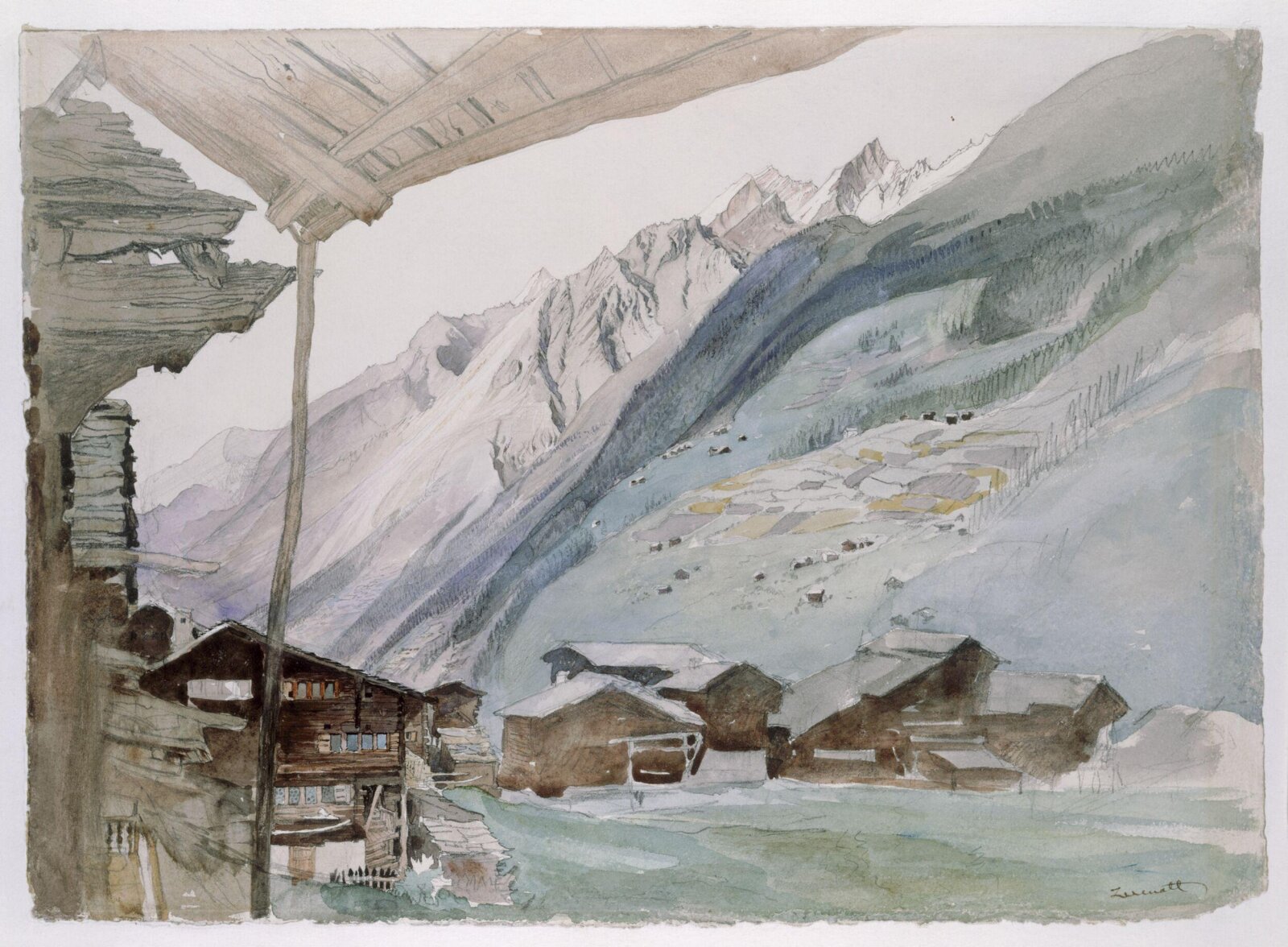
Zermatt
お目にかかれますか?
ただいまはお迎えしていません

ヴィクトリア&アルバート博物館
ロンドン, イギリス
コレクションに属していますが、現在は展示されていません。
- 確認
- 8 日前
- この状態になった日
- 2026年9月25日
- 出典
- 美術館自身の所蔵データ
作品について
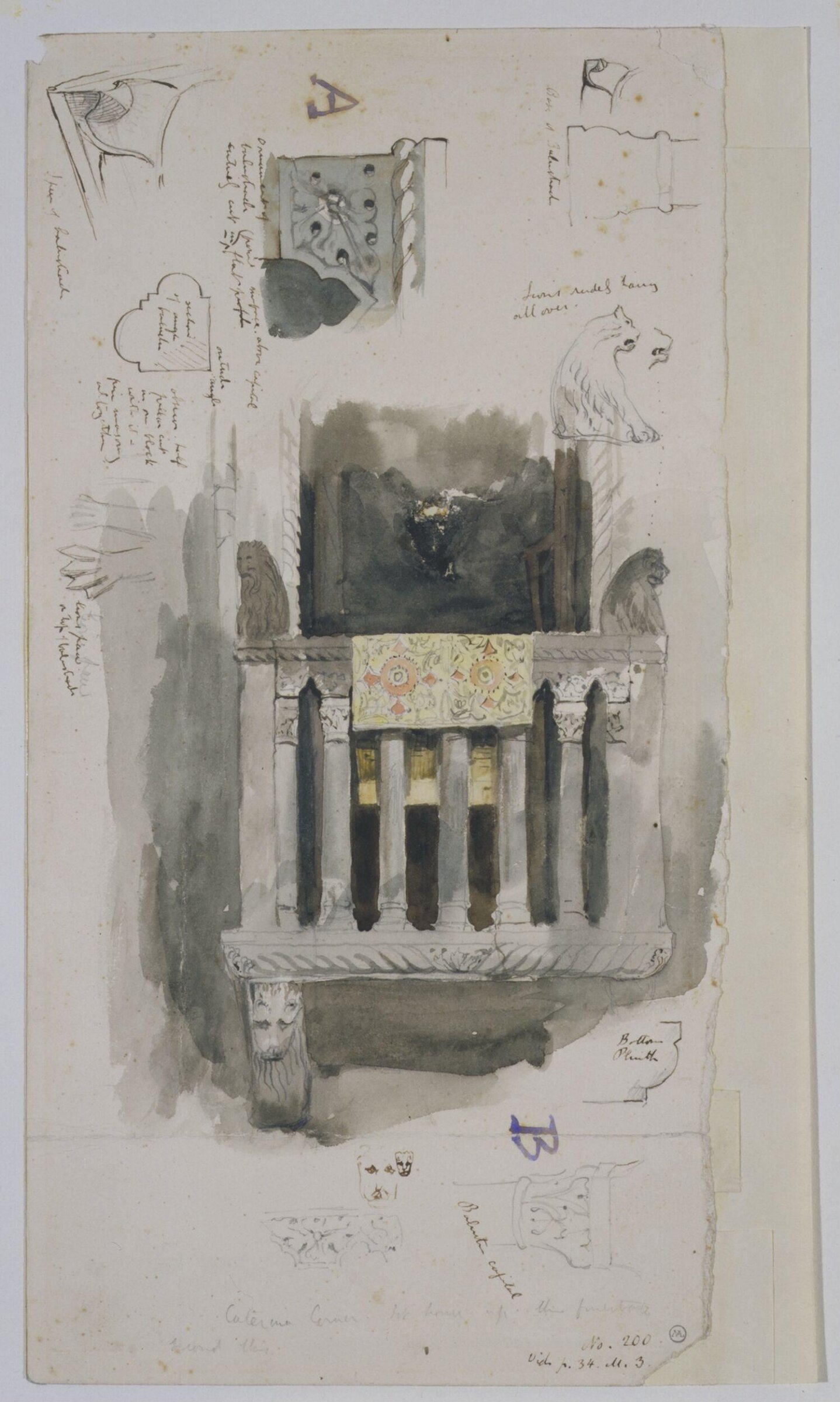
John Ruskin was an art critic as well as an artist. He advised painters to go directly to nature, 'rejecting nothing, selecting nothing'. This scene of Zermatt, Switzerland, is a carefully recorded view. Ruskin visited Switzerland in the summer of 1844 with his parents.
ヴィクトリア&アルバート博物館
作品データ
- 収蔵番号
- P.15-1921
What it shows
カタログ収録
出典
- ヴィクトリア&アルバート博物館: the museum's own open data · 8 日前に取得
- 画像: ヴィクトリア&アルバート博物館 — © Victoria and Albert Museum, London
その頃、John Ruskinの人生では
生涯をすべて見る1834–1900 · 活動地
Great Britain
late 1840 – autumn 1842
Italy with his parents: guided by George Richmond
For much of the period from late 1840 to autumn 1842 Ruskin is abroad with his parents, mainly in Italy, where George Richmond — introduced to the family by Joseph Severn, a friend of Keats — guides his study of Italian art. Back at Oxford in 1842 he sits for a pass degree and is awarded an unusual honorary double fourth-class degree in recognition of his achievements.
1843
In defence of Turner: the first volume of “Modern Painters”
The first volume of “Modern Painters” — an answer to Turner's critics — is published by Smith, Elder & Co. under the name “A Graduate of Oxford”; Ruskin controversially argues that modern landscape painters, above all Turner, surpass “Old Masters” such as Gaspard Dughet, Claude and Salvator Rosa in “truth to nature”, moral as well as material. Reviews are mixed, but Charlotte Brontë and Elizabeth Gaskell are impressed, and the book cements Ruskin's relationship with Turner.
1845
“Venice is lost to me”: restoration is destruction
Alarmed by the combined effects of decay and modernisation on the city, Ruskin writes that Venice is lost to him, and becomes convinced that architectural restoration is destruction and that the only true and faithful action is preservation and conservation.
1845
First journey without his parents
At 26 Ruskin travels without his parents for the first time to study medieval art and architecture in France, Switzerland and above all Italy: in Lucca he sees the tomb of Ilaria del Carretto by Jacopo della Quercia, which he considers the finest example of Christian sculpture; he draws inspiration from the Campo Santo in Pisa, is especially struck by Fra Angelico and Giotto in Florence, and in Venice by the mosaics of St Mark's and Tintoretto's paintings in the Scuola di San Rocco.
April 1846
The second volume of “Modern Painters”
The second volume, written on the strength of his travels, concentrates on Renaissance and pre-Renaissance artists rather than Turner and is more theoretical than the first: Ruskin links the beautiful with the divine, and critics receive it more warmly, although many find his attack on the aesthetic orthodoxy of Joshua Reynolds hard to accept. That summer he is abroad again with his father, who still hopes his son might become a poet — one of many factors raising the tension between them.