Michael Henry Spangイングランド
William Hogarth
お目にかかれますか?
はい、お客様をお迎えしています

一般公開されています。裏付けとなる出典は下に記しています。
- 確認
- 9 日前
- この状態になった日
- 2026年9月25日
- 出典
- 美術館自身の所蔵データ
About the sculpture
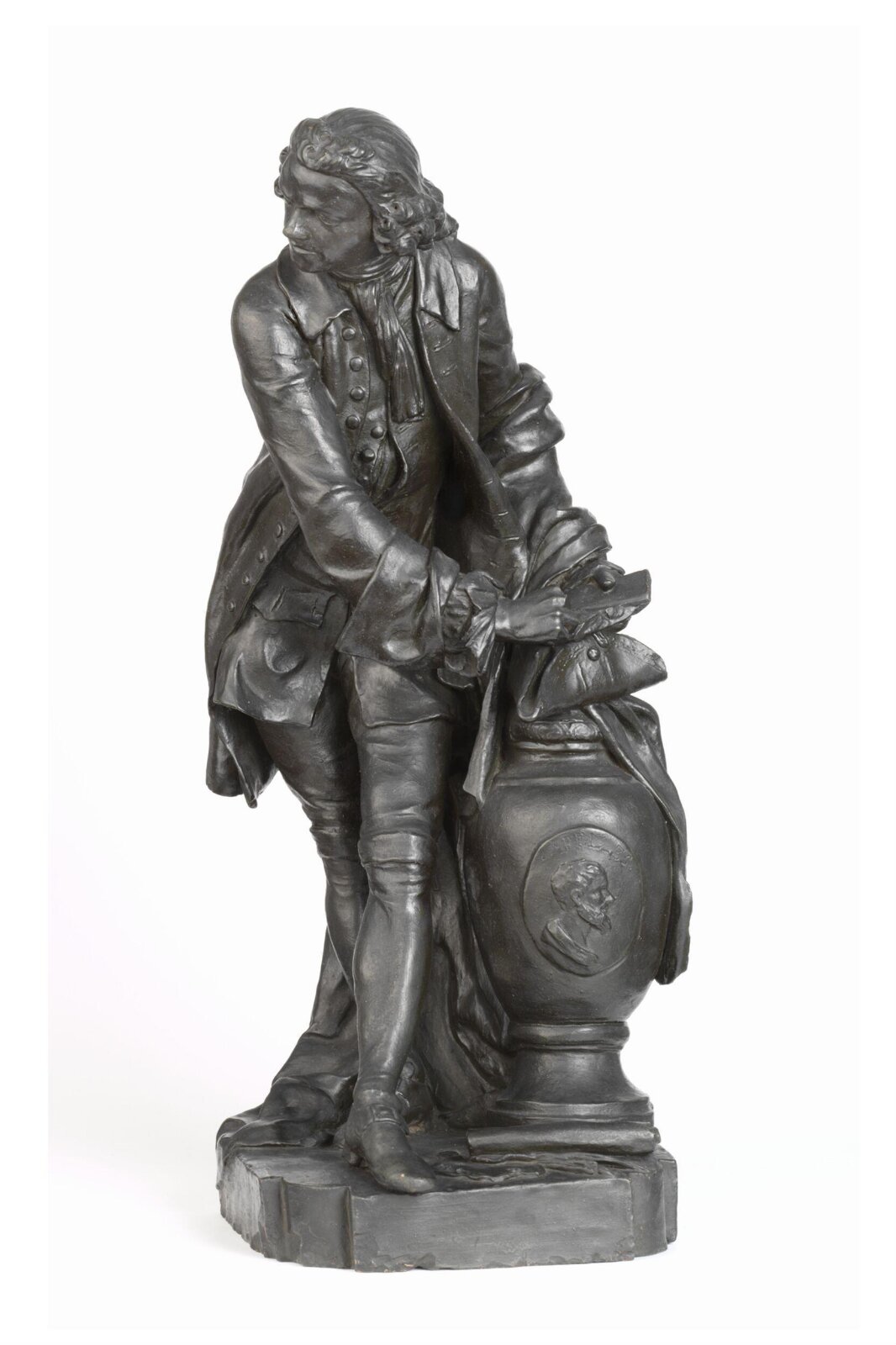
This terracotta is painted in bronze-coloured paint, so that it could function as a finished bronze statuette. It appears to be a posthumous portrait of the British painter Hogarth, perhaps for a memorial that was never executed. The urn on which the figure of Hogarth leans is inset with a medallion portrait inscribed with the name of one of the great artists of antiquity, Apelles. Other artists' tools are shown at the base of the urn, including a palette and brushes. The figure appears to be making a note or sketch in a notebook. Spang's lively figure style is related to the sculpture of Roubiliac, with whom he is known to have worked.
Read on
William Hogarth (1697-1764) was an English painter, satirist, engraver and art theorist. Hogarth's first real success came in 1732 with a series of six morality pictures, The Harlot's Progress, first painted and then engraved. The Rake's Progress and numerous other 'modern moral subjects' followed.
Little is known of the artist Spang (active 1756; d. London 1762). He was a native of Denmark, but was in England from about 1756 until his death. He made chimneypieces for the four principal rooms at Kedleston, Derbyshire in 1759, and received some London commissions, such as three statues for the front of Lord Spencer's house in St. James's, London.
ヴィクトリア&アルバート博物館
作品データ
- 収蔵番号
- 311-1885
What it shows
カタログ収録
出典
- ヴィクトリア&アルバート博物館: the museum's own open data · 9 日前に取得
- 画像: ヴィクトリア&アルバート博物館 — © Victoria and Albert Museum, London