Watercolour
お目にかかれますか?
ただいまはお迎えしていません

ヴィクトリア&アルバート博物館
ロンドン, イギリス
コレクションに属していますが、現在は展示されていません。
- 確認
- 8 日前
- この状態になった日
- 2026年9月25日
- 出典
- 美術館自身の所蔵データ
作品について
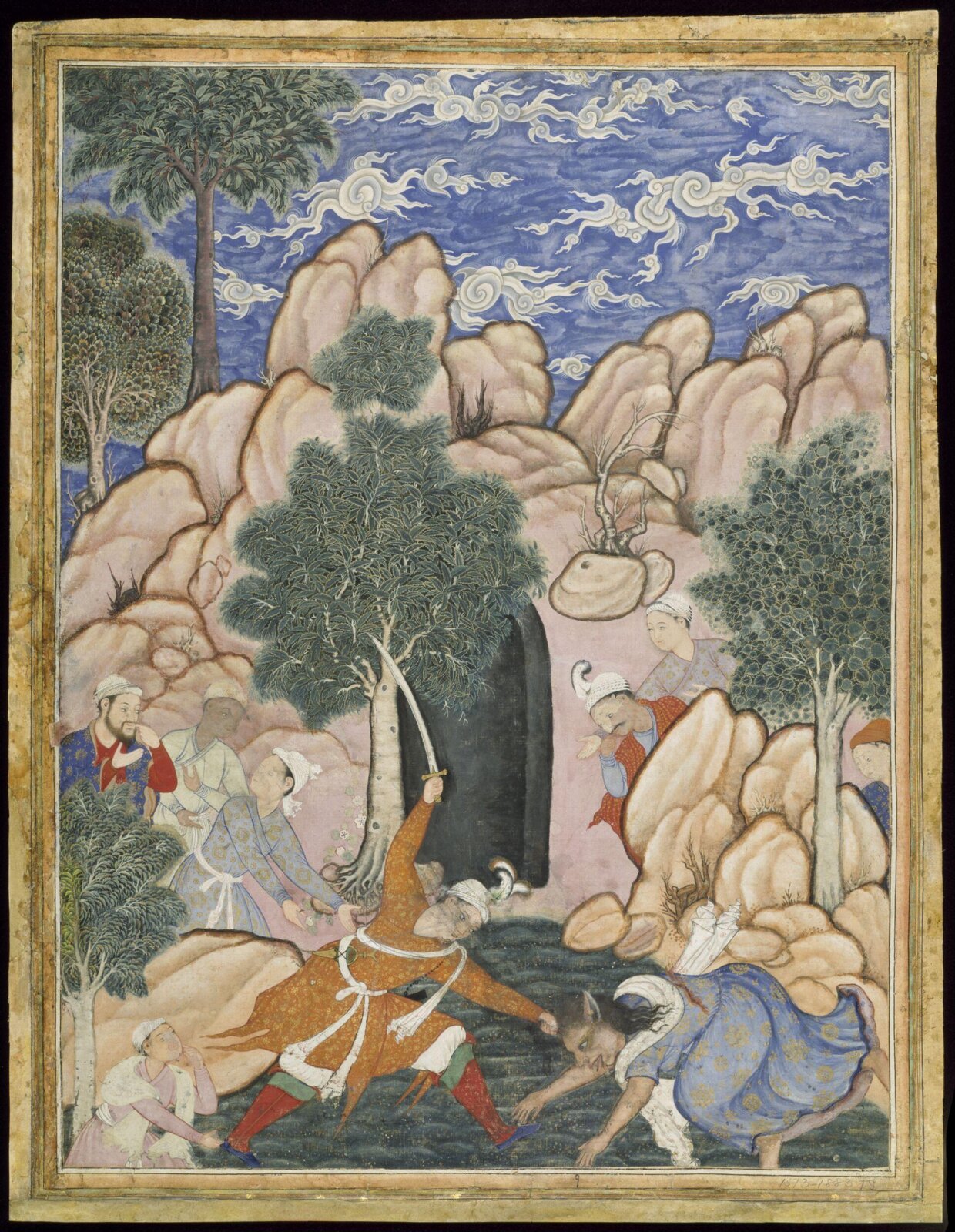
The Hamzanama, or Book of Hamza, was commissioned by the great Mughal emperor Akbar (r.1556–1605) in the mid 16th century. It is based very loosely on the life of the uncle of the Prophet Muhammad. The epic story chronicles the fantastic adventures of Hamza as he and his band of heroes fight against the enemies of Islam and against monsters, demons, dragons and sorcerers. The tales, from a long-established oral tradition, were written down by calligraphers in Persian, the language of the court, in multiple volumes. These originally had 1400 illustrations, of which fewer than 200 survive today. Work probably began in about 1562 and took 15 years to complete.
Read on
This scene, set in a rocky landscape, has not been conclusively identified. A king, distinguished by the feather aigrette in his turban, grasps a demoness by the hair and raises his sword to behead her. His companions stay behind the rocks, making conventional gestures of amazement. The blue sky is filled with stylised clouds typical of Chinese decoration and derived from Iranian painting.
ヴィクトリア&アルバート博物館
作品データ
- 収蔵番号
- IS.1513-1883
What it shows
カタログ収録
出典
- ヴィクトリア&アルバート博物館: the museum's own open data · 8 日前に取得
- 画像: ヴィクトリア&アルバート博物館 — © Victoria and Albert Museum, London