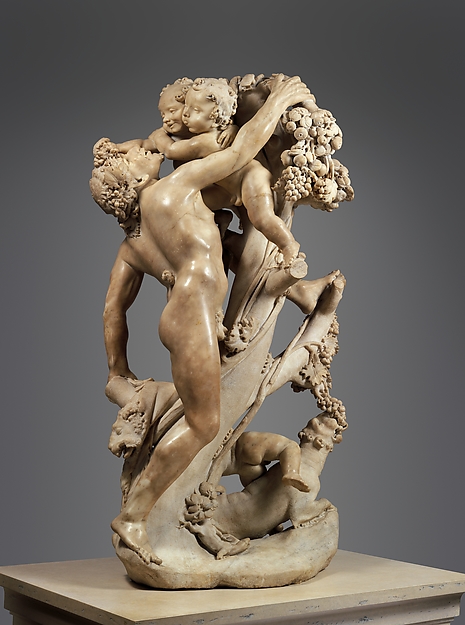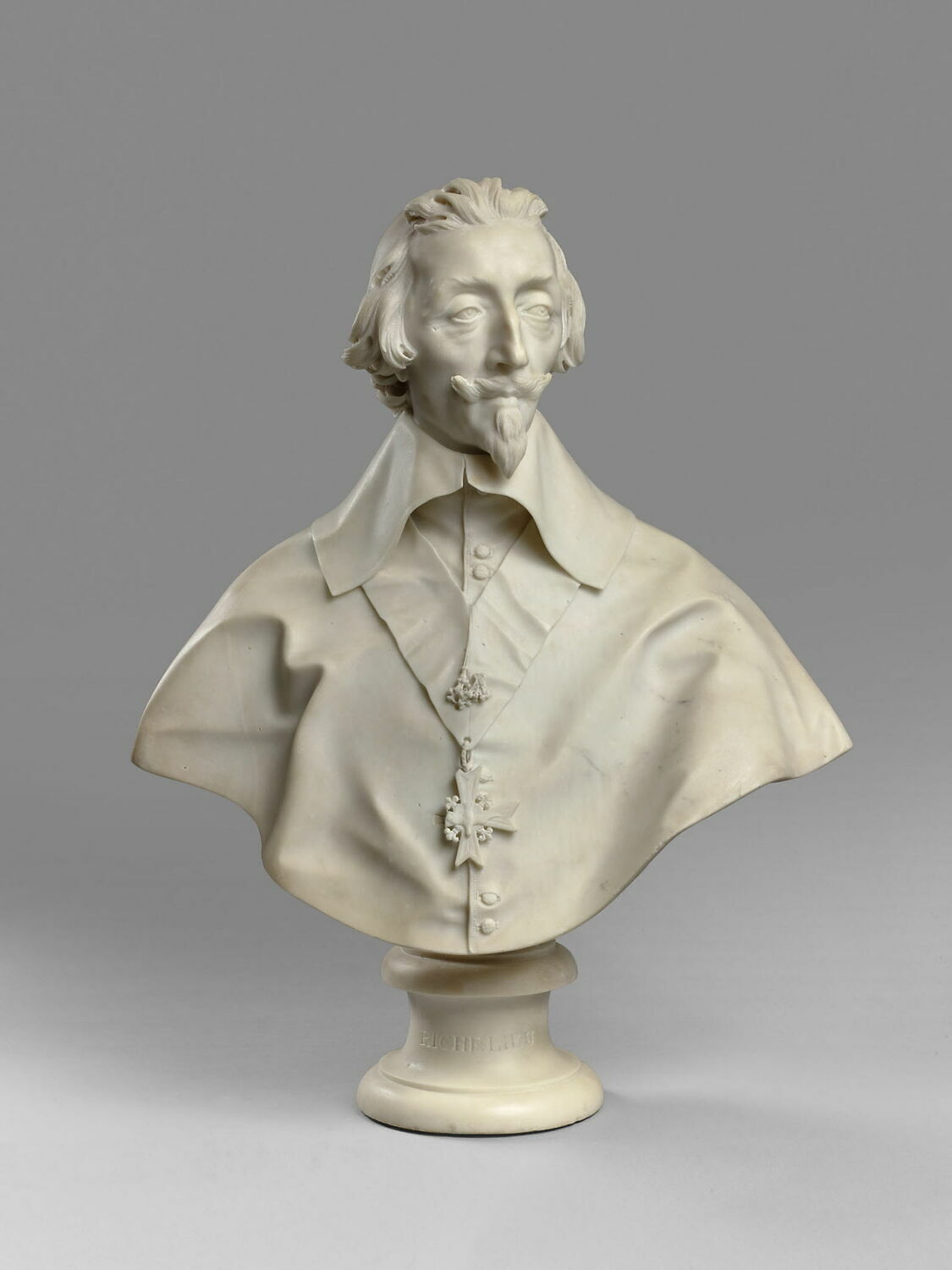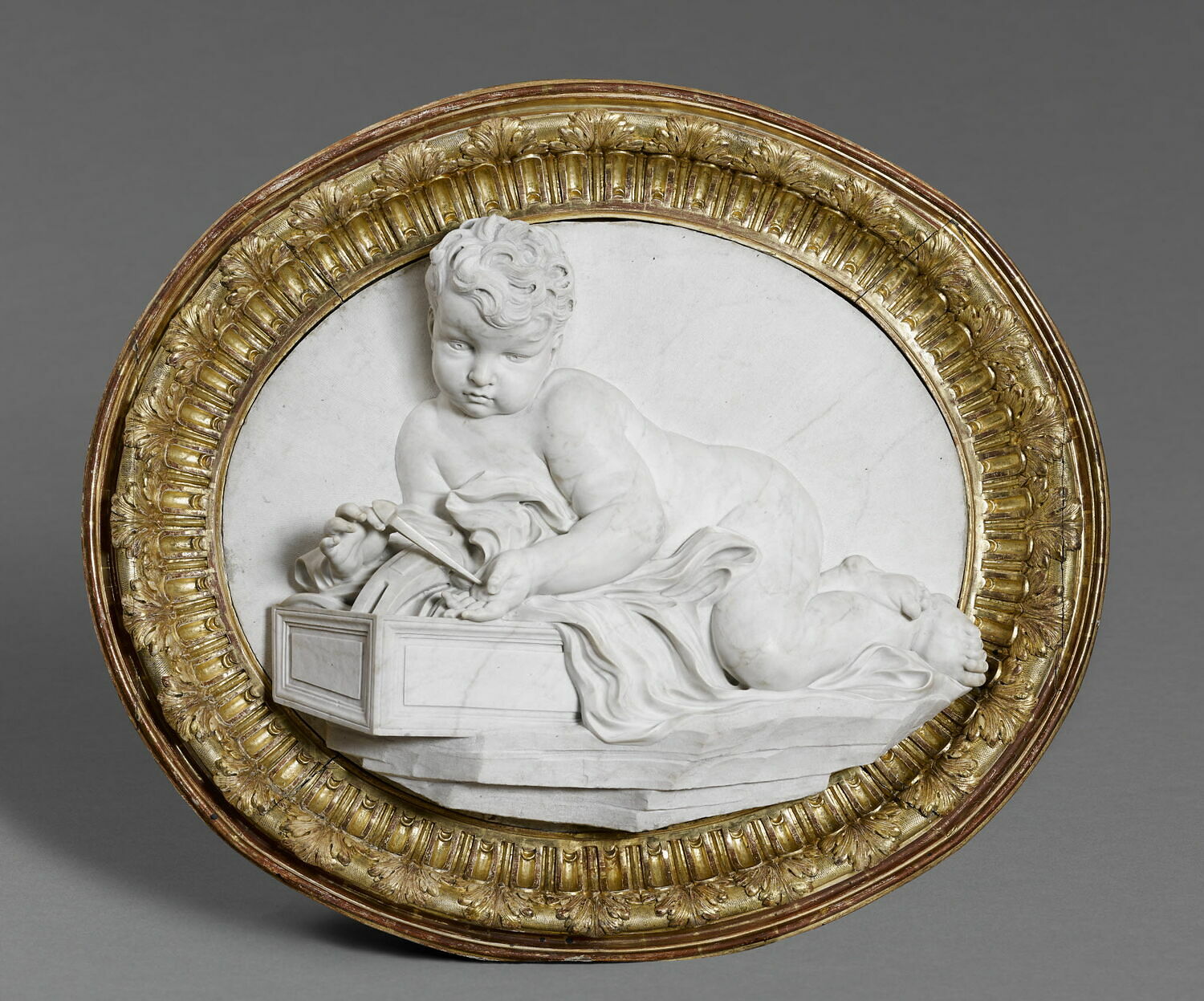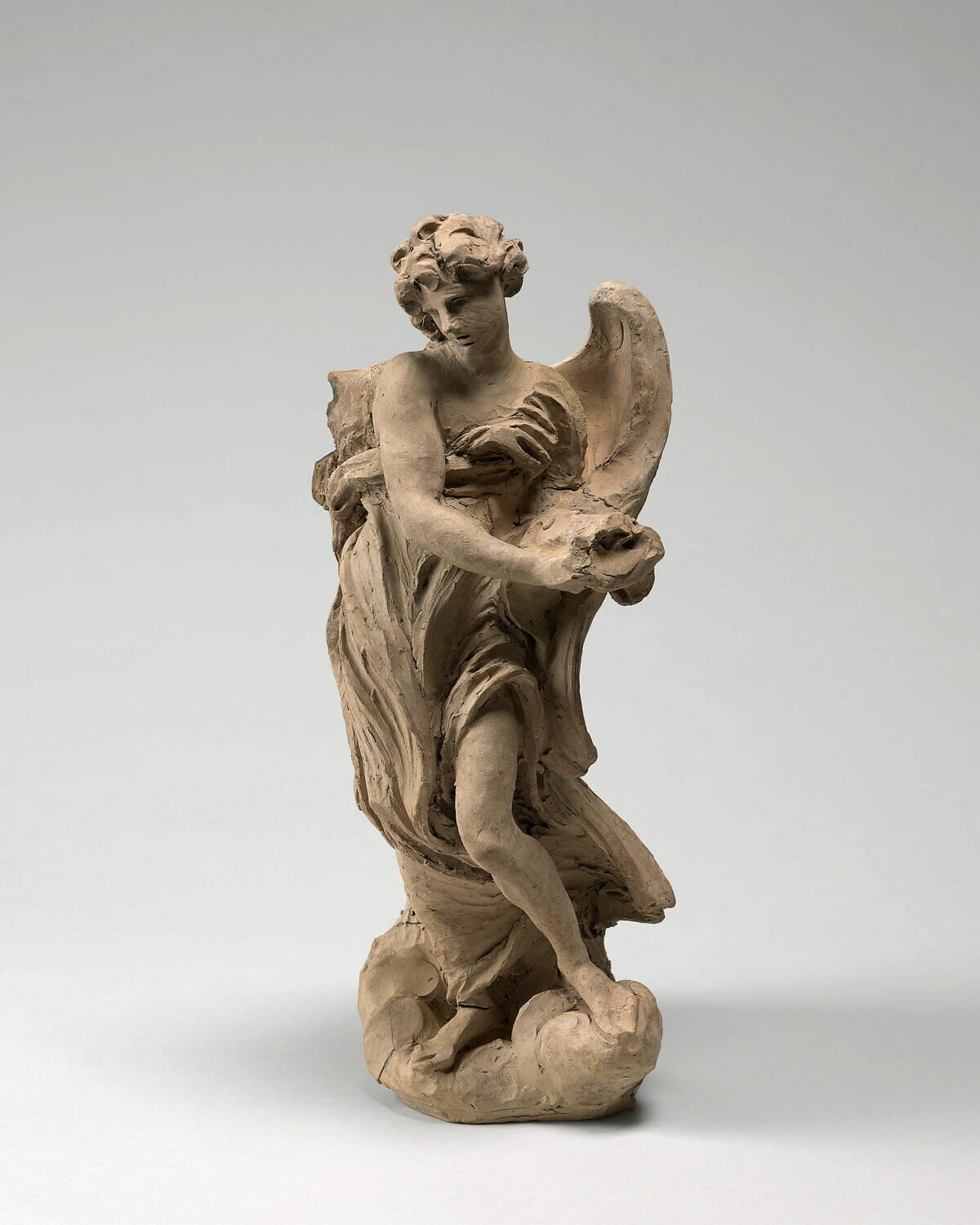
 Gian Lorenzo Berniniイタリア, 1598–1680
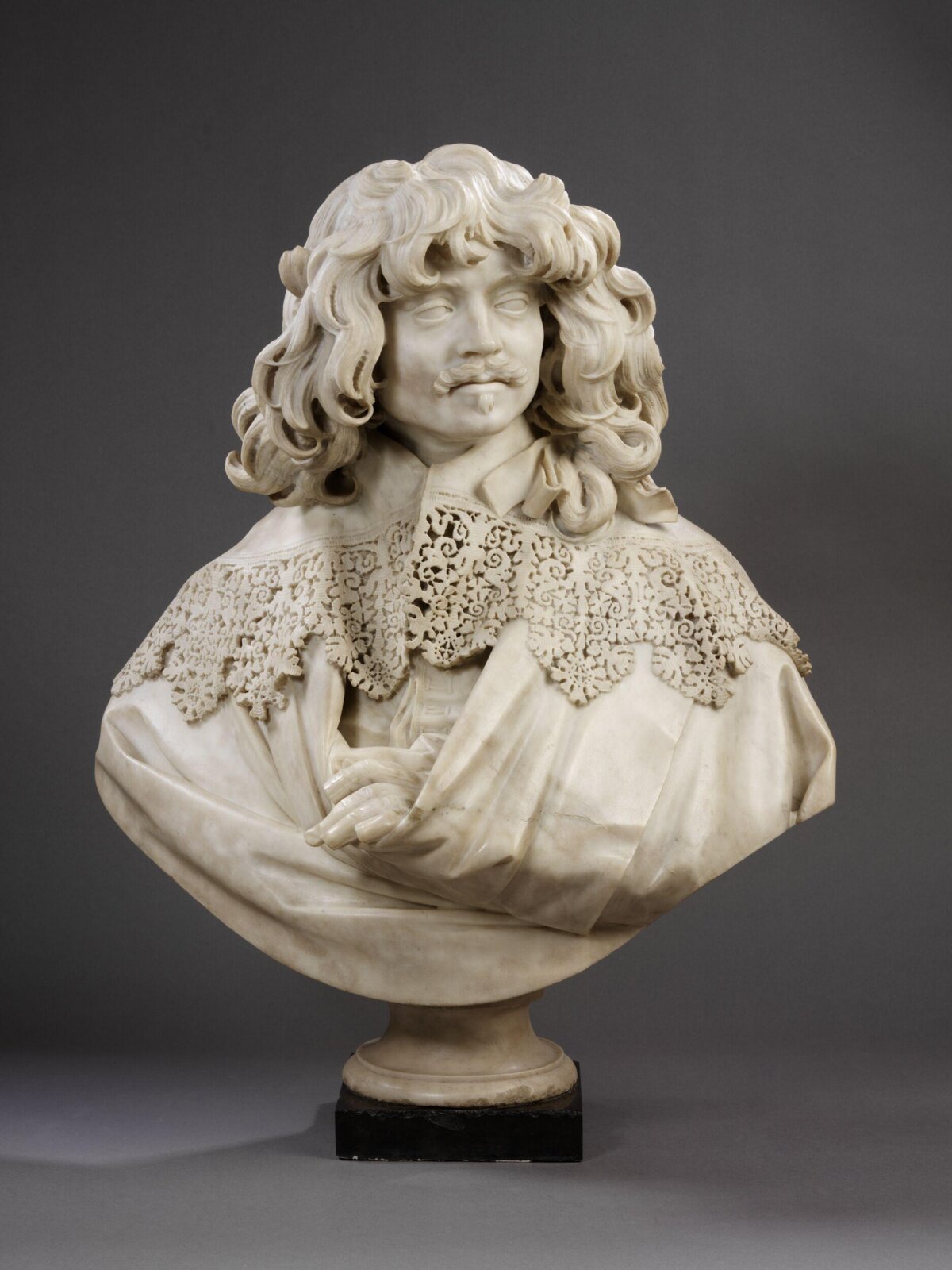
Thomas Baker (1606-1658)
お目にかかれますか?
はい、お客様をお迎えしています

一般公開されています。裏付けとなる出典は下に記しています。
- 確認
- この状態になった日
- 出典
- 美術館自身の所蔵データ
この彫刻について
Thomas Baker (1606–1658), a relatively obscure English squire from Whittingham Hall in Suffolk, succeeded in persuading Gian Lorenzo Bernini (1598-1680) — the leading sculptor in Rome at the time — to carve his portrait. The resulting bust presents Baker with dramatically voluminous curls and an elaborate Venetian lace collar. His head turns sharply to the left, while his gloved left hand emerges discreetly from beneath his cloak. Baker's smooth, youthful face, neatly groomed moustache, and self-assured expression suggest the image of a stylish, perhaps vain, gentleman eager to immortalize himself in marble at the hands of the greatest sculptor of his days.
続きを読む
This bust is remarkable not only for its virtuosity but also for its context. Unlike most sculpted portraits of the period, which were commissioned by high-ranking ecclesiastical or noble patrons, this was a private commission from a comparatively modest figure. It also holds a unique place in Bernini’s career: it is the only documented bust he created of a relatively young man, and the only surviving work by Bernini known to have arrived in Britain during the artist’s lifetime.
According to the English antiquarian George Vertue (1684–1756), Baker first travelled to Rome in 1636 to deliver a portrait of King Charles I painted by Anthony van Dyck. Bernini was then commissioned to translate the painting into marble, resulting in a bust of the king, tragically destroyed in the Whitehall Palace fire of 1698. Baker managed to commission a bust of himself from Bernini, reportedly offering a generous sum of 6,000 scudi, significantly more than the 4,000 scudi Bernini had received for the royal portrait.
In a 1638 interview with the English sculptor Nicholas Stone, Bernini explained that he accepted the commission in part to demonstrate to the British what he was capable of when working from life rather than from a painted likeness. He was well aware, however, that accepting a commission from a man of such modest social standing would displease his primary patron, Pope Urban VIII. Indeed, it did: the Pope sent his nephew, Cardinal Francesco Barberini, to order Bernini to abandon the work. According to Stone, Bernini defaced the terracotta model in response. The bust, however, was ultimately completed. Bernini may have later repaired the original model or created a new one, proceeding to carve the marble version, perhaps discreetly and with assistance to avoid further controversy. The drapery is thought to have been executed by Andrea Bolgi (1605–1656), the most skilled sculptor in Bernini’s workshop at the time, and shows more mechanical treatment. In contrast, the delicate rendering of the facial features and the intricate curls are attributed to Bernini himself.
A description of Gian Lorenzo Bernini's working method survives from his visit to France in 1665. He made numerous drawings of his sitters in action so as to get to know their movements and expressions. Working from memory, he then carved the Carrara marble block using chisels and drills. Bernini prided himself on being able to give marble the appearance of flesh. In this bust, the tool marks are particularly visible in the hair and the intricate lace.
ヴィクトリア&アルバート博物館
作品データ
- 収蔵番号
- A.63-1921
描かれているもの
カタログ収録
出典
- ヴィクトリア&アルバート博物館:美術館のオープンデータ · 11 日前に取得
- 画像: ヴィクトリア&アルバート博物館 — © Victoria and Albert Museum, London
その頃、Gian Lorenzo Berniniの人生では
生涯をすべて見る1606–1642 · 居住
House of Pietro and Gianlorenzo Bernini (Rome)
1630s
Commissions from rulers beyond Rome
In the 1630s, by then one of the foremost marble portraitists, Bernini began to receive commissions from Cardinal Richelieu, Francesco I d'Este, Duke of Modena, and Charles I of England and his queen, Henrietta Maria; the bust of Charles I was made in Rome from Van Dyck's triple portrait, while that of the queen was never begun because of the English Civil War.
1636
A commission for two bell towers for St Peter's
Eager to finish the exterior of St Peter's, Urban VIII ordered Bernini to design and build the two long-intended bell towers of the façade, whose foundations had been laid earlier by Carlo Maderno.
late 1630s
An affair with Costanza Bonarelli and her bust
Bernini had an affair with Costanza, the wife of his workshop assistant Matteo Bonucelli (Bonarelli), and at the height of the romance carved her marble bust (Bargello, Florence), apparently the first marble portrait of a non-aristocratic woman by a major artist in European history.
late 1630s
Reprisal against Costanza and pursuit of his brother
Learning that Costanza was also having an affair with his younger brother Luigi, Bernini chased him through the streets of Rome and had a servant slash her face with a razor; the servant was jailed, Costanza was jailed for adultery, and Bernini himself was exonerated by the pope.
May 1639
An arranged marriage at Urban's command
In May 1639 Bernini married the twenty-two-year-old Roman Caterina Tezio in an arranged marriage under orders from Pope Urban. They had eleven children, among them Domenico, who became his father's first biographer; afterwards, according to his early biographers, Bernini turned more sincerely to the practice of his faith.