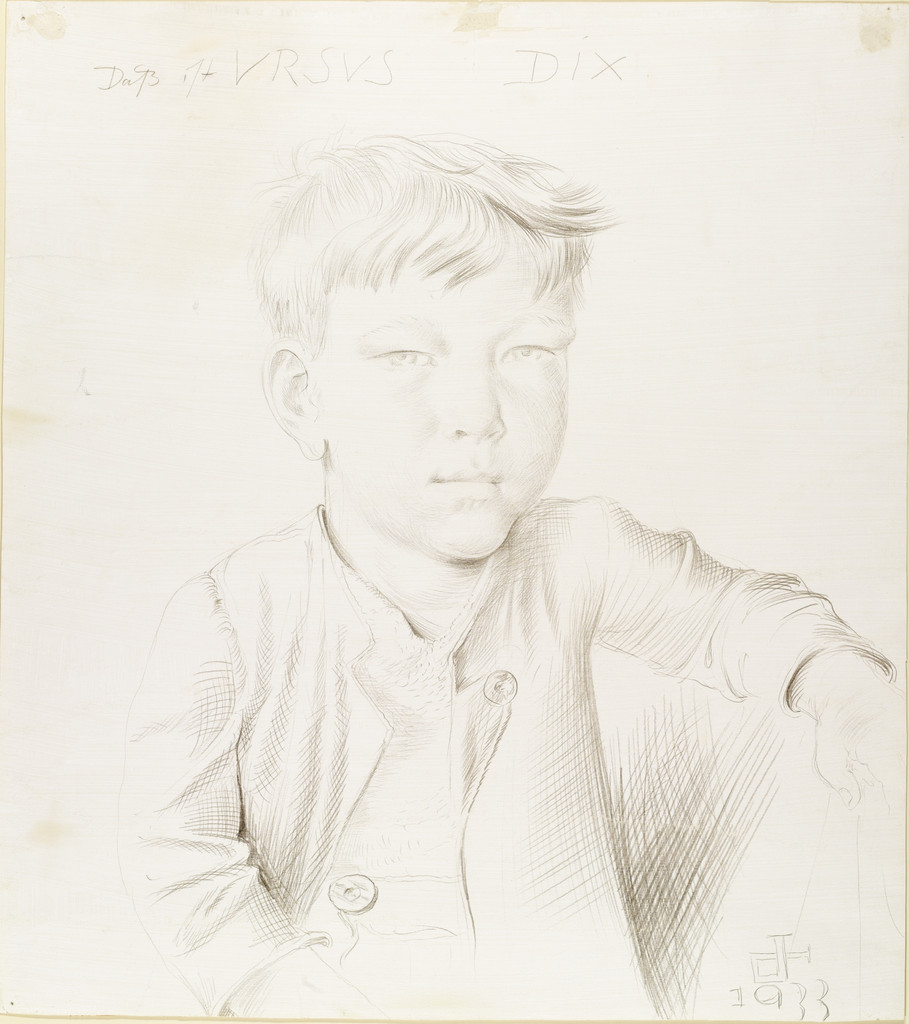
 Otto Dixドイツ, 1891–1969
This is Ursus Dix (Das ist Ursus Dix)
見られますか?
現在は展示されていません
『This is Ursus Dix (Das ist Ursus Dix)』は今どこに? 所蔵: ニューヨーク近代美術館, ニューヨーク. 現在は展示されていません. 確認 2026年9月22日.

ニューヨーク, アメリカ合衆国
コレクションに属していますが、現在は展示されていません。
- 確認
- 出典
- 美術館
作品データ
- 収蔵番号
- 258.1966
カタログ収録
出典
- ニューヨーク近代美術館
- 画像: ニューヨーク近代美術館 — © the artist or rights holder
その頃、Otto Dixの人生では
生涯をすべて見る1933
Dismissal from the Dresden Academy
Soon after the Nazi takeover, Richard Müller, on a directive from Saxony's Reichskommissar Manfred Freiherr von Killinger, dismisses Dix from his post as professor of painting at the Dresden Academy, the stated reason being that through his art he has committed a 'violation of the moral sensibilities' of the nation.
1933–1945
Compulsory membership of the Reich Chamber of Fine Arts
Like all other practising artists, Dix is forced to join the Reich Chamber of Fine Arts, a subdivision of Goebbels' Cultural Ministry, and has to promise to paint only inoffensive landscapes; he still paints an occasional allegorical painting that criticizes Nazi ideals.
1933–1945
Branded a “cultural Bolshevik”, painting in secret
In Nazi Germany Dix is classed among the representatives of 'cultural Bolshevism' and 'degenerate art'; he withdraws to the countryside, where he paints in secret.
![Young Family (Lovers) (Junge Familie [Liebespaar]), also known under the title "Homunkulus", Otto Dix, 1918](https://api.nga.gov/iiif/df009930-91ff-4d00-85c7-6a52083047ce/full/!2400,2400/0/default.jpg)







