Édouard Manetフランス, 1832–1883
笛を吹く少年
The Fif
お目にかかれますか?
不明:美術館は黙して語らず

オルセー美術館
パリ, フランス
所蔵者はわかっています。いま展示されているかどうかは美術館が公表しておらず、当て推量は私どもの流儀ではありません。
- この状態になった日
- 出典
- 美術館自身の所蔵データ
About the painting
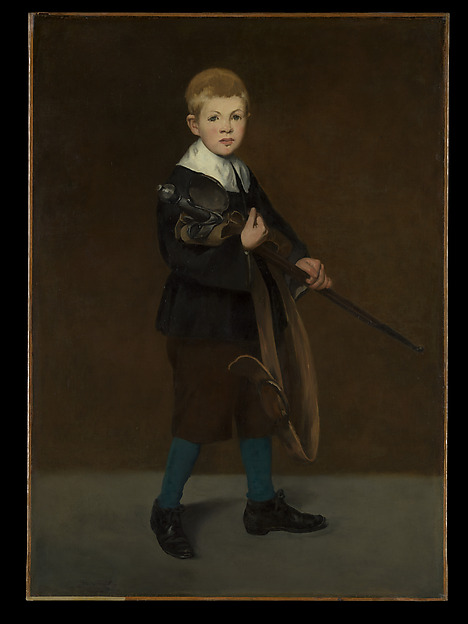
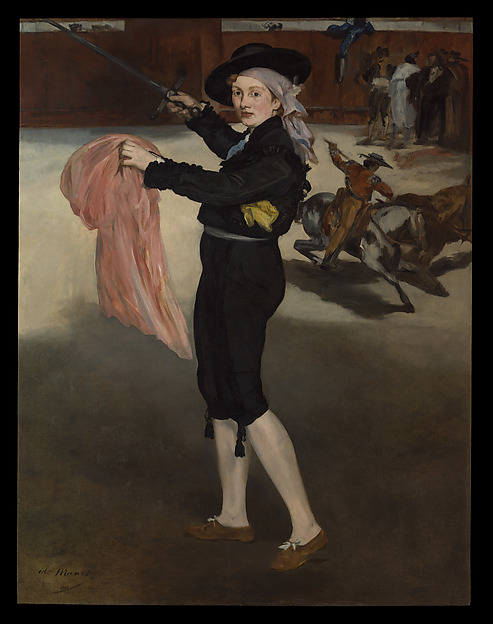
『笛を吹く少年』(Le Joueur de fifre)は、エドゥアール・マネが1866年に完成させた油絵。現在、パリのオルセー美術館に所蔵されている。
『オランピア』の不評でスペインに逃れ、ディエゴ・ベラスケスの『道化パブロ・デ・バリャドリード』(プラド美術館) を見たマネは「背景が消え、空気だけが人物を包んでいる」とアンリ・ファンタン=ラトゥールに書いた。そして、ベラスケスを「画家の中の画家」と呼んだ。また、日本の浮世絵の影響で画面が単純化されて似絵のように見える。フランス近衛軍鼓笛隊のマスコット的少年を描いたとされる。一説には、顔の部分のみ息子レオン(レオン・コエラ)(1852年1月28日 - 1927年)に似せたと言われている。
吹いている楽器は木製の横笛「ファイフ」(Fife)で、絵の指づかいを真似て吹くと「ソ」の音が鳴る。
作品データ
- 収蔵番号
- RF 1992
出典
- Wikidata · 6 日前に取得
- 画像: オルセー美術館 — Édouard Manet · Public domain · Wikimedia Commons
その頃、Édouard Manetの人生では
生涯をすべて見る1865
“Olympia” at the Salon: a scandal
In 1865 the Salon accepted “Olympia”, and the frank depiction of a self-assured prostitute created a scandal; according to Antonin Proust, only the precautions taken by the administration prevented the painting from being punctured and torn. The popular press caricatured it, while the avant-garde, including Courbet, Cézanne and Monet, championed it.
after 1865
Café Guerbois and the Batignolles group
After returning from Spain Manet became a regular at the Café Guerbois in the Batignolles quarter, where Fantin-Latour, Whistler, Duranty, Degas, Renoir, Monet and Pissarro gathered, with Émile Zola as Manet's ardent defender. After harsh reproaches from Duranty, Manet challenged him to a duel and wounded him, but they made up and remained good friends until Manet's death.
1865
Flight to Spain: El Greco, Velázquez, Goya
The persecution after “Olympia” forced Manet to flee, almost literally, to Spain, where he spent his time to good purpose, getting to know the works of El Greco, Velázquez and Goya and finding in them a justification of his own aesthetic taste.
1867
His own pavilion near the Pont de l'Alma
In 1867, during the World's Fair in Paris, Manet set up his own pavilion near the Pont de l'Alma and showed fifty of his best works of the past ten years. Possibly this step led to his works being accepted at the next two Salons.
1867
Zola defends Manet in print
In 1867 Émile Zola, who supported Manet publicly in the press, wrote that the public was not accustomed to such simple and direct translations of reality and that this luminous and serious painting interprets nature with a gentle brutality.
1868
Friendship with Berthe Morisot
In 1868 Manet became a friend and colleague of Berthe Morisot; she is credited with convincing him to attempt plein air painting, to which Camille Corot had introduced her. Through Morisot, Manet became friends with Degas, Monet, Renoir, Sisley, Cézanne and Pissarro.