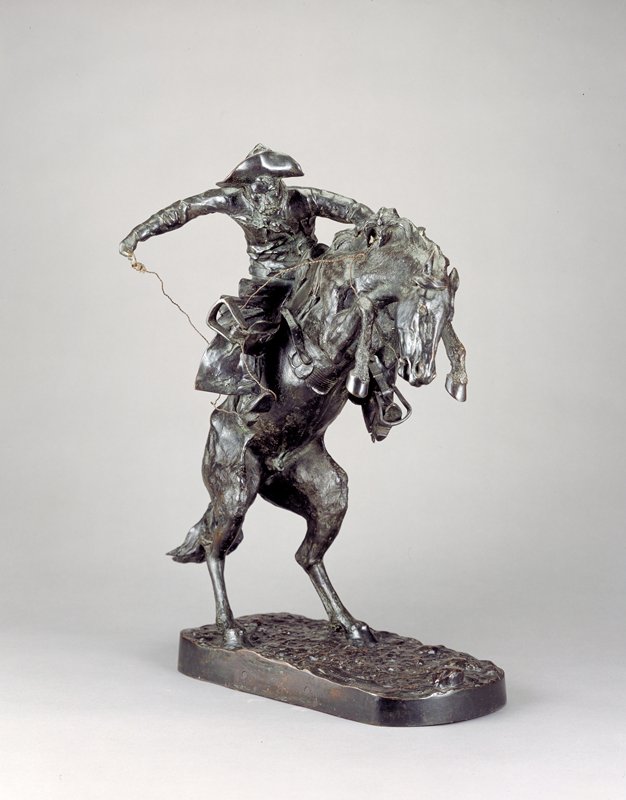
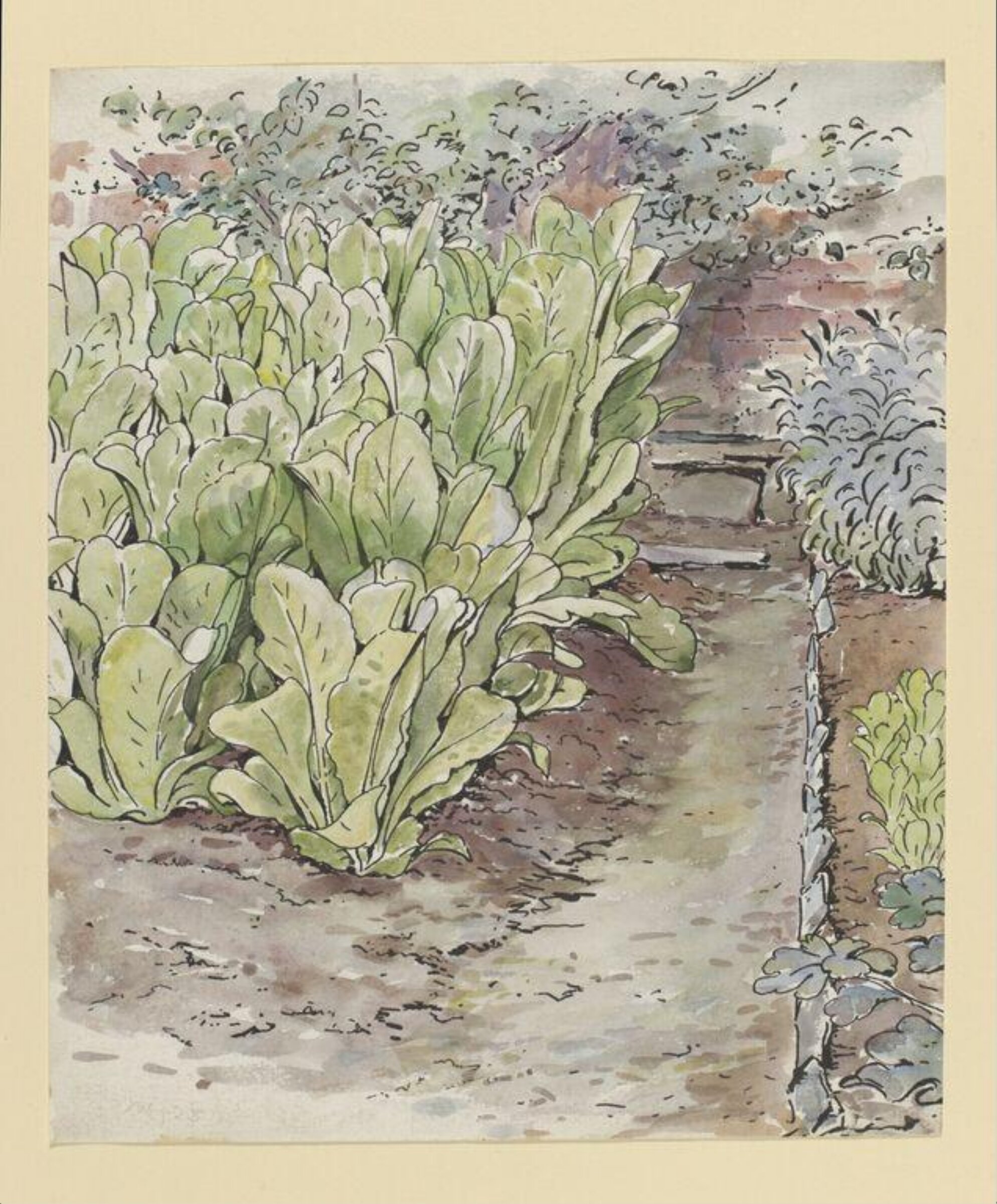
Frederic Remingtonアメリカ合衆国, 1861–1909
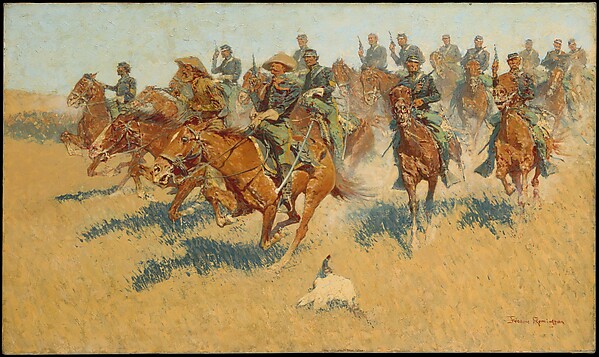
The Advance Guard
お目にかかれますか?
不明

ワシントンD.C., アメリカ合衆国
所蔵者は判明していますが、現在展示中かどうかは不明です。
- この状態になった日
- 出典
- 美術館
作品データ
- 収蔵番号
- 2005.23.3
描かれているもの
カタログ収録
出典
- スミソニアン・アメリカ美術館
- 画像: スミソニアン・アメリカ美術館 — CC0
その頃、Frederic Remingtonの人生では
生涯をすべて見る1886
To Arizona after Geronimo as an artist-correspondent
Harper's Weekly sends him to Arizona as an artist-correspondent to cover the government's war against Geronimo. He never catches up with Geronimo, but acquires many authentic artifacts for use as props later and makes photographs and sketches valuable for later paintings; to supplement the black-and-white photos he notes the true colours of the West, such as shadows of horses being a cool carmine and blue. Critics later called his palette “primitive and unnatural”, even though it was based on actual observation.
9 January 1886
His first cover under his own name in Harper's Weekly
At twenty-five he gets his first full-page cover under his own name in Harper's Weekly. Financial backing from his Uncle Bill allows him to pursue his art career and support his wife.
1887
Eighty-three illustrations for Theodore Roosevelt's book
He receives a commission to do eighty-three illustrations for Theodore Roosevelt's book Ranch Life and the Hunting Trail, to be serialized in The Century Magazine. The 29-year-old Roosevelt had a Western adventure similar to Remington's, losing money on a ranch in North Dakota the previous year. The assignment gives Remington's career a big boost and forges a lifelong connection with Roosevelt.
1889
A second-class medal at the Paris Exposition
He wins a second-class medal at the Paris Exposition: the American committee chose him to represent American painting over Albert Bierstadt, whose majestic large-scale landscapes with tiny figures of pioneers and Indians were by then considered passé. His status as the new trendsetter in Western art is solidified.
1890
At the scene of the Wounded Knee massacre
He arrives on the scene just after the massacre at Wounded Knee on the Pine Ridge Indian Reservation in South Dakota, in which about 150 Sioux, mostly women and children, were killed. In his report, “The Sioux Outbreak in South Dakota”, he hails the Army's “heroic” actions toward the Indians.
1890
First solo show at the American Art Galleries
Remington's first one-man show, twenty-one paintings at the American Art Galleries, is very well received. With success all but assured, he becomes established in society: his personality, his “pseudo-cowboy” manner of speaking and his “Wild West” reputation are strong social attractions. His biography falsely promoted some of the myths he encouraged about his Western experiences.