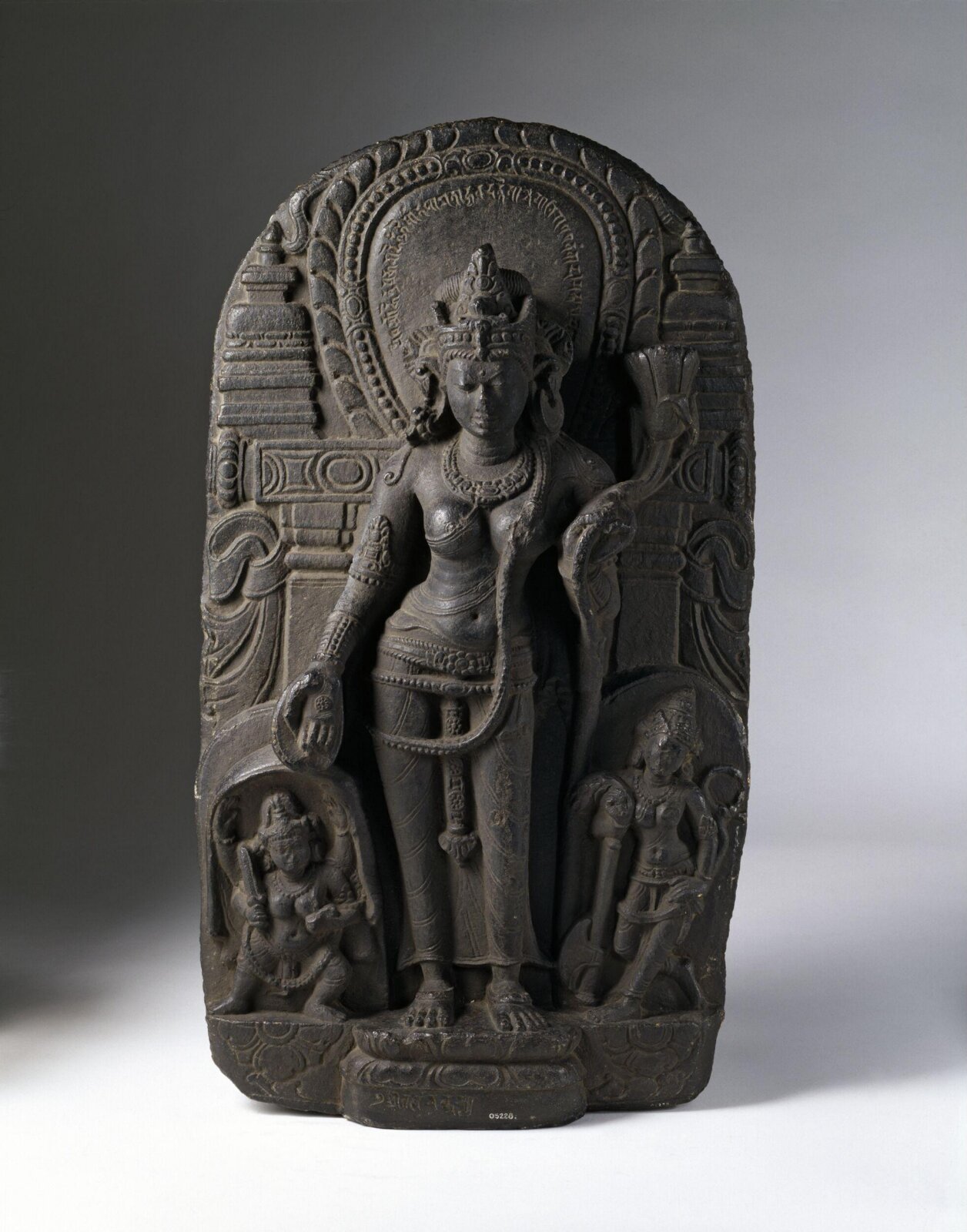
Tara
お目にかかれますか?
はい、お客様をお迎えしています

ヴィクトリア&アルバート博物館
展示室Buddhism, Room 18, The Robert H. N. Ho Family Foundation Galleries of Buddhist Artロンドン, イギリス
一般公開されています。裏付けとなる出典は下に記しています。
- 確認
- 7 日前
- この状態になった日
- 2026年9月25日
- 出典
- 美術館自身の所蔵データ
About the sculpture
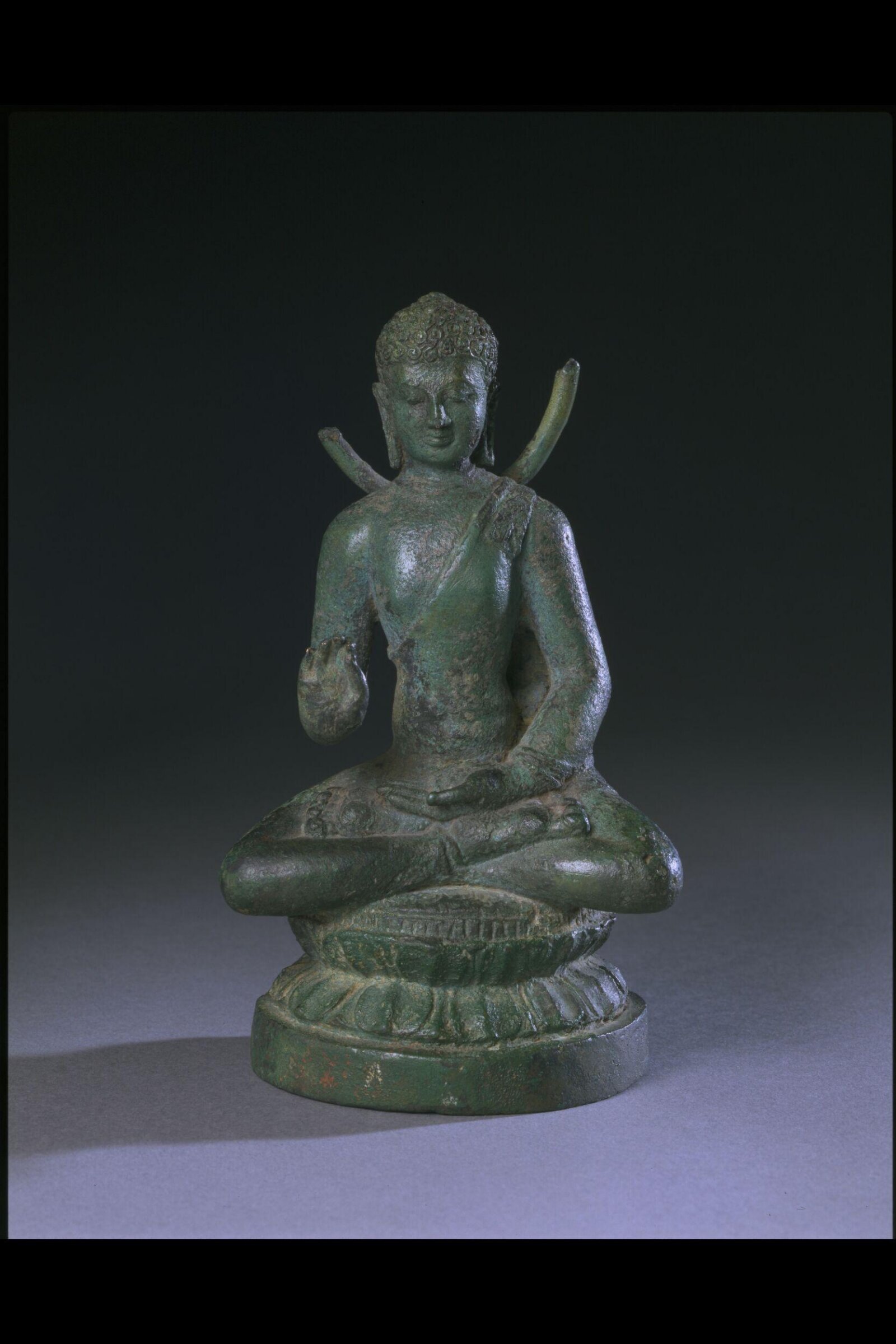
The goddess Tara (literally 'saviouress') was widely worshipped in later Buddhism as an independent deity. In particular, as a divine mother. Here she is represented holding a flowering lotus stem (padma) in one hand, whilst gesturing the granting of wishes with her open hand (varada-mudra). The Green Tara, Syama-tara, is closely identified with Avalokitesvara Padmapani, the Buddhist embodiment of compassion and she is often regarded as his female manifestation.
Read on
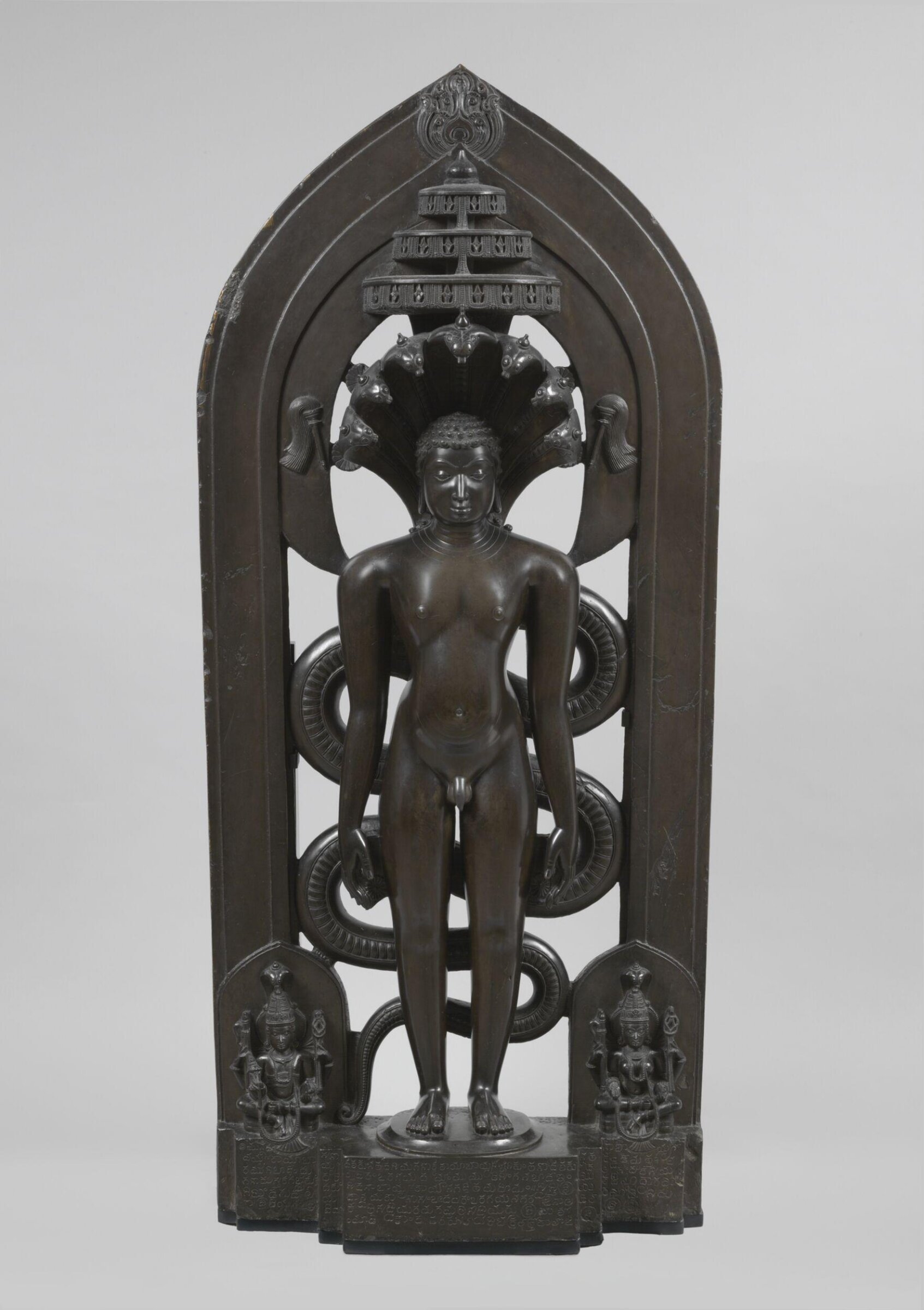
Tara is set against an elaborate backplate (prabha), which frames her figure and defines her status. She is standing against a throne back, with upright pillars, a cross-beam and a large nimbus framing her head. Behind the throne-back are two stupas that flank her. This degree of architectural elaboration underscores the way in which such icons functioned: as miniature or replica shrines and temples. This message is supported by the presence of two smaller attendant figures, both of whom appear to be guardians (dharmapalas); one leans on a axe, the other has the combative stance of a Mahakali.
A dedicatory inscription reciting the Ye Dharma Buddhist creed appears upon the nimbus. It is expressed in Sanskrit and is written in the siddhamatoka script of medieval eastern India.
ヴィクトリア&アルバート博物館
作品データ
- 収蔵番号
- 05228(IS)
What it shows
カタログ収録
出典
- ヴィクトリア&アルバート博物館: the museum's own open data · 7 日前に取得
- 画像: ヴィクトリア&アルバート博物館 — © Victoria and Albert Museum, London