Grant Woodアメリカ合衆国, 1891–1942
Sultry Night

作品について
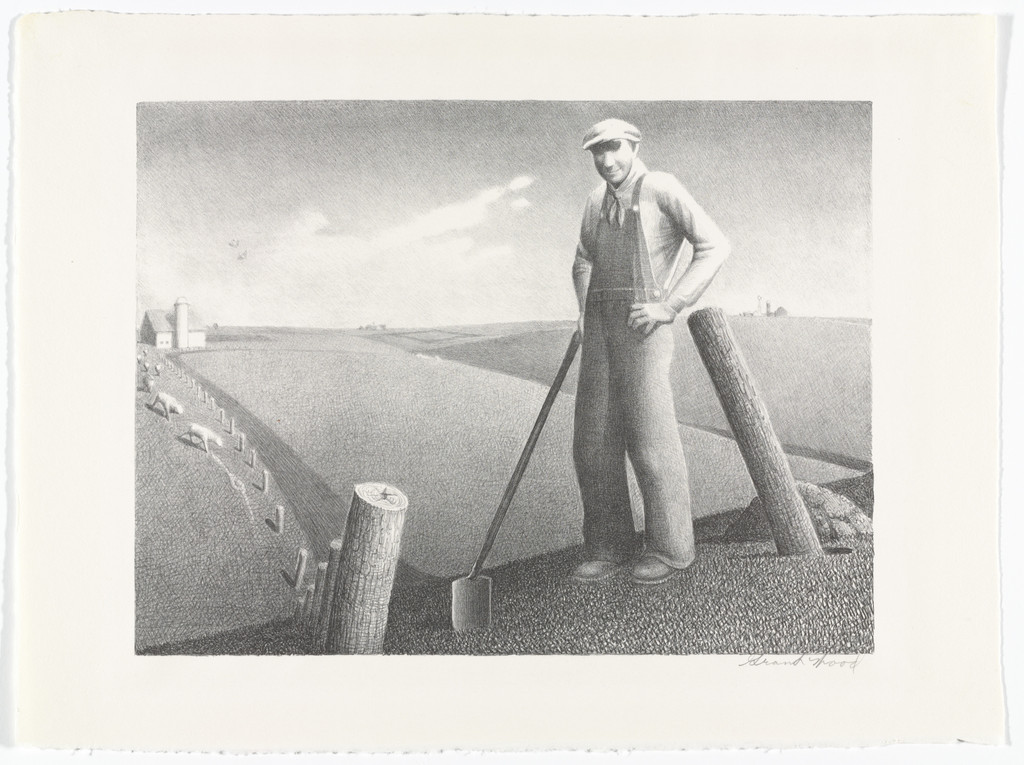
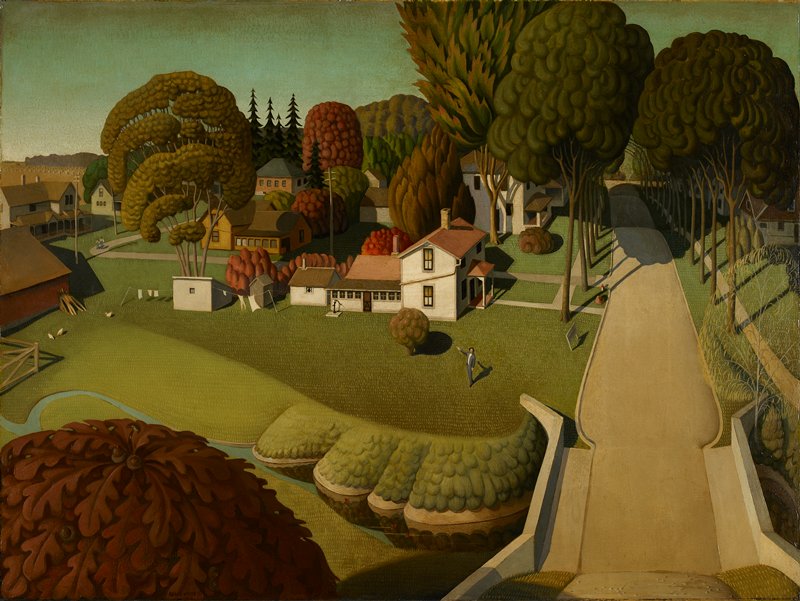
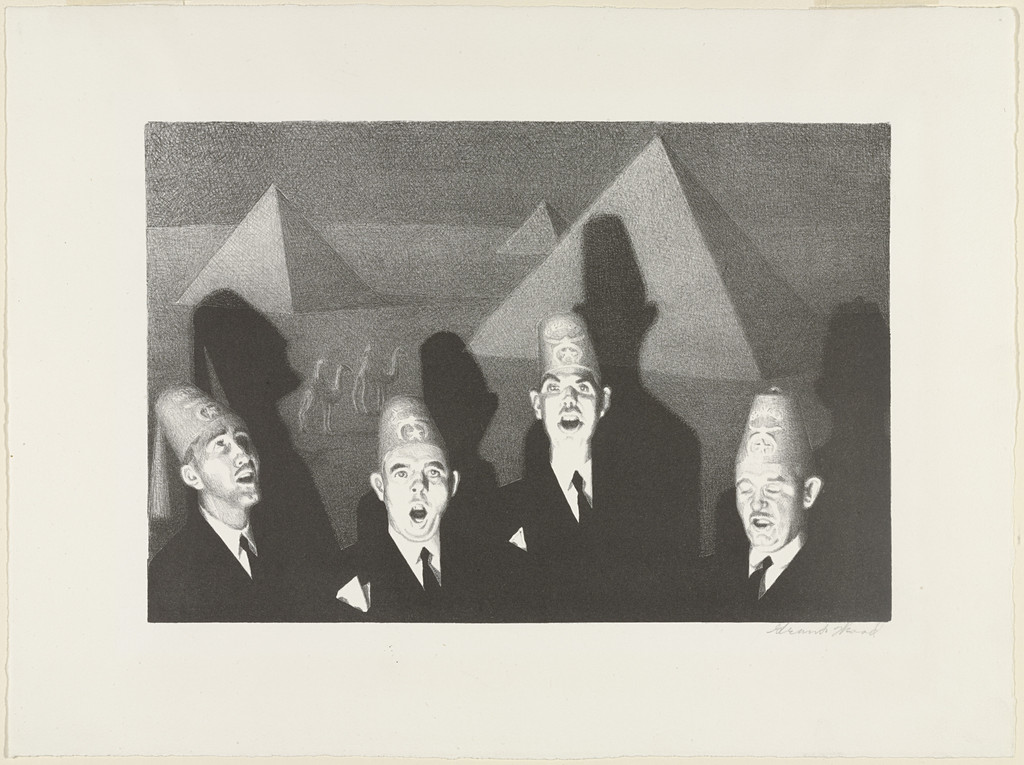
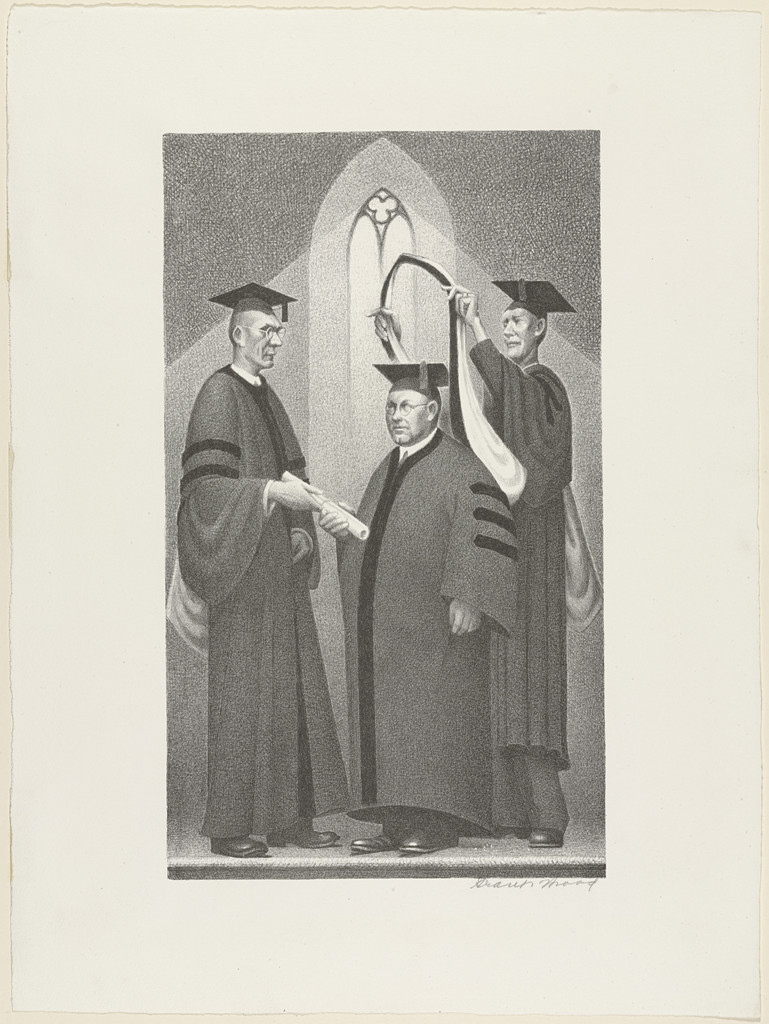
Grant Wood studied at the School of the Art Institute of Chicago between 1913 and 1916. Between 1937 and 1941, he created 19 lithographs that were published by Associated American Artist (A.A.A.), a private gallery and publisher. A.A.A had a unique approach to marketing, offering printed images of American life in large editions (usually 250 prints) at reasonable prices via mail order and through regional stores such as Marshall Field’s in Chicago.
This lithograph gained notoriety for its full-frontal portrayal of a nude man; the U.S. Post Office banned A.A.A. from mailing the print because it was considered obscene. As a result, only 100 impressions were made.
シカゴ美術館CC BY 4.0
作品データ
- 収蔵番号
- 2015.575
カタログ収録
出典
- シカゴ美術館
- 画像: シカゴ美術館 — © the artist or rights holder
その頃、Grant Woodの人生では
生涯をすべて見る1930s
Helps Curry and Benton return to the Midwest
John Steuart Curry and Thomas Hart Benton, who with Wood are the artists most associated with Regionalism, returned to the Midwest thanks to his encouragement; he helped them find teaching positions at colleges, Curry in Wisconsin and Benton in Missouri.
1934–1941
A colleague, Lester Longman, tries to get Wood fired
Wood was a closeted homosexual, and a colleague at the university, Lester Longman, made an unsuccessful attempt to have him fired on explicit moral grounds and for his advocacy of regionalism. The university administration dismissed the allegations.
1934–1941
Mentor to students, among them Elizabeth Catlett
At the university Wood supervised mural-painting projects, mentored students including Elizabeth Catlett, produced works of his own and became a key part of the university’s cultural community.
1935–1938
Marriage to Sara Sherman Maxon
From 1935 to 1938 Wood was married to Sara Sherman Maxon; friends considered the marriage a mistake for him.
1940
Hired to depict the filming of “The Long Voyage Home”
In 1940 Wood and eight other prominent American artists were hired to document and interpret dramatic scenes and characters during the production of “The Long Voyage Home”, a film adaptation of Eugene O’Neill’s plays.
1941
Growing health problems; the end of his teaching
Wood’s teaching at the University of Iowa School of Art ended in 1941; he would have returned as a professor if not for his growing health problems.

.jpg?width=1280)