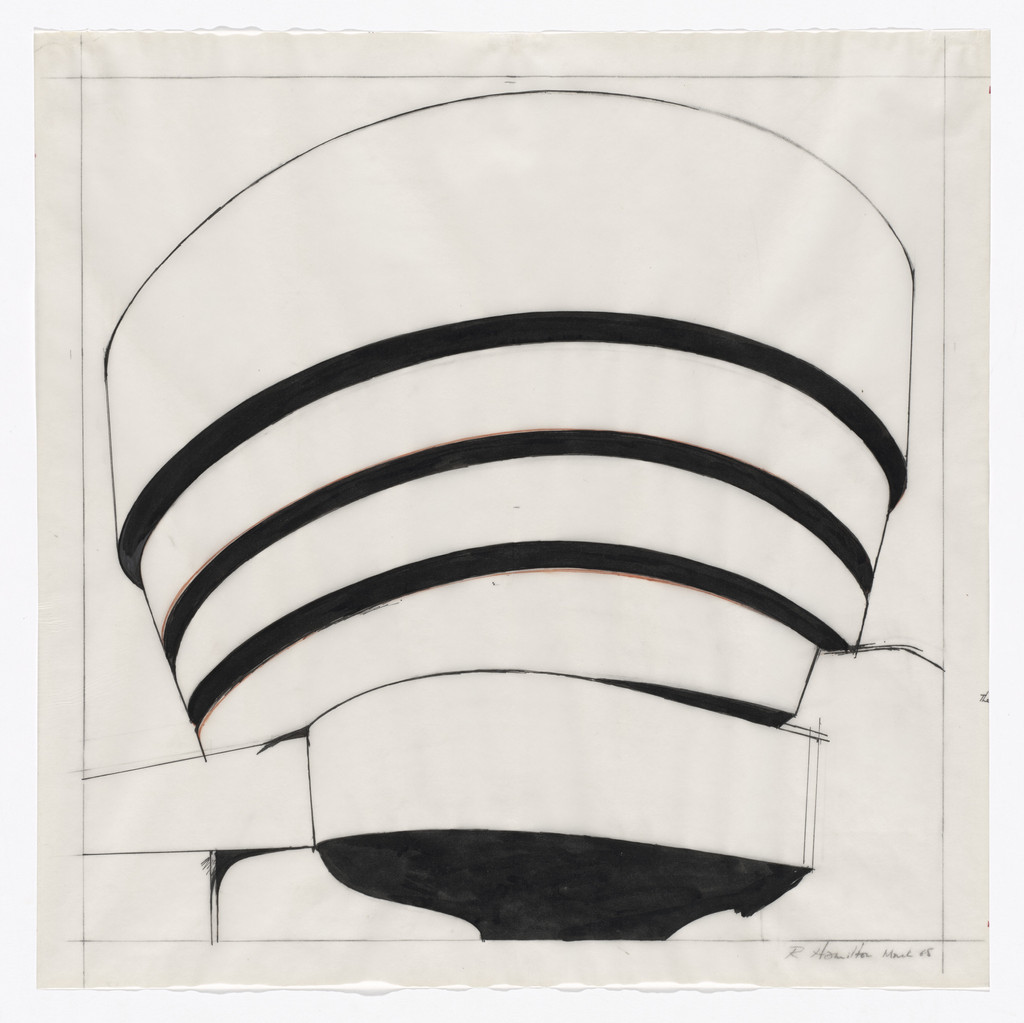
 Richard Hamiltonイングランド, 1922–2011
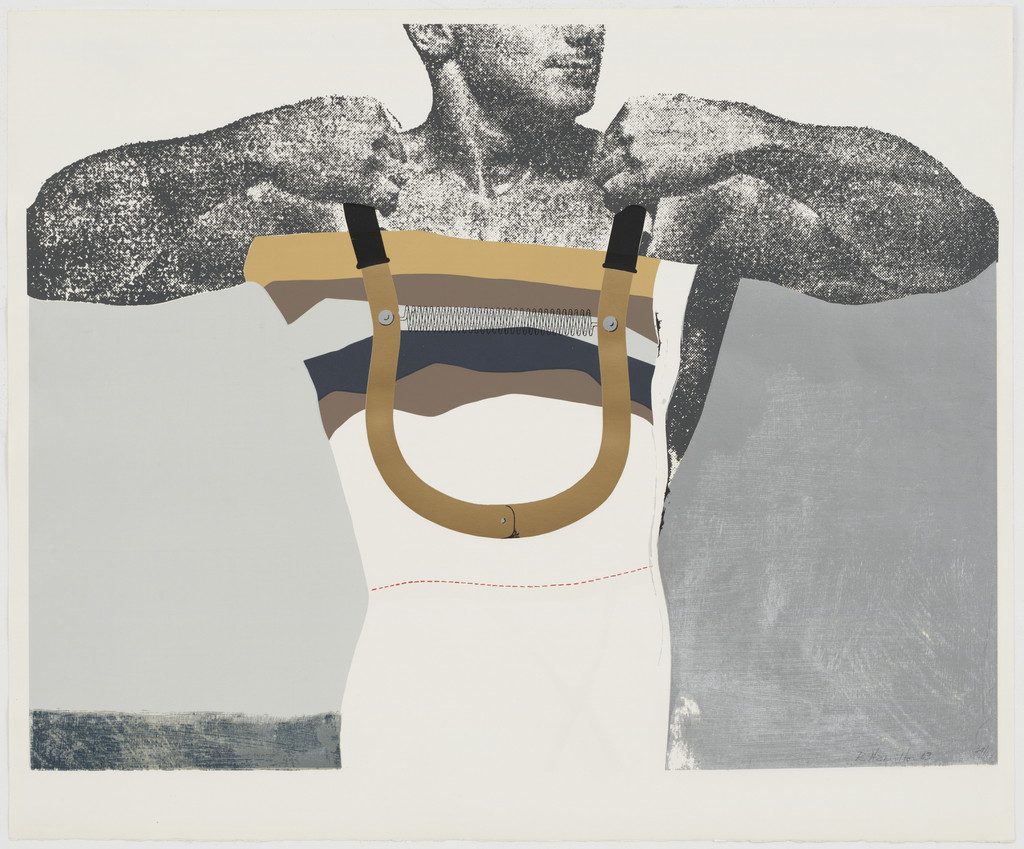
Study for The Solomon R. Guggenheim
見られますか?
現在は展示されていません
『Study for The Solomon R. Guggenheim』は今どこに? 所蔵: ニューヨーク近代美術館, ニューヨーク. 現在は展示されていません. 確認 2026年9月22日.

ニューヨーク, アメリカ合衆国
コレクションに属していますが、現在は展示されていません。
- 確認
- 出典
- 美術館
作品データ
- 収蔵番号
- 15.1967
カタログ収録
出典
- ニューヨーク近代美術館
- 画像: ニューヨーク近代美術館 — © the artist or rights holder
その頃、Richard Hamiltonの人生では
生涯をすべて見る1950s–1966
Teaches in Newcastle at Pasmore’s invitation
Through Penrose he meets Victor Pasmore, who gives him a teaching post in the Fine Art Department of Durham University at Newcastle upon Tyne, which lasts until 1966 (from 1952 to 1966 he also teaches at the Central School of Art and Design). Among his students are Rita Donagh, Mark Lancaster, Tim Head, Roxy Music founder Bryan Ferry and Ferry’s visual collaborator Nicholas de Ville; Hamilton described Ferry as “his greatest creation.”
1950–2010 · 活動地
Solingen
early 1960s
Rescuing Schwitters’s Merzbau
In the early 1960s he receives an Arts Council grant to investigate the condition of Kurt Schwitters’s Merzbau in Cumbria; the research eventually leads him to organize the work’s preservation by relocating it to the Hatton Gallery at Newcastle University.
1963
First trip to the US: Duchamp in Pasadena
Partly to recover from his loss, he travels to the United States for the first time for a retrospective of Marcel Duchamp’s work at the Pasadena Art Museum, where he meets other leading pop artists and is befriended by Duchamp.
from the mid-1960s
Robert Fraser and the “Swingeing London” series
From the mid-1960s he is represented by Robert Fraser, and produces a series of prints, “Swingeing London,” based on the arrest of Fraser and Mick Jagger for possession of drugs. In 1969 he discusses the series, and his preoccupation with mass media, through a selection of his own work in a documentary by James Scott.
1966
The first British Duchamp retrospective
He curates the first British retrospective of Duchamp’s work; his familiarity with the Green Box enables him to make copies of “The Large Glass” and other glass works too fragile to travel. The exhibition is shown at the Tate Gallery.