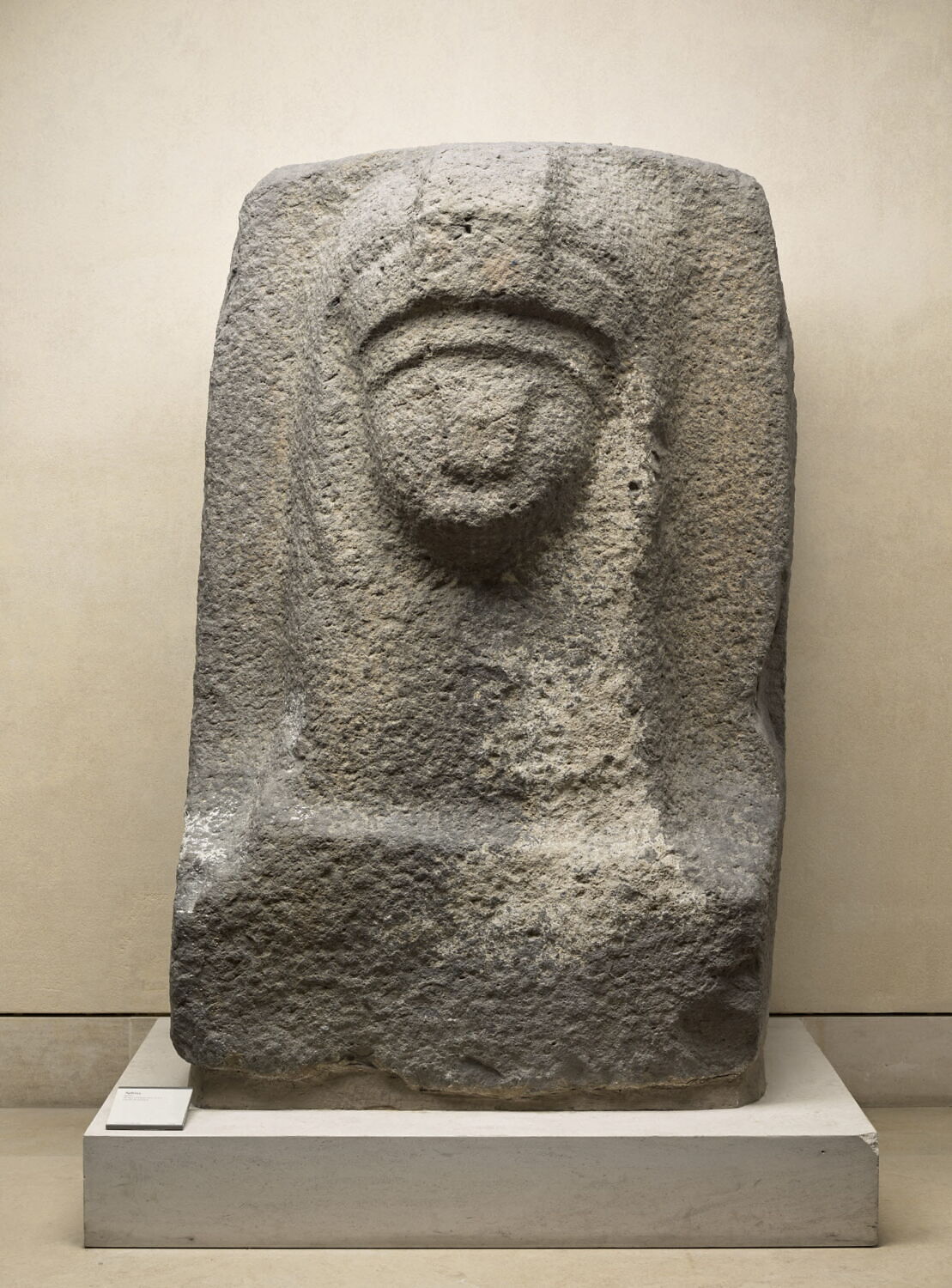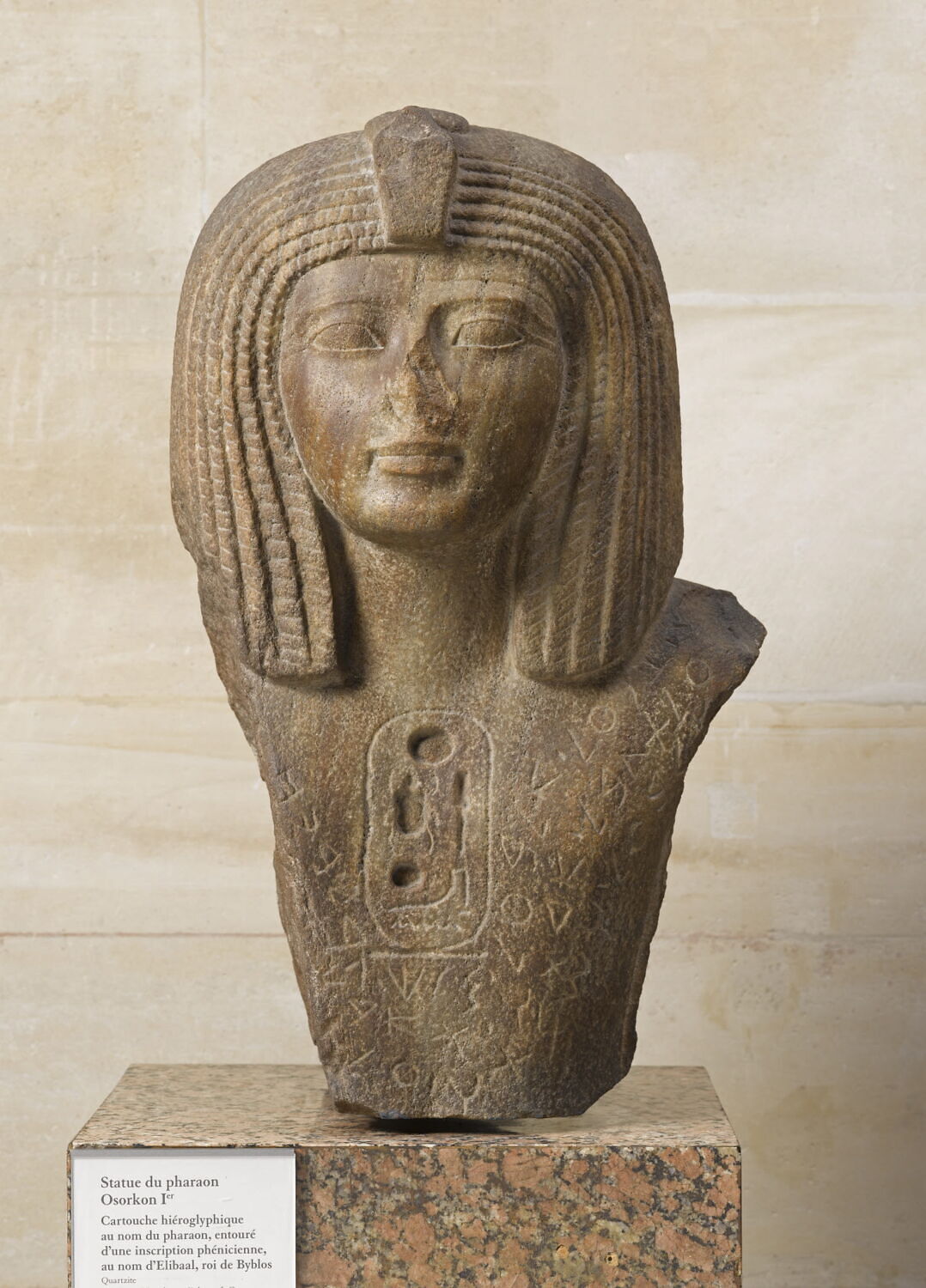
Statue d'Osorkon Ier
お目にかかれますか?
不明:美術館は黙して語らず

ルーヴル美術館
パリ, フランス
所蔵者はわかっています。いま展示されているかどうかは美術館が公表しておらず、当て推量は私どもの流儀ではありません。
- この状態になった日
- 2026年9月26日
- 出典
- 美術館自身の所蔵データ
About the sculpture
The Osorkon Bust, also known as the Eliba'l Inscription, is a bust of Egyptian pharaoh Osorkon I, discovered in Byblos (in today's Lebanon) in the 19th century. Like the Tabnit sarcophagus from Sidon, it is decorated with two separate and unrelated inscriptions – one in Egyptian hieroglyphics and one in Phoenician script. It was created in the early 10th century BC, and was unearthed c. 1881, very likely in the Temple of Baalat Gebal.
The Egyptian writing is the prenomen of Osorkon, and the Phoenician is a dedication to Elibaal, the king of Byblos.
The details of the find were published in by French archaeologist René Dussaud in 1925.
The bust is made of quartzite, and is 60 cm × 36 cm × 37.5 cm.
作品データ
- 収蔵番号
- AO 9502
カタログ収録
出典
- ルーヴル美術館: the museum's own open data · 4 日前に取得
- 画像: ルーヴル美術館 — © 2008 GrandPalaisRmn (musée du Louvre) / Franck Raux