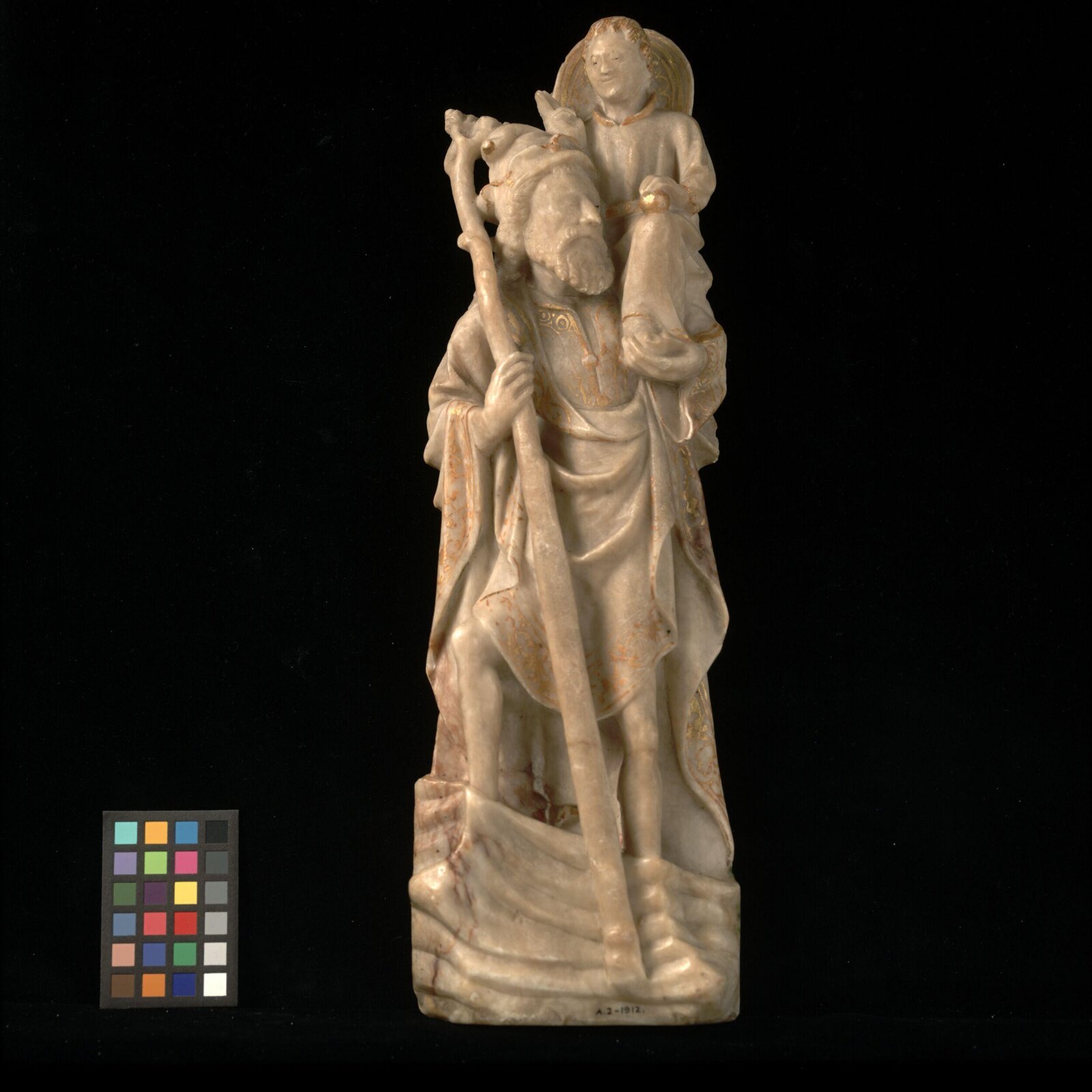
St Christopher
お目にかかれますか?
はい、お客様をお迎えしています

ヴィクトリア&アルバート博物館
展示室Sculpture, Room 111, The Gilbert Bayes Galleryロンドン, イギリス
一般公開されています。裏付けとなる出典は下に記しています。
- 確認
- 8 日前
- この状態になった日
- 2026年9月25日
- 出典
- 美術館自身の所蔵データ
About the sculpture
There are two sorts of alabaster. Calcite alabaster is very hard and was used in ancient times. This object is made of gypsum alabaster which is a fine-grained, soft and smooth stone. Although at first glance it looks a little like marble, which it was intended to imitate, it was much easier to carve due to its softness, and alabaster objects were therefore significantly cheaper to produce. It probably originated in the large deposits found in Britain, in the Midlands, which were extensively worked from the 14th century.
England was a major centre for the production of objects such as this one. During period, they were exported in very large numbers to Europe where they survive, unlike many examples which remained in England and were destroyed or greatly damaged during the Reformation. This particular object depicts a Saint.
Read on
Saints are the heroes and heroines of Christian faith. In the 14th and 15th centuries, they were a popular subject for alabaster carvings. Religious themes penetrated private life, so devotional images of saints were sculpted not only for church interiors, but also for individuals to contemplate within the privacy of their homes. Christopher was a giant of superhuman strength who carried Christ across a difficult river. He became the patron saint of travellers and was invoked against plagues, sudden death, water and storms. This carving may be a figure from an altarpiece, or alternatively a single devotional piece for a wealthy household.
ヴィクトリア&アルバート博物館
作品データ
- 収蔵番号
- A.2-1912
What it shows
カタログ収録
出典
- ヴィクトリア&アルバート博物館: the museum's own open data · 8 日前に取得
- 画像: ヴィクトリア&アルバート博物館 — © Victoria and Albert Museum, London