ART WIKI32,963 点が展示中
地図コレクション作家美術館展覧会ジャーナル
ログイン

ART WIKI

名画の居場所と、扉の開く時刻。

所蔵館:J・ポール・ゲティ美術館、アムステルダム国立美術館、ヴィクトリア&アルバート博物館、エルミタージュ美術館、クリーブランド美術館、ゲティ・ヴィラ、コペンハーゲン国立美術館、シカゴ美術館、スミソニアン・アメリカ美術館、スミソニアン国立アジア美術館、トレチャコフ美術館、ナショナル・ギャラリー、ニューヨーク近代美術館、ハーシュホーン博物館と彫刻の庭、ハーバード美術館群、プーシキン美術館、ホイットニー美術館、ミネアポリス美術館、メトロポリタン美術館、ルーヴル美術館、ロシア美術館、国立肖像画美術館、ロシア博物館資料国家目録(274館)、Europeana(19館)、ウィキデータ(6館)、Paris Musées(12館)、Joconde(フランス文化省の美術館データベース)(495館)。画像の権利は各権利者に帰属します。

ご案内

  • 地図
  • 検索
  • コレクション
  • 名作
  • 現在展示中
  • 作家

その他

  • 美術館・ギャラリー
  • 展覧会
  • ジャーナル
  • データの出どころ
  • プライバシーとCookie
ホーム地図カタログ
  1. コレクション/
  2. ハーバード美術館群/
  3. Squirrels and Grapevine
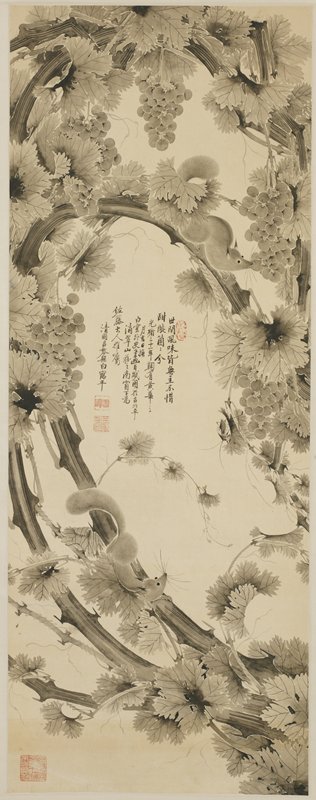
Squirrels and Grapevine, Bai Haonian, dated to 1906
BBai Haonian中国

Squirrels and Grapevine

dated to 1906 · Painting

お目にかかれますか?

はい、お客様をお迎えしています

ハーバード美術館群

ケンブリッジ, アメリカ合衆国

展示室2600, floor 2, East Asian Art

一般公開されています。裏付けとなる出典は下に記しています。

確認
3 日前
この状態になった日
2026年9月27日
出典
美術館
地図で見る美術館のページ

この絵画について

Painted in ink on paper, this hanging scroll represents an upside-down, U-shaped, old grapevine with two squirrels sporting amongst the fruiting branches. The grapevine comprises four intertwined, leafy stalks that enter the composition in the lower left corner, diagonally traverse the composition, rise along the right edge, make a U-turn at the top, and then extend down the left edge. Numerous bunches of ripe grapes hang from the vines. In the upper left corner of the painting one squirrel nibbles on a grape, while another squirrel in the lower right corner looks up toward the first. Neatly framed all around by the grapevine, the artist's inscription and signature appear at the very center of the composition.

ハーバード美術館群

作品データ

収蔵番号
2009.83

Bai Haonianのほかの作品

すべての作品

同じ展示室 · Gallery 2600, floor 2, East Asian Art, ハーバード美術館群

美術館のページ

カタログ収録

絵画墨中国絵画モダニズム20世紀中国

出典

  • ハーバード美術館群
  • 画像: ハーバード美術館群 — © President and Fellows of Harvard College
Squirrels and Grapevine, Bai Haonian, 1905

Squirrels and Grapevine

1905 · 非展示 · ミネアポリス美術館

Paper God: Kitchen God and Two Wives, with Two Officers and "Three Stars" (Gods of Happiness, Emoluments, and Longevity), at an Altar Table, and with a Calendar for the Year Minguo 21 (1932), 1932

Paper God: Kitchen God and Two Wives, with Two Officers and "Three Stars" (Gods of Happiness, Emoluments, and Longevity), at an Altar Table, and with a Calendar for the Year Minguo 21 (1932), 1932

This Morning's Autumn (left), Watanabe Kōkan 渡辺公観, 1918 (Taishō 7)

Watanabe Kōkan 渡辺公観

This Morning's Autumn (left), 1918 (Taishō 7)

This Morning's Autumn (right), Watanabe Kōkan 渡辺公観, 1918 (Taishō 7)

Watanabe Kōkan 渡辺公観

This Morning's Autumn (right), 1918 (Taishō 7)

Momoyogusa (Flowers of a Hundred Worlds), vol. 1, Kamisaka Sekka 神坂雪佳, 1909 (vol. 1) - 1910 (vols. 2 and 3)

Kamisaka Sekka

Momoyogusa (Flowers of a Hundred Worlds), vol. 1, 1909 (vol. 1) - 1910 (vols. 2 and 3)

Momoyogusa (Flowers of a Hundred Worlds), vol. 3, Kamisaka Sekka 神坂雪佳, 1909 (vol. 1) - 1910 (vols. 2 and 3)

Kamisaka Sekka

Momoyogusa (Flowers of a Hundred Worlds), vol. 3, 1909 (vol. 1) - 1910 (vols. 2 and 3)

Momoyogusa (Flowers of a Hundred Worlds), vol. 2, Kamisaka Sekka 神坂雪佳, 1909 (vol. 1) - 1910 (vols. 2 and 3)

Kamisaka Sekka

Momoyogusa (Flowers of a Hundred Worlds), vol. 2, 1909 (vol. 1) - 1910 (vols. 2 and 3)

Autumn Sunset Along the River, Fang Shishu 方士庶, dated to 1727

Fang Shishu

Autumn Sunset Along the River, dated to 1727

Seasonal Genre Scenes (Fūzoku zukan): Summer Scenes Along the Sumida River, Attributed to Hishikawa Moronobu 菱川師宣, Edo period, circa 1684-1688 (Jōkyō era)

Attributed to Hishikawa Moronobu 菱川師宣

Seasonal Genre Scenes (Fūzoku zukan): Summer Scenes Along the Sumida River, Edo period, circa 1684-1688 (Jōkyō era)