Gustav Klimtオーストリア, 1862–1918
Sonnenblume
お目にかかれますか?
不明

オーストリア・ギャラリー
ウィーン, オーストリア
所蔵者は判明していますが、現在展示中かどうかは不明です。
- この状態になった日
- 出典
- 美術館
この絵画について
美術館の言葉で — ドイツ語
Gustav Klimt zeigt eine einzelne majestätische Sonnenblume inmitten dieser quadratischen Komposition, in der sich das Grün einer Hecke wie ein Musterteppich über die gesamte Bildfläche ausbreitet. Die Blüte leicht geneigt, scheint sie ihre Blätter wie zum Schutz über die bunten Sommerblumen zu wölben, die dicht gedrängt unter ihr wachsen. Tatsächlich wurde Klimts Sonnenblume immer wieder als menschenähnliche Gestalt gedeutet, die in ihrer Form an mittelalterliche Schutzmantelmadonnen erinnert: Der berühmte Kunstkritiker der Wiener Secession Ludwig Hevesi sah in ihr eine „verliebte Fee“. Andere wollten in diesem Gemälde gar ein verstecktes Porträt der Designerin Emilie Flöge erkennen.
オーストリア・ギャラリー
作品データ
その頃、Gustav Klimtの人生では
生涯をすべて見る1900–1907
He returns the advance and keeps the paintings
The state commission refused to accept the three “Faculty Paintings”; Klimt told the minister he would return the 60,000-krone advance, refused to work for the Austrian state again and kept the pictures. The ministry demanded them, but Klimt did not open the door to the removal men — and the affair ended in his victory.
1905
Klimt and his group leave the Secession
Klimt and his “stylist” followers, who held that art should enter every sphere of life, fell out with the “naturalists”; the decision against Klimt's group was carried by a single vote. For the next three years the group had no joint exhibitions.
1906
The “Kunstschau” group
A year after the split Klimt formed the “Kunstschau” group, or “Klimt group”, which included Carl Moll, Otto Wagner and other leading Austrian artists.
1 June – 16 November 1908
The first Vienna Art Show
For the sixtieth anniversary of Franz Joseph's reign pavilions with 54 rooms were built on a temporary site and over 900 works shown. Room 22, which Peter Altenberg called “the church of modern art named after Gustav Klimt”, held “The Kiss”, “Adele Bloch-Bauer I”, “Danaë” and “The Three Ages of Woman”.
1909
The second Vienna Art Show
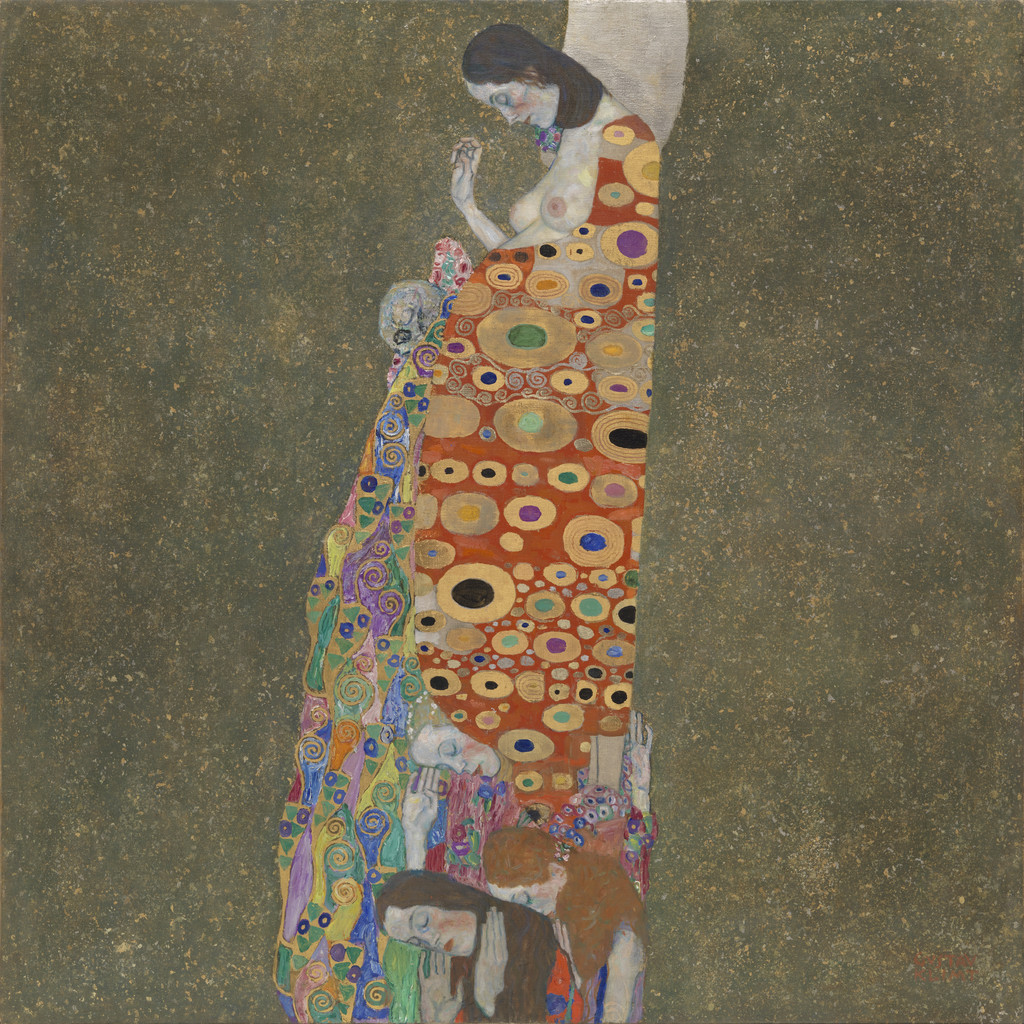
The second generation of modernists was represented by Kokoschka and Egon Schiele, and Klimt showed “Judith II” and “Hope II”. The works of Van Gogh, Munch, Gauguin, Vallotton, Bonnard and Matisse gave him the impulse for a new phase, but he never organized exhibitions again.