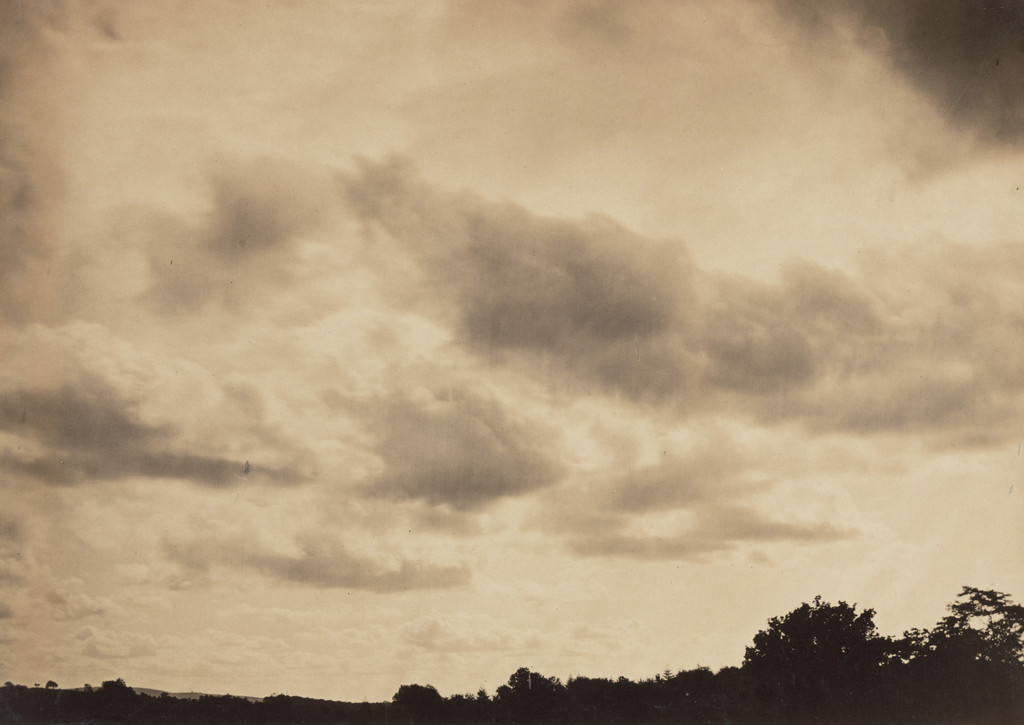
 Roger Fentonイギリス, 1819–1869
September Clouds
お目にかかれますか?
ただいまはお迎えしていません

ニューヨーク近代美術館
ニューヨーク, アメリカ合衆国
コレクションに属していますが、現在は展示されていません。
- 確認
- 出典
- 美術館自身の所蔵データ
作品データ
- 収蔵番号
- 58.1979
出典
- ニューヨーク近代美術館: the museum's own open data · 13 日前に取得
- 画像: ニューヨーク近代美術館 — © the artist or rights holder
その頃、Roger Fentonの人生では
生涯をすべて見る1854
Commissioned to document the Crimean War
Probably in autumn 1854, powerful friends and patrons — among them Prince Albert and the Duke of Newcastle, Secretary of State for War — urge Fenton to go to the Crimea; the London print publisher Thomas Agnew & Sons becomes his commercial sponsor. The photographs may have been meant to offset the war's unpopularity and to counter the critical reporting of William Howard Russell of The Times: they were to be converted into woodblocks for the less critical Illustrated London News.
1854
Royal portraits for Queen Victoria
Queen Victoria commissions Fenton to produce a series of royal portraits: besides formal studio portraits, he makes informal tableaux vivants of the queen at Balmoral, Windsor Castle and Buckingham Palace.
1855
Cholera, heat and broken ribs in the Crimea
Despite the summer heat, breaking several ribs in a fall, suffering from cholera (the effects of which will contribute to his early death) and becoming depressed at the carnage he witnesses at Sevastopol, Fenton manages to make more than 350 usable large-format negatives.
c. 1855
An exhibition of 312 prints
Soon after his return an exhibition of 312 prints goes on show in London, and in the following months at various places across the country; Fenton also shows them to Queen Victoria and Prince Albert and to Emperor Napoleon III in Paris. He is nevertheless disappointed that sales are less than he expected.
8 March – 22 June 1855
Fenton at Balaklava
Fenton sets off aboard HMS Hecla in February, lands at Balaklava on 8 March and stays until 22 June, taking Marcus Sparling as his photographic assistant, a servant known as William, and a large horse-drawn van of equipment.
September 1855
“Panorama of the Plateau of Sebastopol” in London
Thomas Agnew puts this photograph on show in London as one of a series of eleven collectively titled “Panorama of the Plateau of Sebastopol in Eleven Parts”. Fenton titles it “The Valley of the Shadow of Death”, a deliberate evocation of Psalm 23.