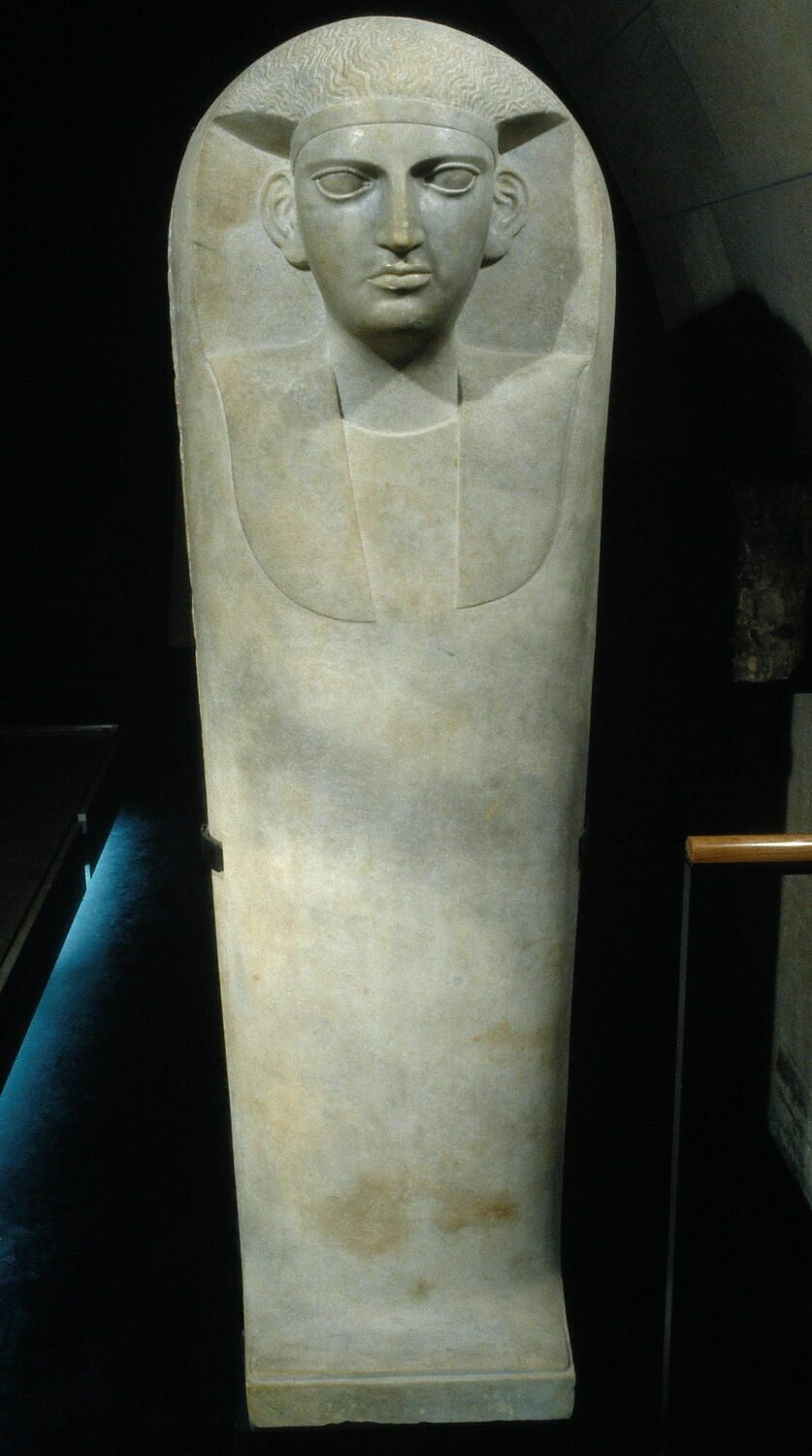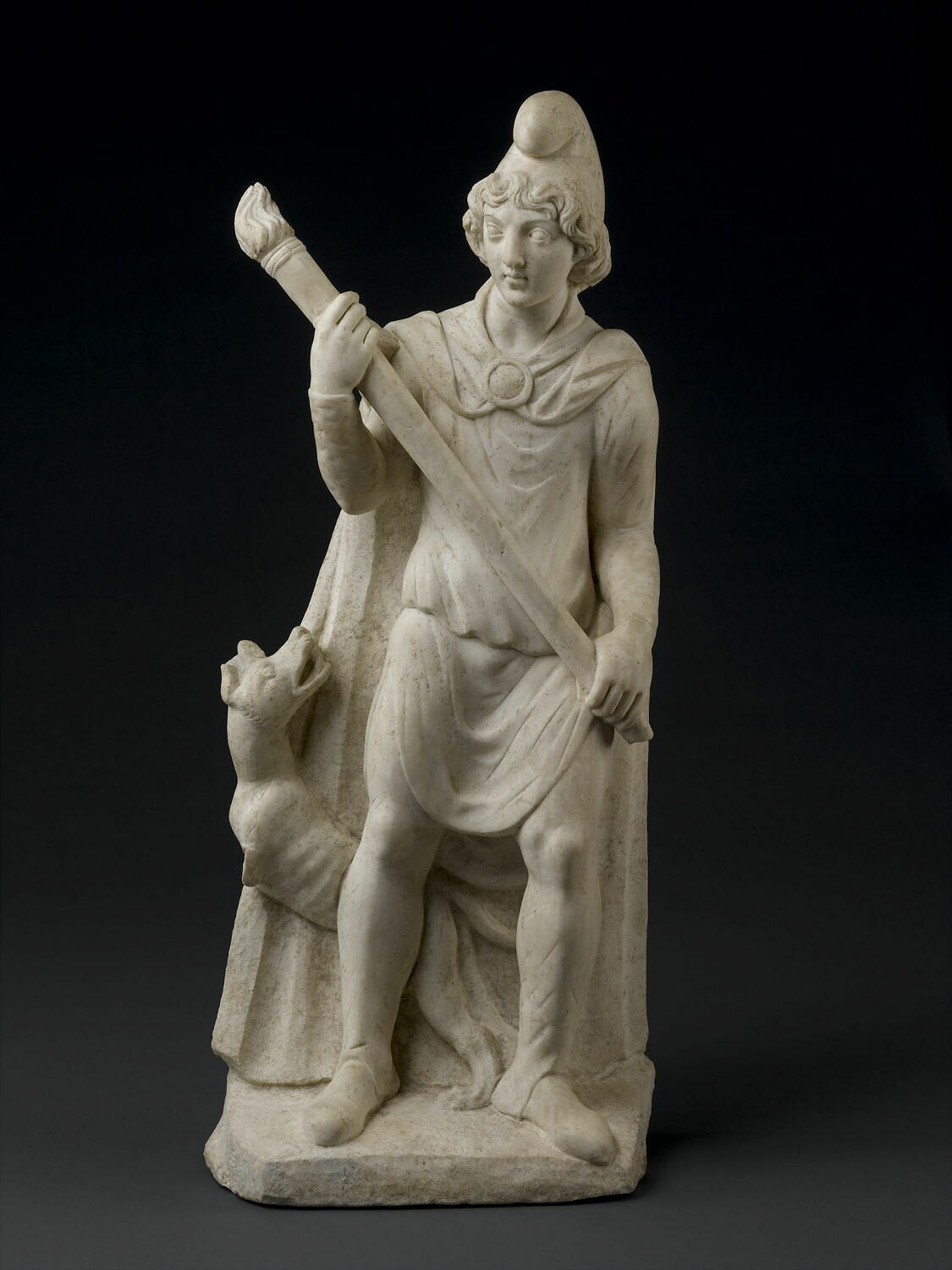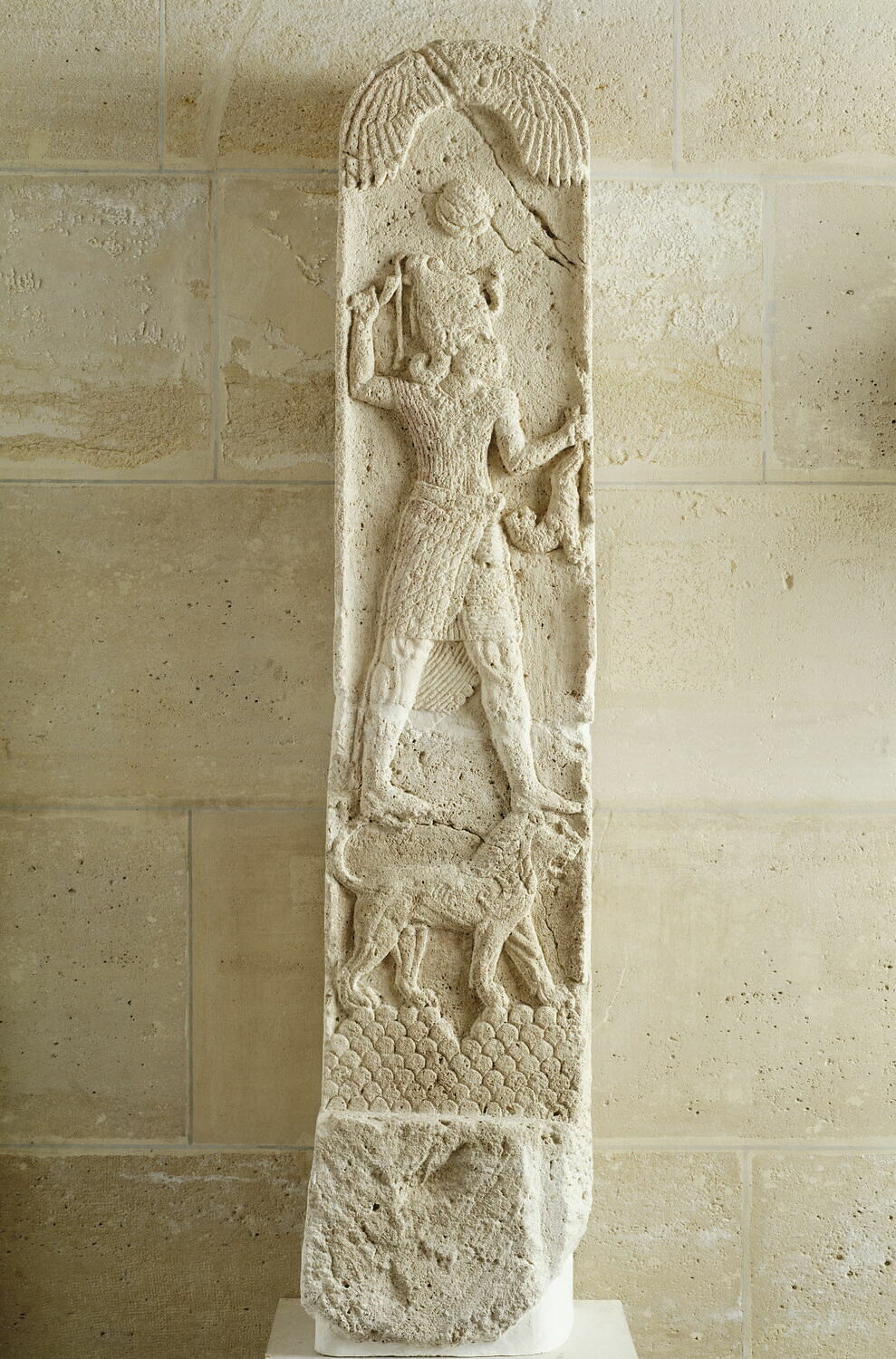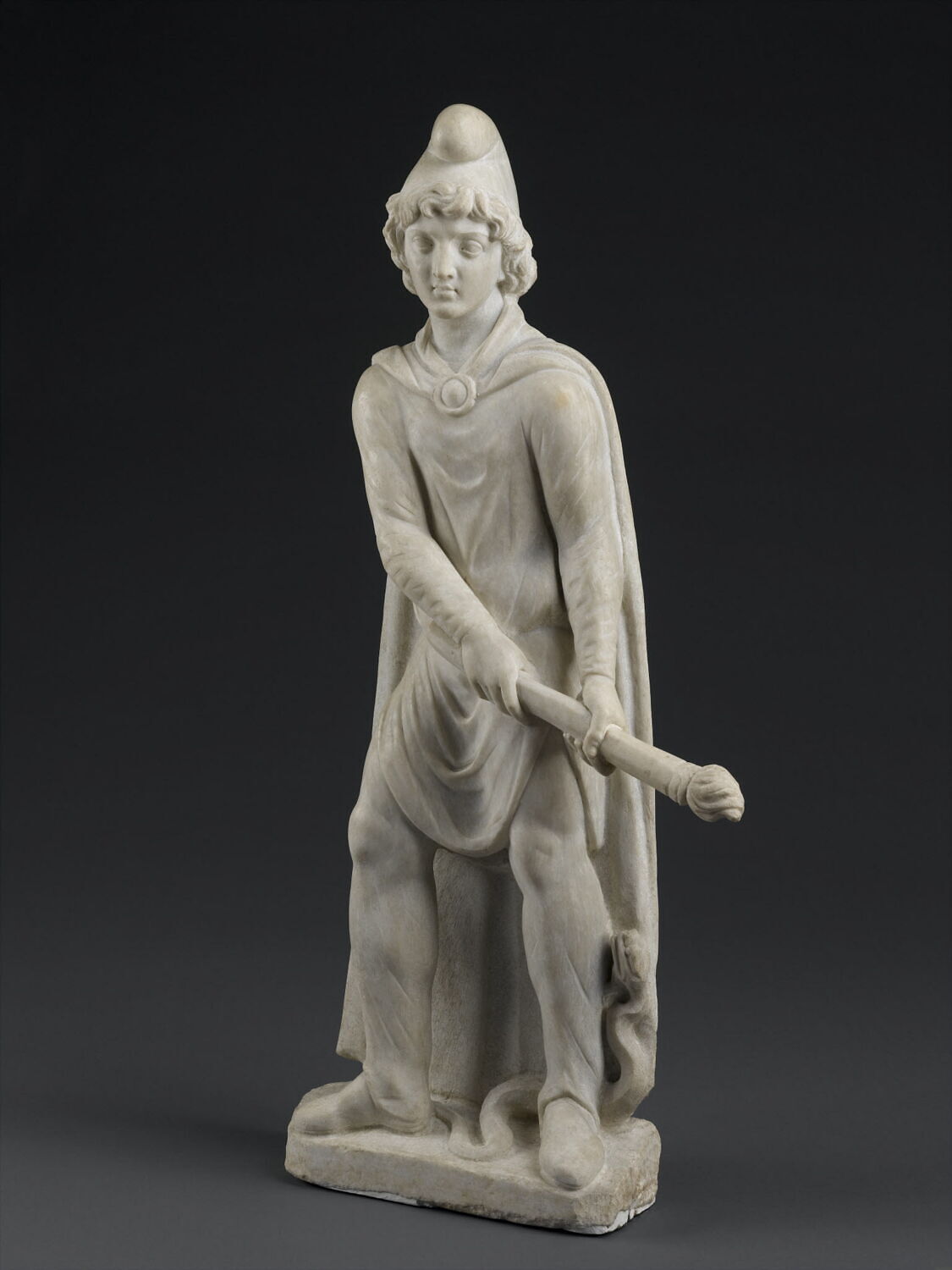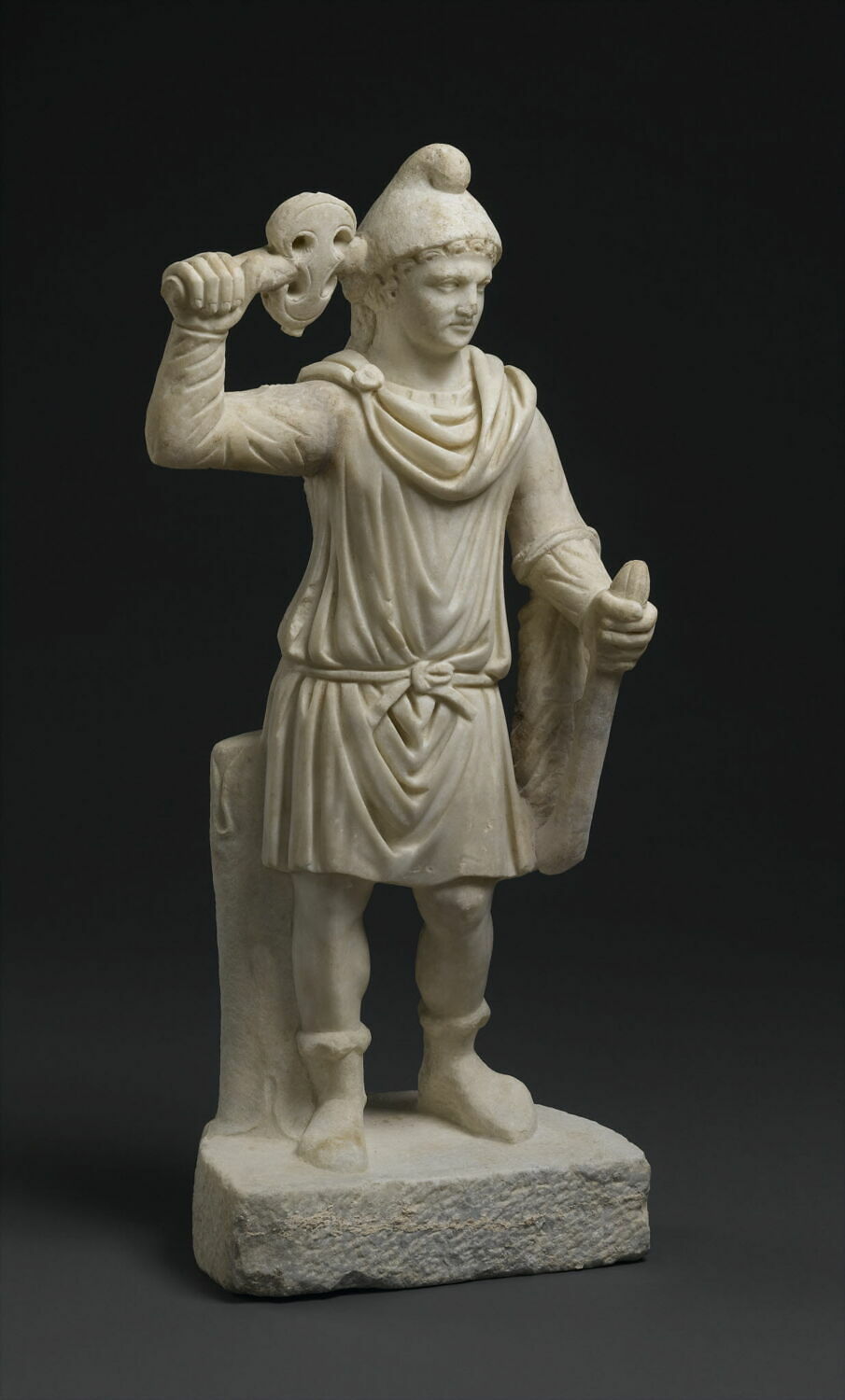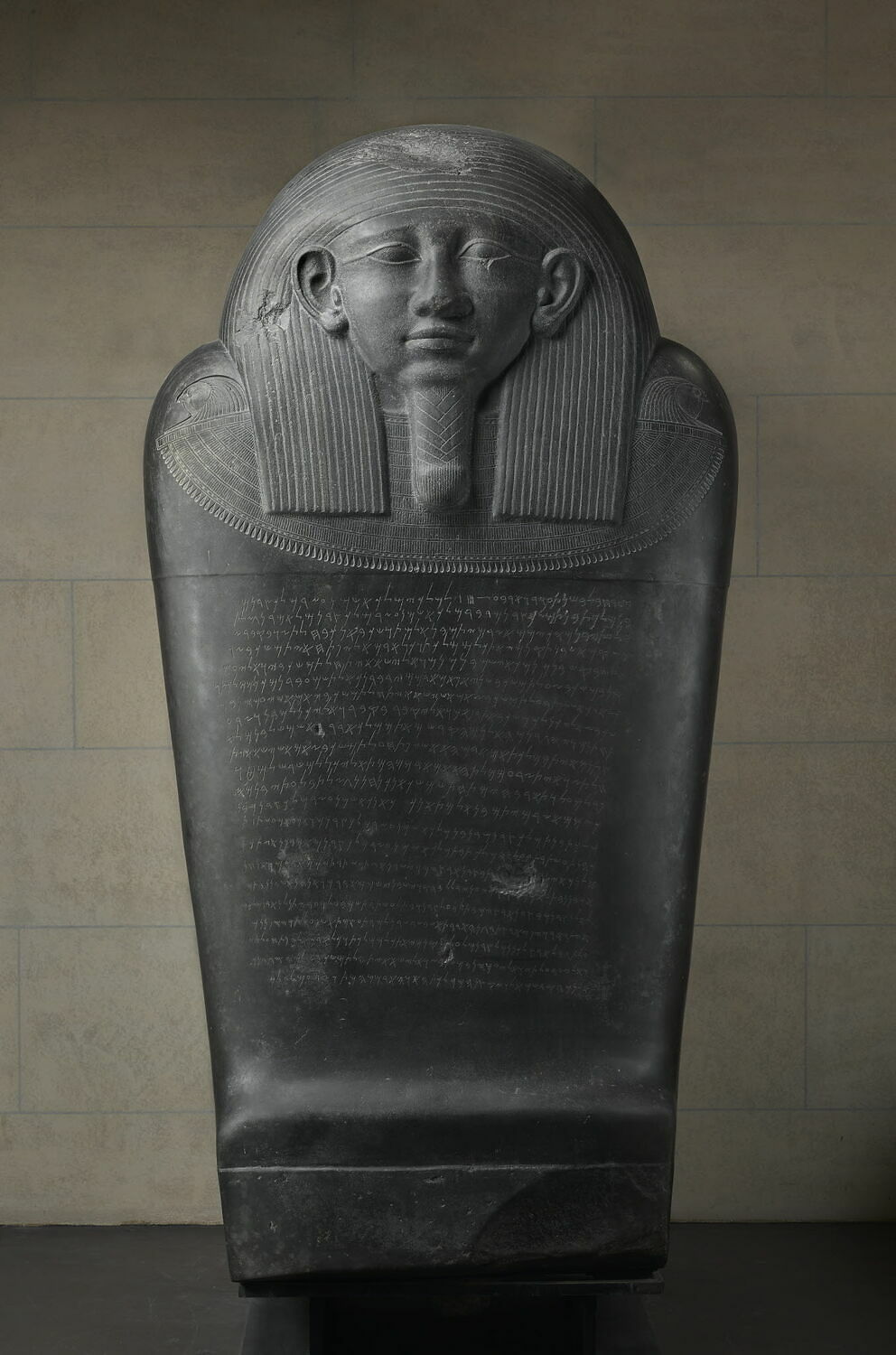
Sarcophage d'Eshmunazor
見られますか?
はい、現在展示中
『Sarcophage d'Eshmunazor』は今どこに? ルーヴル美術館, Salle 311, Aile Sully, Niveau 0, パリ. はい、現在展示中. 確認 2026年11月9日.

閉館· 9:00に開館
一般公開されています。
- 確認
- この状態になった日
- 出典
- 美術館
この彫刻について
The sarcophagus of Eshmunazar II is a 6th-century BC sarcophagus unearthed in 1855 in the grounds of an ancient necropolis southeast of the city of Sidon, in modern-day Lebanon, that contained the body of Eshmunazar II (Phoenician: 𐤀𐤔𐤌𐤍𐤏𐤆𐤓 ʾšmnʿzr, r. c. 539 – c. 525 BC), Phoenician King of Sidon. One of only three Ancient Egyptian sarcophagi found outside Egypt – the other two belonged to Eshmunazar's father King Tabnit and to a woman, possibly Eshmunazar's mother Queen Amoashtart – it was likely carved in Egypt from local amphibolite, and captured as booty by the Sidonians during their participation in Cambyses II's conquest of Egypt in 525 BC. The sarcophagus has two sets of Phoenician inscriptions, one on its lid and a partial copy of it on the sarcophagus trough, around the curvature of the head.
続きを読む
The lid inscription was of great significance upon its discovery, as it was the first Phoenician language inscription to be discovered in Phoenicia proper and the most detailed Phoenician text ever found anywhere up to that point, and is today the second longest extant Phoenician inscription, after the Karatepe bilingual.
The sarcophagus was discovered by Alphonse Durighello, a diplomatic agent in Sidon engaged by Aimé Péretié, the chancellor of the French consulate in Beirut. The sarcophagus was sold to Honoré de Luynes, a wealthy French nobleman and scholar, and was subsequently removed to the Louvre after the resolution of a legal dispute over its ownership.
More than a dozen scholars across Europe and the United States rushed to translate the sarcophagus inscriptions after its discovery, many noting the similarities between the Phoenician language and Hebrew. The translation allowed scholars to identify the king buried inside, his lineage, and his construction feats. The inscription warns against disturbing Eshmunazar II's place of repose. It also recounts that the "Lord of Kings", the Achaemenid king, granted Eshmunazar II the territories of Dor, Joppa, and Dagon in recognition for his services.
The discovery led to great enthusiasm for archaeological research in the region and was the primary reason for Renan's 1860–1861 Mission de Phénicie, the first major archaeological mission to Lebanon and Syria. Today it remains one of the highlights of the Louvre's Phoenician collection.
作品データ
- 収蔵番号
- AO 4806
カタログ収録
出典
- ルーヴル美術館
- 画像: ルーヴル美術館 — © 2019 Musée du Louvre, Dist. GrandPalaisRmn / Raphaël Chipault