 El Lissitzkyロシア, 1890–1941
Проун
お目にかかれますか?
不明:美術館は黙して語らず

トレチャコフ美術館
モスクワ, ロシア
所蔵者はわかっています。いま展示されているかどうかは美術館が公表しておらず、当て推量は私どもの流儀ではありません。
- この状態になった日
- 出典
- 美術館自身の所蔵データ
作品について
In the museum's own words — the original
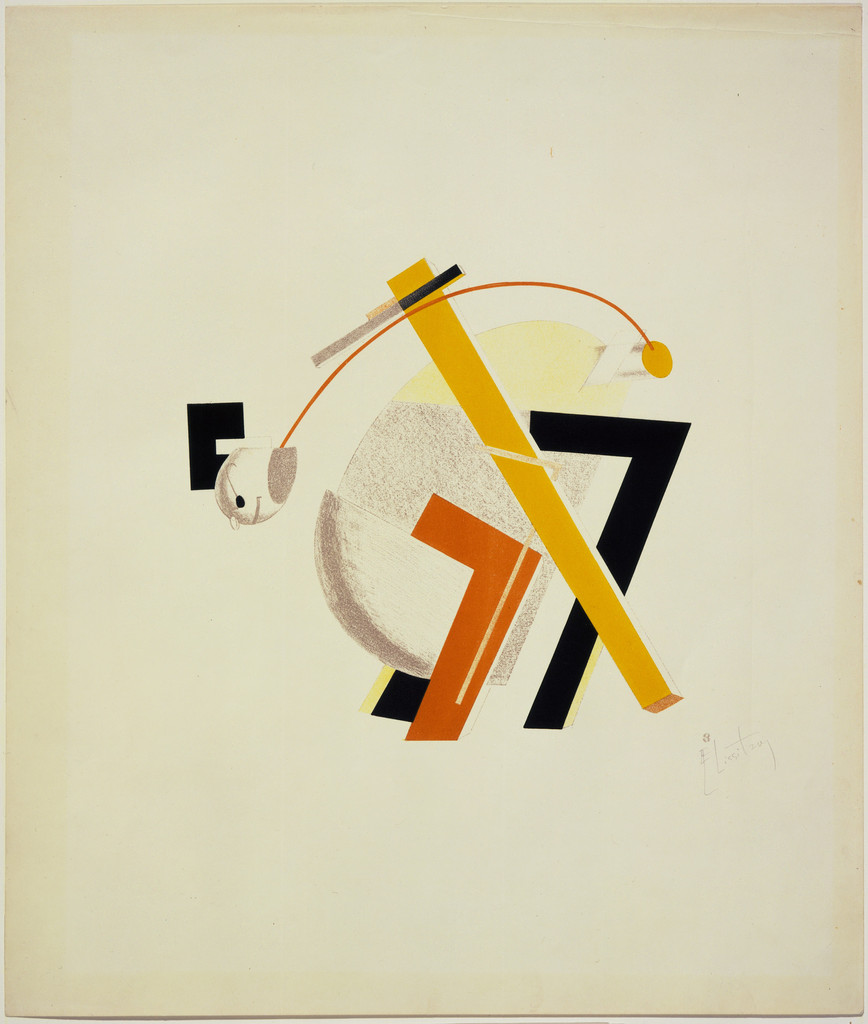
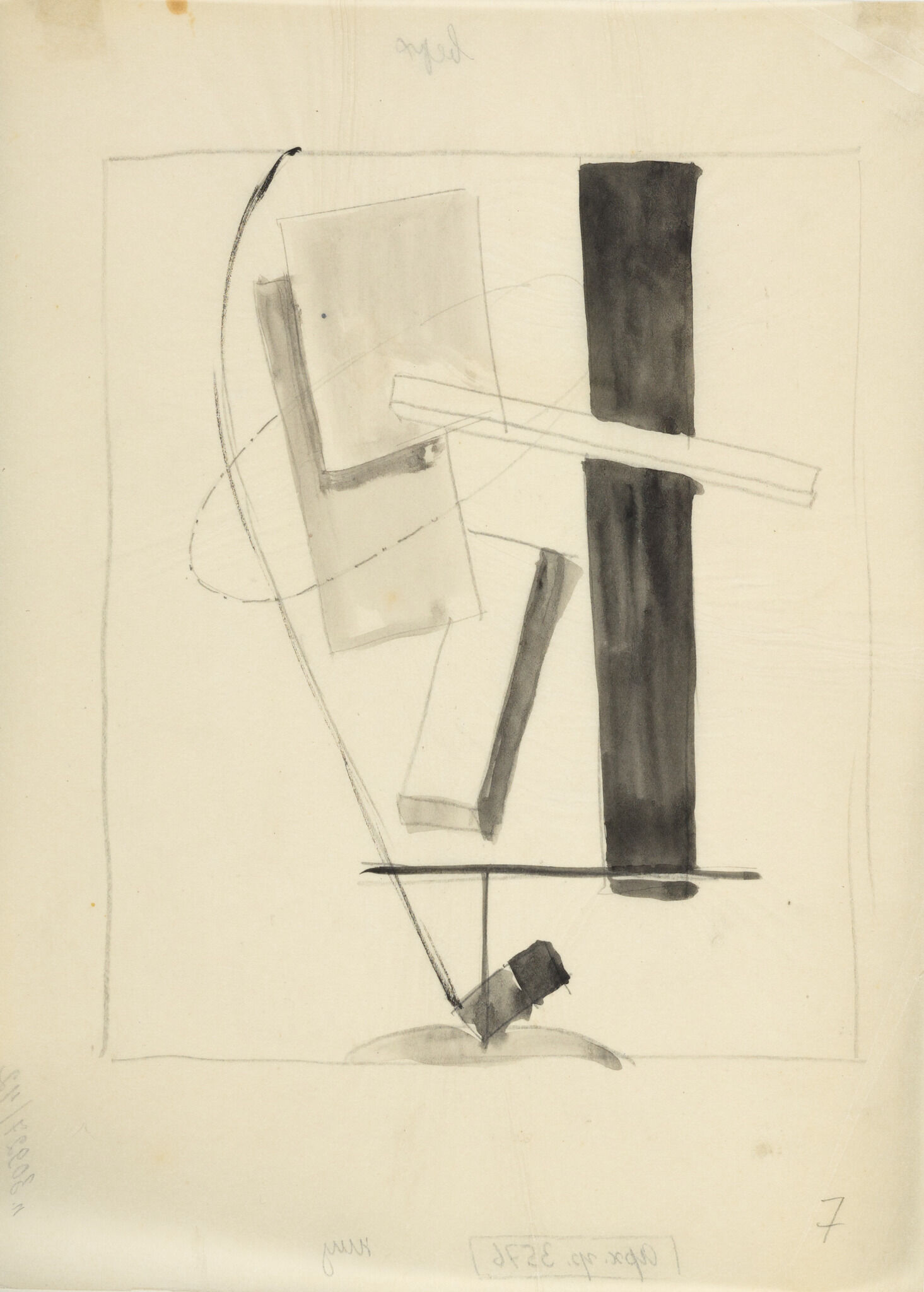
Практически все проуны, исполненные Лисицким в Германии, разошлись по немецким музеям и коллекционерам, а после Второй мировой войны некоторые из них оказались в США и Канаде. Возвращаясь в 1925 году в Россию, Лисицкий располагал лишь эскизами и набросками; именно они и составили коллекцию его произведений в Третьяковской галерее. Далеко не все эскизы получили воплощение в больших, известных по западным музеям работах, однако публикуемый проун как раз относится к числу таковых; два эскиза, находящиеся в Третьяковской галерее, сопоставимы с окончательным вариантом из Музея Буша-Райзингера, (Кембридж, Массачусетс).
Read on
В этих проунах Лисицкий отрабатывает пластическую задачу состояния равновесия: эквилибристика геометрических форм, как будто подвешенных и закрученных в пространстве, но опирающихся на кривую линию с точкой баланса на плоскости, виртуозно решает проблему веса и безвесия, массы и плотности. Интересно, что в окончательном варианте из музея Буша- Райзингера он сокращает до минимума количество парящих форм и делает акцент на упругой кривой.
В 1931 году в комментариях к проекту своей выставки под названием «Художник изобретатель» Лисицкий выделил основополагающие постулаты пластической системы проунов: «объем, масса и вес, просвет, преодоление фундамента, отрыв, мнимое тело».
トレチャコフ美術館
作品データ
- 収蔵番号
- АРХ ГР-3576
出典
- トレチャコフ美術館: the museum's own open data · 6 日前に取得
- 画像: トレチャコフ美術館 — © State Tretyakov Gallery
その頃、El Lissitzkyの人生では
生涯をすべて見る1920–1921
Moscow: INKhUK, a lecture on the Prouns, VKhUTEMAS
In 1920 Lissitzky leaves Vitebsk for Moscow and becomes a member of INKhUK (the Institute of Artistic Culture, also referred to as GINKhUK); on 23 September 1921 he gives a lecture there about his Prouns. In 1921 he also starts to teach at VKhUTEMAS but soon leaves Moscow for Germany.
1921
Leaving for Germany as a “cultural emissary”
In 1921, as UNOVIS declines and suprematism begins to fracture into a utopian, spiritual half and a utilitarian one, Lissitzky aligns with neither and leaves Vitebsk: he takes a job as a “cultural emissary” of Soviet Russia and moves to Weimar Berlin to establish contacts between Russian and German artists — what exactly he did in this role remains unclear. In 1921–1925 he lives in Germany and Switzerland.
1922
First solo exhibition in Hanover
The year after the publication of his first Proun series in 1921, Kurt Schwitters introduces Lissitzky to the Hanover gallery Kestnergesellschaft, where he holds his first solo exhibition. The second Proun series, printed in Hanover in 1923, is a success.
1923
The Proun Room at the Great Berlin Art Exhibition
In 1923, for the Great Berlin Art Exhibition, Lissitzky transforms a small room (about 3 by 3 by 2.5 m) into a single work of art, the Proun Room, which lets viewers “walk into an image” and become active participants. He violates the unwritten rule of rejecting the commercialization of art by putting price tags on three elements of the room; the price tags, together with his “half-dance” during the demonstration of the room, alienate his friend Theo van Doesburg.
1923–1924
Tuberculosis and a Swiss hospital
In 1923–1924 Lissitzky is severely ill with tuberculosis and stays in a Swiss hospital; at this time he is reported even to have considered suicide. He will die of tuberculosis in 1941.
1925
Return to the USSR
Lissitzky's years in Germany and Switzerland run from 1921 to 1925; it appears that in 1925 he returns to the Soviet Union.