 Viktor Vasnetsov1848–1926
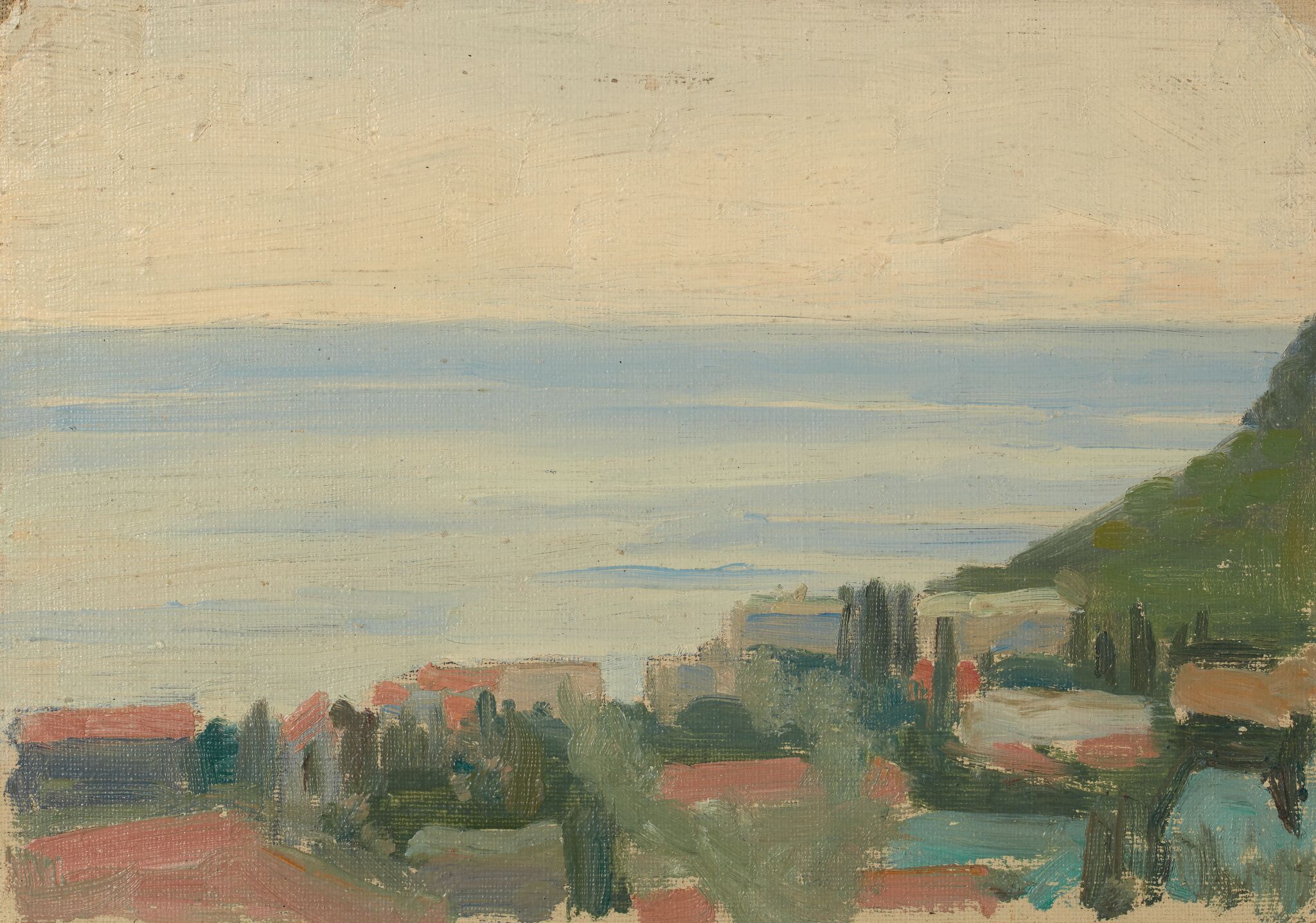
Приморское селение

この絵画について
美術館の言葉で — ロシア語
Этюд «Приморское селение» написан В.М. Васнецовым на рубеже 1890–1910-х годов. В это время его сын Алексей Викторович проходил лечение в Ялте и родные часто гостили у него.
Третьяковская галерея хранит этюды художника «Море» и «Улица в Ялте» (1903. Ж-1428), проникнутые любованием Крымом, который для Виктора Михайловича, выросшего в северной Вятской губернии, всегда был чем-то особенным. «Что описывать скалы крымские и море; стихами не умею, а прозой не выйдет… Хорошо, дивно и только!» – делился он своими впечатлениями с женой Александрой Владимировной в письме из Ялты, написанном в апреле 1912 года. Художник старался передать характерные черты крымского пейзажа – с грядами гор, покрытых изумрудной зеленью, с морем, всегда разным, и таким же переменчивым небом, с живописным своеобразием сел.
続きを読む
В небольшом этюде «Приморское селение» природа Крыма предстает лирической и задумчивой: слегка волнующееся море, приглушенные тона зелени и черепичных крыш. Небо затянуто туманной пеленой, сквозь которую пробивается ровный желтоватый свет солнца.
В собрании Государственной Третьяковской галереи хранится много пейзажных этюдов Васнецова. В поиске характерных образов и мотивов художник умел привычное глазу выразить поэтически.
トレチャコフ美術館
作品データ
- 収蔵番号
- ДМВ Ж-73
カタログ収録
出典
- トレチャコフ美術館
- 画像: トレチャコフ美術館 — © State Tretyakov Gallery
その頃、Viktor Vasnetsovの人生では
生涯をすべて見る1878–1890 · 経歴
the Peredvizhniki
From 1878 he belonged to the Society of Travelling Art Exhibitions (the Peredvizhniki): he took part in its activity in 1878–1890 and exhibited with it until 1897; he was admitted for the realism and sharp social subjects of his genre paintings.
1884–1889
Friendship with Mikhail Vrubel in Kiev
While living in Kiev he became friends with Mikhail Vrubel, who was also working on the cathedral; while they worked together Vasnetsov taught the younger artist a great deal.
1885–1895
The controversy over the Kiev frescoes: Stasov, Benois, Filosofov
Contemporaries disagreed: Dmitry Filosofov saw in the frescoes “the first bridge over the 200-year-old gulf” between classes of Russian society, Stasov a sacrilegious play with the religious feelings of the people, and Alexandre Benois a “sumptuous and frivolous féerie”; Vasnetsov himself saw the cathedral as a “Bible for the poor”.
1891–1894
He builds a terem-style house in Troitskaya Sloboda
In 1891 he bought land in Troitskaya Sloboda and himself devised a wooden mansion in the style of an ancient Russian terem; construction, carried out by peasants from Vladimir Governorate, was completed in 1894, and the second-floor studio (110 m², six-metre ceilings) became the place where the “Bogatyrs”, “The Snow Maiden” and the “Poem of Seven Fairy Tales” were painted; Governor-General Grand Duke Sergei Alexandrovich allowed the house to exceed the height limit.
1917
He rejects the revolution but stays in Russia
He did not accept the October Revolution, calling himself a convinced monarchist “on the ancient Russian principles”; his nobility and ties with the old regime found no favour with the Bolsheviks, but he did not emigrate and went on living and working in Moscow.
1920
His son Mikhail emigrates on the last steamer
During the Civil War Mikhail taught at the White Army’s flying school in Kiev; in 1920, escaping the Red Army, he sent his wife and son to his father’s house and left on the last steamer sailing from Crimea to Gallipoli — the family knew nothing of his fate until 1922.