 Antonio Canovaイタリア, 1757–1822
Paris
見られますか?
はい、現在展示中
『Paris』は今どこに? メトロポリタン美術館, 展示室 548, ニューヨーク. はい、現在展示中. 確認 2026年11月23日.

ニューヨーク, アメリカ合衆国
閉館· 明日10:00に開館
一般公開されています。
- 確認
- この状態になった日
- 出典
- 美術館
この彫刻について
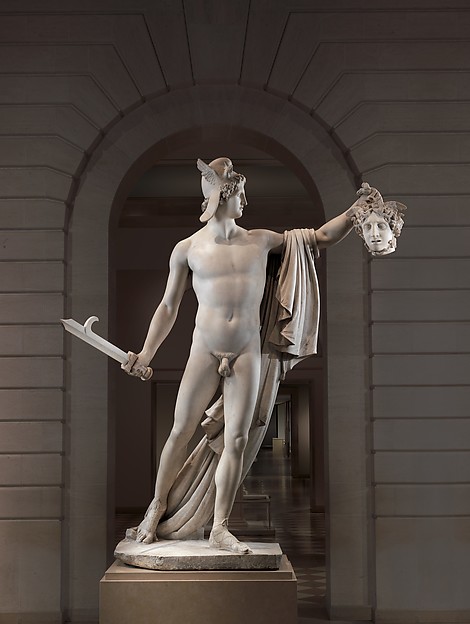
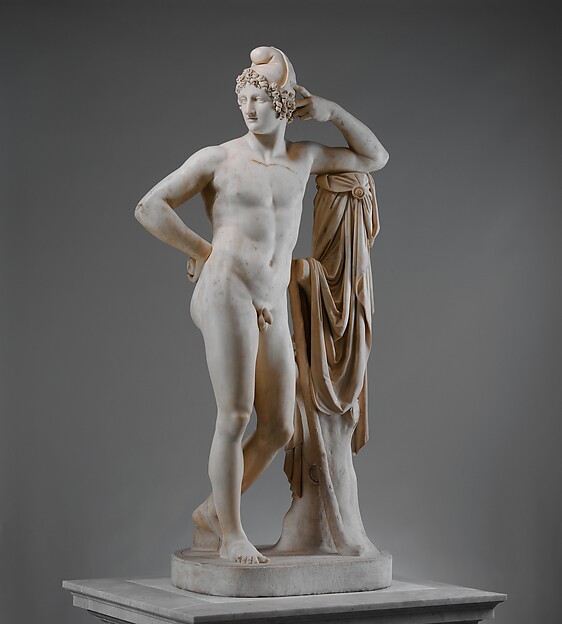
Paris, made by Antonio Canova's workshop about 1822–23, is at the Metropolitan Museum of Art in New York. The marble figure wears a Phrygian cap and holds the apple for judging the goddesses behind his back. This version was unfinished when Canova died in 1822; assistants completed it the next year. The original marble version had been finished in November 1812. The sculpture is exhibited in gallery 548.
作品データ
- 収蔵番号
- 2003.21.2
描かれているもの
カタログ収録
出典
- メトロポリタン美術館
- 画像: メトロポリタン美術館 — Open Access (CC0)
その頃、Antonio Canovaの人生では
生涯をすべて見る1810
President of the Academy of St Luke
In 1810 Canova became president of the Roman Academy of St Luke, and in 1814 its president for life (by other accounts he was appointed president in 1816).
1815
Mission to Paris: bringing back the looted masterpieces
In 1815 Pope Pius VII named Canova his Minister Plenipotentiary and tasked him with recovering works of art that Napoleon had taken to Paris. At the Louvre he met resistance from its director Vivant Denon and, because of the works’ size or unclear whereabouts, was forced to leave major pieces behind, among them Veronese’s “The Wedding at Cana”.
1815
London: Haydon and the Elgin Marbles
In 1815 Canova visited London and met Benjamin Haydon; it was on Canova’s advice that the British Museum acquired the Elgin Marbles, with plaster copies sent to Florence at his request.
1816
Marquis of Ischia and the “Golden Book”
Returning to Rome in 1816 with some of the art Napoleon had taken, Canova was rewarded by the Pope with the title of Marquis of Ischia, inscription in the “Golden Book of Roman Nobles” (the Pope entered his name with his own hands) and an annual pension of 3,000 crowns.
11 July 1819
Lays the foundation stone of his own temple in Possagno
After his 1814 proposal for a statue of Religion in St Peter’s was rejected, Canova resolved to build his own temple: he designed and financed the building himself and partly built it, combining the Parthenon and the Pantheon. On 11 July 1819 he laid the foundation stone, dressed in a red papal uniform and wearing all his medals, and afterwards visited Possagno every autumn to direct the workmen.
1822年10月13日
死去