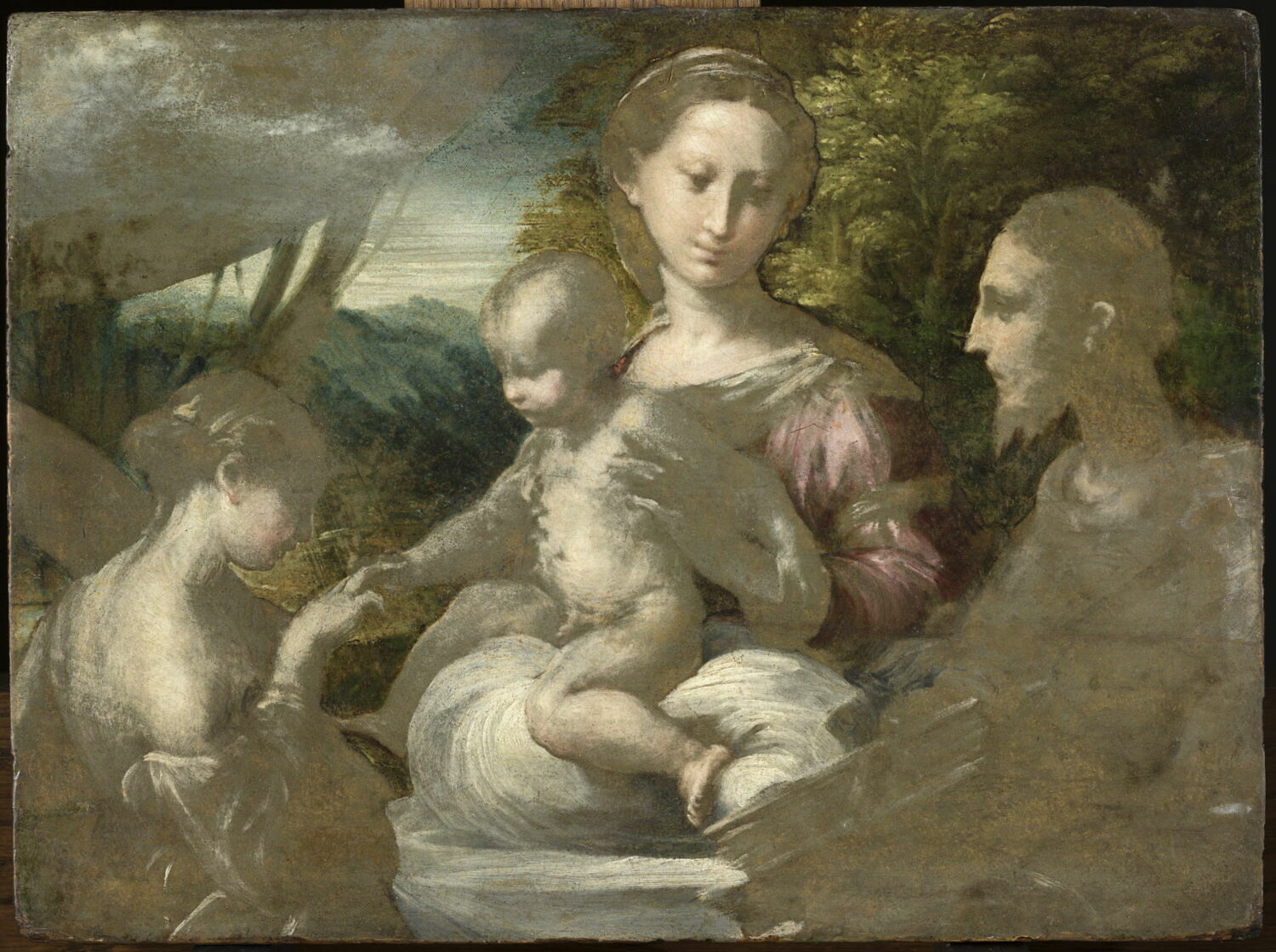
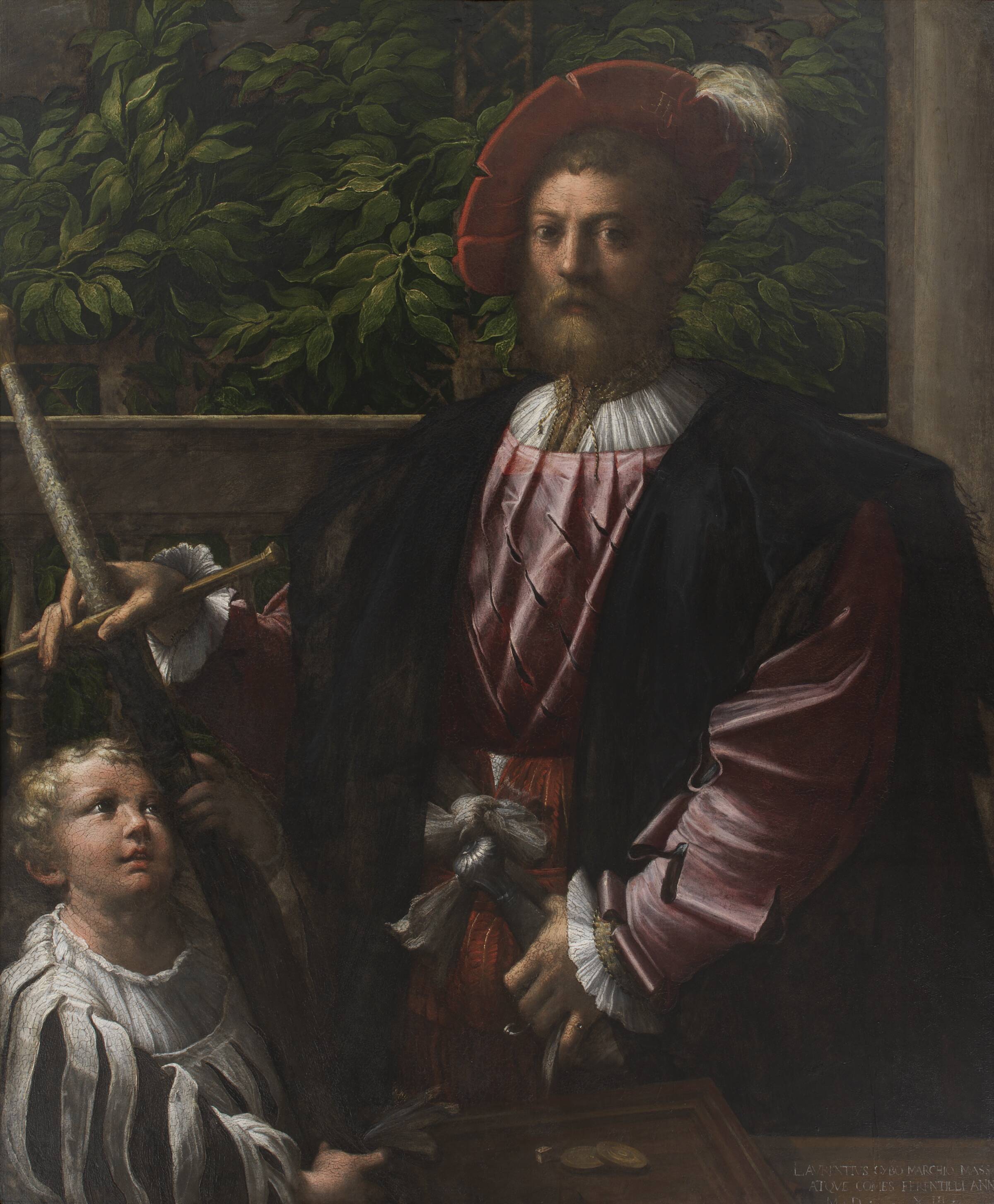
![[Pan], Parmigianino, 1500–1532](https://diglib.hab.de/varia/haum/carpi-u-d-ab3-0007/max/000001.jpg)
 Parmigianinoイタリア, 1503–1540
[Pan]
お目にかかれますか?
不明:美術館は黙して語らず

アントン・ウルリッヒ公爵美術館
ブラウンシュヴァイク, ドイツ
所蔵者はわかっています。いま展示されているかどうかは美術館が公表しておらず、当て推量は私どもの流儀ではありません。
- この状態になった日
- 出典
- 美術館自身の所蔵データ
作品データ
What it shows
カタログ収録
出典
- アントン・ウルリッヒ公爵美術館: the museum's own open data · 7 日前に取得
- 画像: アントン・ウルリッヒ公爵美術館 — CC BY-NC-SA 4.0
その頃、Parmigianinoの人生では
生涯をすべて見る1503年1月11日
Born
1505
Father dies of plague; his uncles raise the boy
According to Vasari, Filippo Mazzola died in 1505 during a plague epidemic. Two-year-old Francesco was taken in by his uncles, the painters Pier Ilario and Michele, who introduced him to drawing and painting.
1521
Sent to Viadana to escape the war
To keep him safe from the war between the French, Imperial and papal armies, Francesco was sent to Viadana together with the painter Girolamo Bedoli, who would later marry his cousin. There he painted two tempera panels: “Saint Francis” for the church of the Frati de' Zoccoli and “The Mystical Marriage of Saint Catherine” for San Pietro.
summer 1524
Travels to Rome with his uncles
According to Vasari, on hearing Raphael and Michelangelo praised, Francesco longed to see Rome; his uncles approved and advised him to take some of his works to open doors to the lords and artists there. They arrived in Rome in the summer of 1524, and Parmigianino presented several paintings to Pope Clement VII, among them the “Self-Portrait in a Convex Mirror” painted on a wooden hemisphere.
1527
The Sack of Rome finds him at work
During the Sack of Rome by the landsknechts of Emperor Charles V, soldiers burst into the studio where Parmigianino was painting “The Vision of Saint Jerome” but harmed neither the pictures nor the artist. Soon, however, he had to abandon his lodgings and Rome, and he left the altarpiece with the church of Santa Maria della Pace.
May 1531
Commissioned to decorate Santa Maria della Steccata
In May 1531 Parmigianino was commissioned to fresco the church of Santa Maria della Steccata in praise of the Virgin, with the Coronation as the main scene, and undertook to finish within eighteen months; the work stalled again and again over irregular supplies and the church administration's dislike of his unusual design. Other accounts say the commission was for two altarpieces, of Saint Joseph and Saint John the Baptist. The confraternity advanced him a salary.