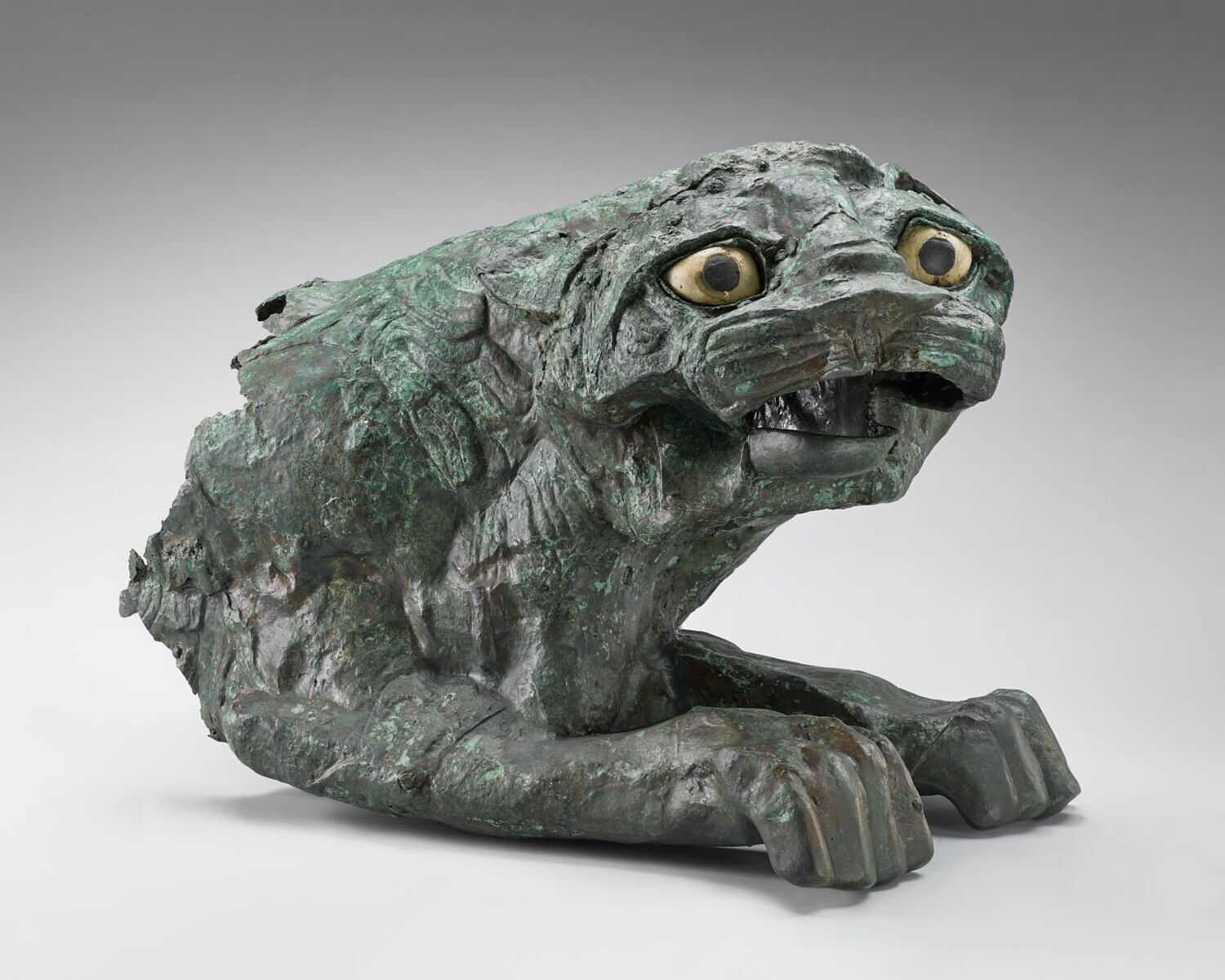
Lion de Mari
見られますか?
はい、現在展示中
『Lion de Mari』は今どこに? ルーヴル美術館, Salle 227, Aile Richelieu, Niveau 0, パリ. はい、現在展示中. 確認 2026年11月9日.

閉館· 9:00に開館
一般公開されています。
- 確認
- この状態になった日
- 出典
- 美術館
この彫刻について
The Lion of Mari is a copper statue of a lion found in 1936 by André Parrot at the "Temple of Lions" in Mari, Syria. The statue is damaged, having been crushed during the destruction of the site, and only the anterior part of the body remains. It is currently on display in the Near Eastern Antiquities Department of the Louvre.
The "Temple of Lions" where the two lion statues were found is known to have been built by the Shakkanakku governor of Mari named Ishtup-Ilum circa 2150 BCE.
続きを読む
The Lion of Mari was probably produced to serve as Protome in the early Second Millennium BCE, at a time when the temple was being rebuilt, presumably during the reign of Zimrī-Lim (reigned c. 1775–1761 BCE.). It was excavated in 1936 by the Parrot expedition at the Temple of Dagon in Mari (now Tell Hariri, Syria) and is now on display at the Louvre; its twin figure is on display at the National Museum of Aleppo.
作品データ
- 収蔵番号
- AO 19520
カタログ収録
出典
- ルーヴル美術館
- 画像: ルーヴル美術館 — © 2020 Musée du Louvre, Dist. GrandPalaisRmn / Raphaël Chipault