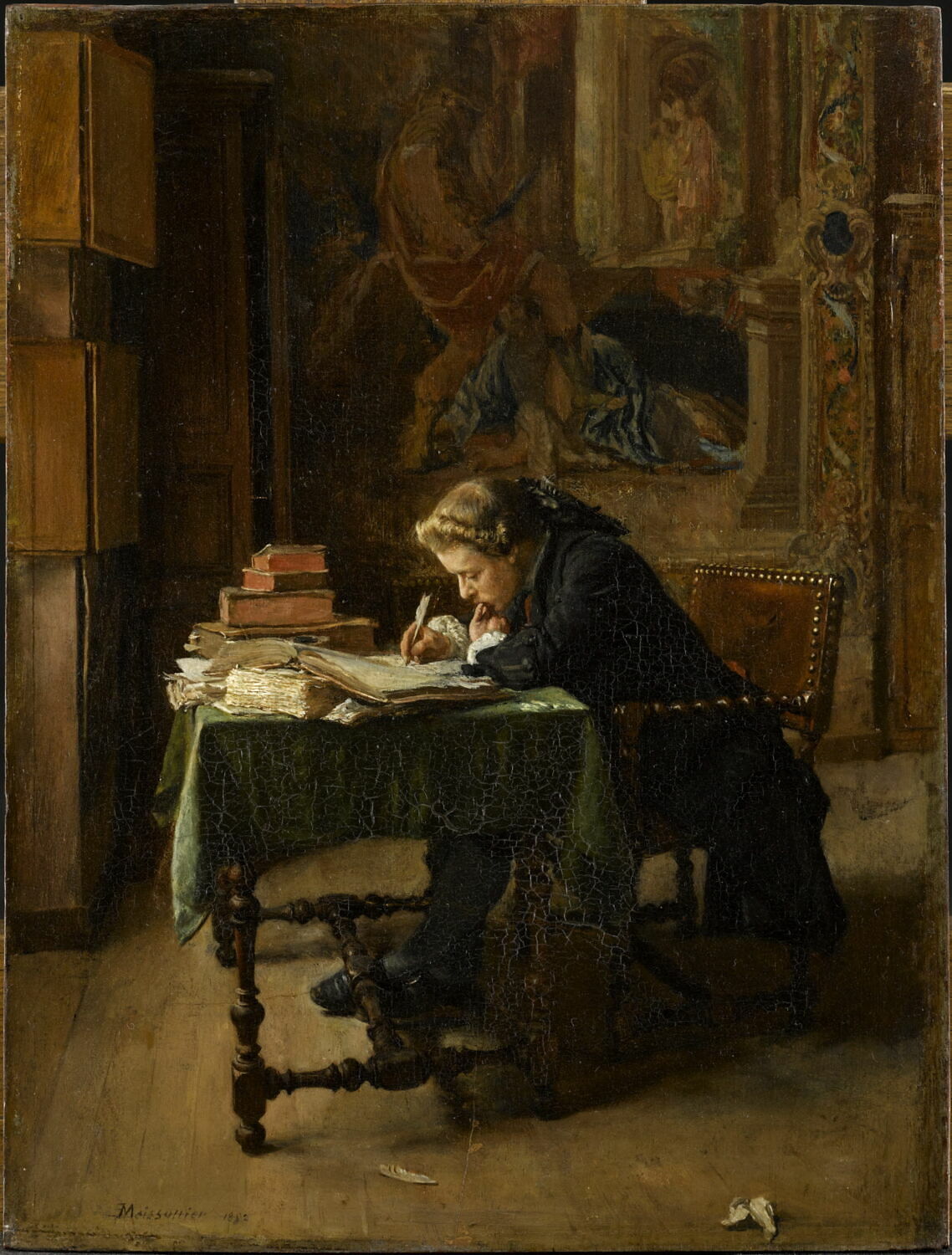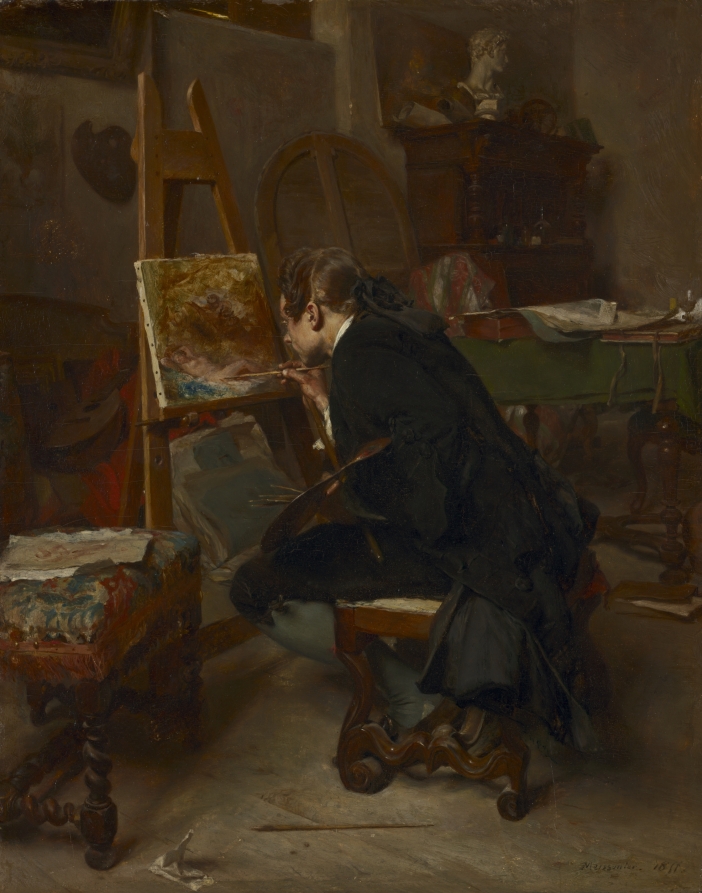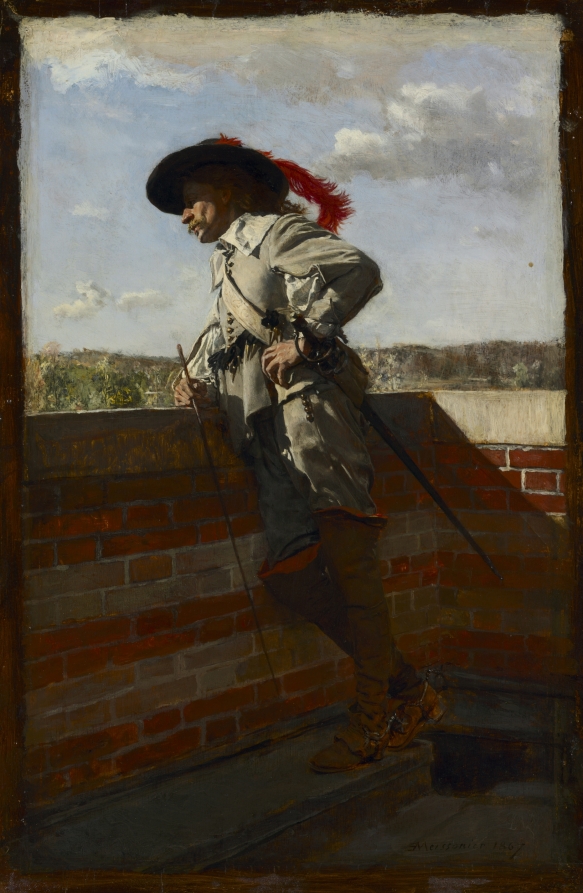
 Jean-Louis-Ernest Meissonierフランス, 1815–1891
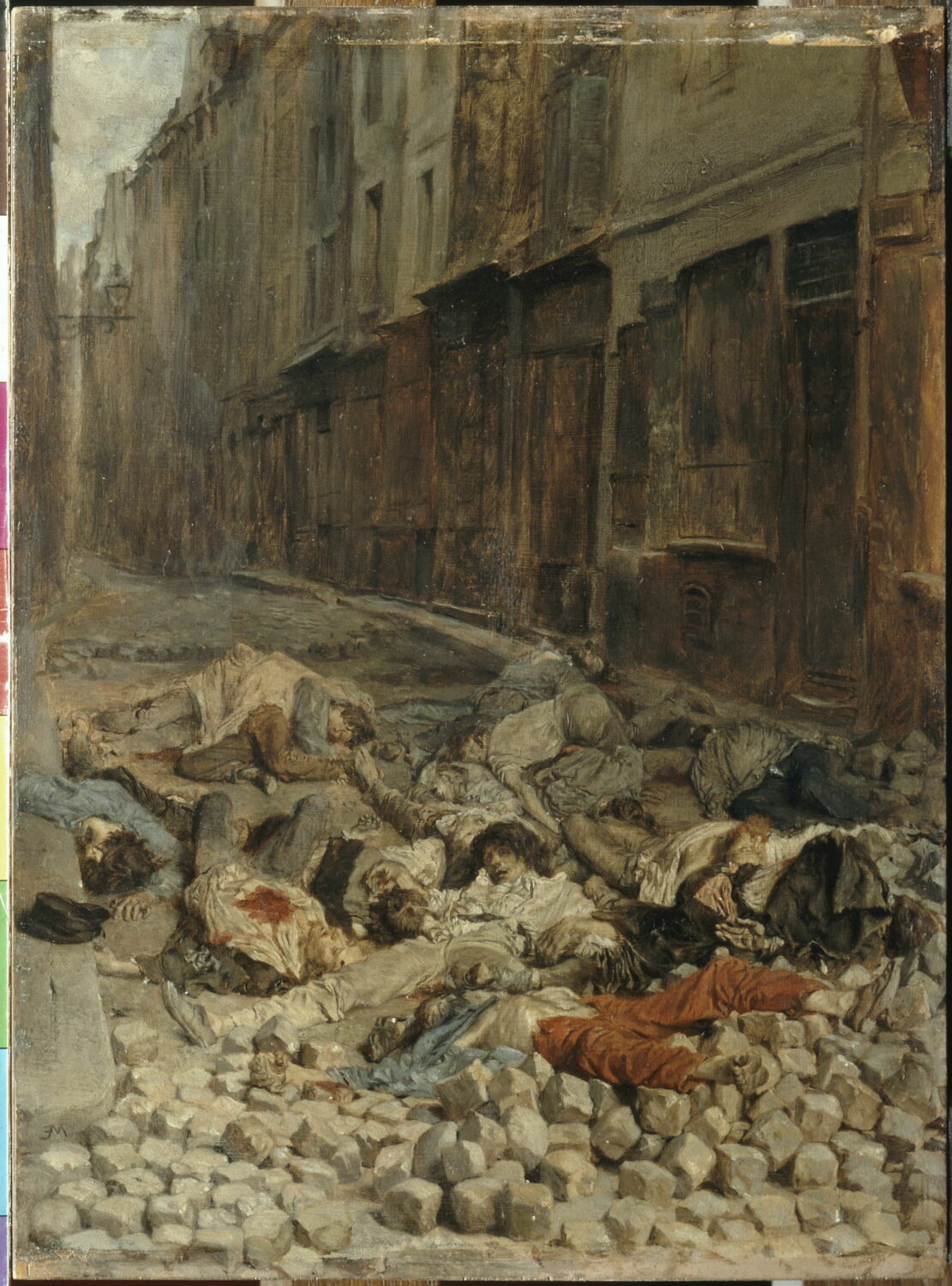
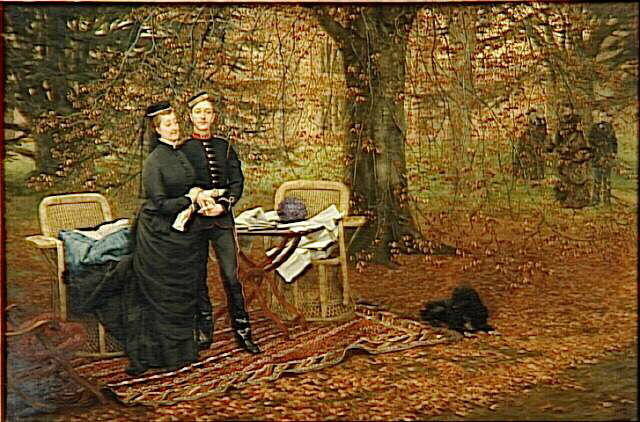
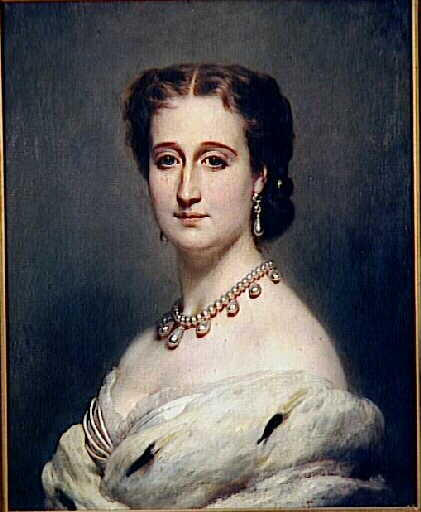
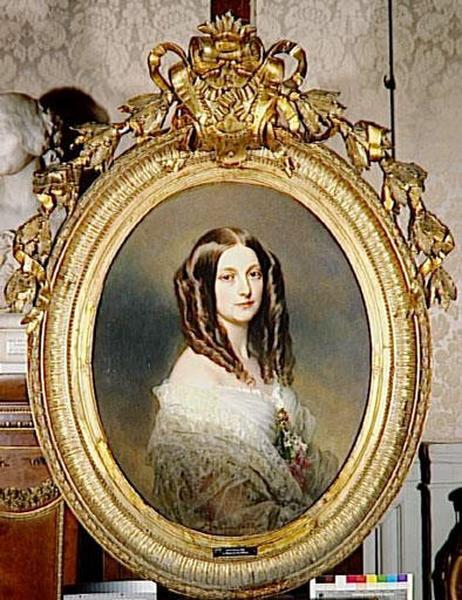
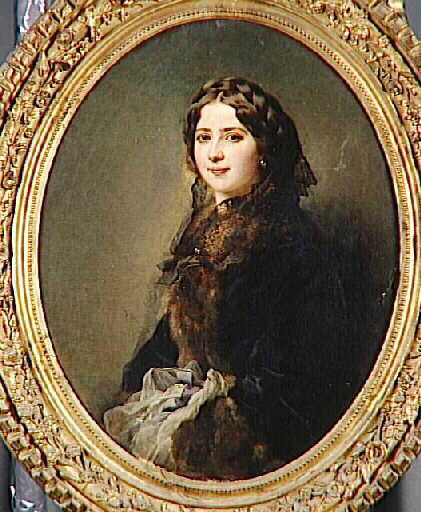
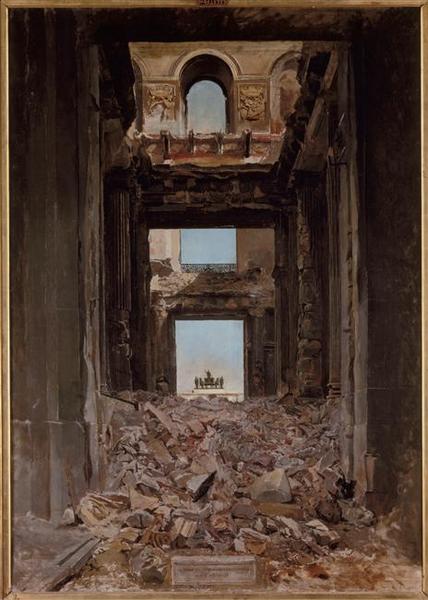
Les Ruines de Tuileries
見られますか?
不明
『Les Ruines de Tuileries』は今どこに? 所蔵: コンピエーニュ城, コンピエーニュ. 不明.
コンピエーニュ, フランス
所蔵者は判明していますが、現在展示中かどうかは不明です。
- この状態になった日
- 出典
- 美術館
作品データ
- 収蔵番号
- C 53 D 39 ; RF 1248
描かれているもの
カタログ収録
出典
- コンピエーニュ城
- 画像: コンピエーニュ城 — © Réunion des musées nationaux - utilisation soumise à autorisation; Ministère de la Culture (France), base Joconde
その頃、Jean-Louis-Ernest Meissonierの人生では
生涯をすべて見る1860s
A turn to battle subjects and high prices
In the 1860s he begins to paint historical and battle scenes from the time of the French Revolution, the Napoleonic Wars and the conflicts of Emperor Napoleon III; his contemporaries valued them even more than his earlier genre works. In time he received 300,000 francs each for The Charge of the Cuirassiers and Napoleon I in 1814, and 200,000 for Napoleon III at Solferino, which its first owner later resold for 850,000.
1870–1871
A colonel in besieged Paris
At the beginning of the war in 1870 he accompanies Napoleon III as an attaché of the imperial staff, and during the Siege of Paris he commands a regiment of the National Guard (other accounts call it a regiment de marche, one of the improvised units thrown up in the chaos of the war).
1870–1871
The conflict with Manet and the Impressionists
Édouard Manet served under his command during the Franco-Prussian War; their relations went badly then and only worsened later. His long conflict with the Impressionists did great harm to Meissonier’s reputation after his death.