 Nicolas Poussinフランス, 1594–1665
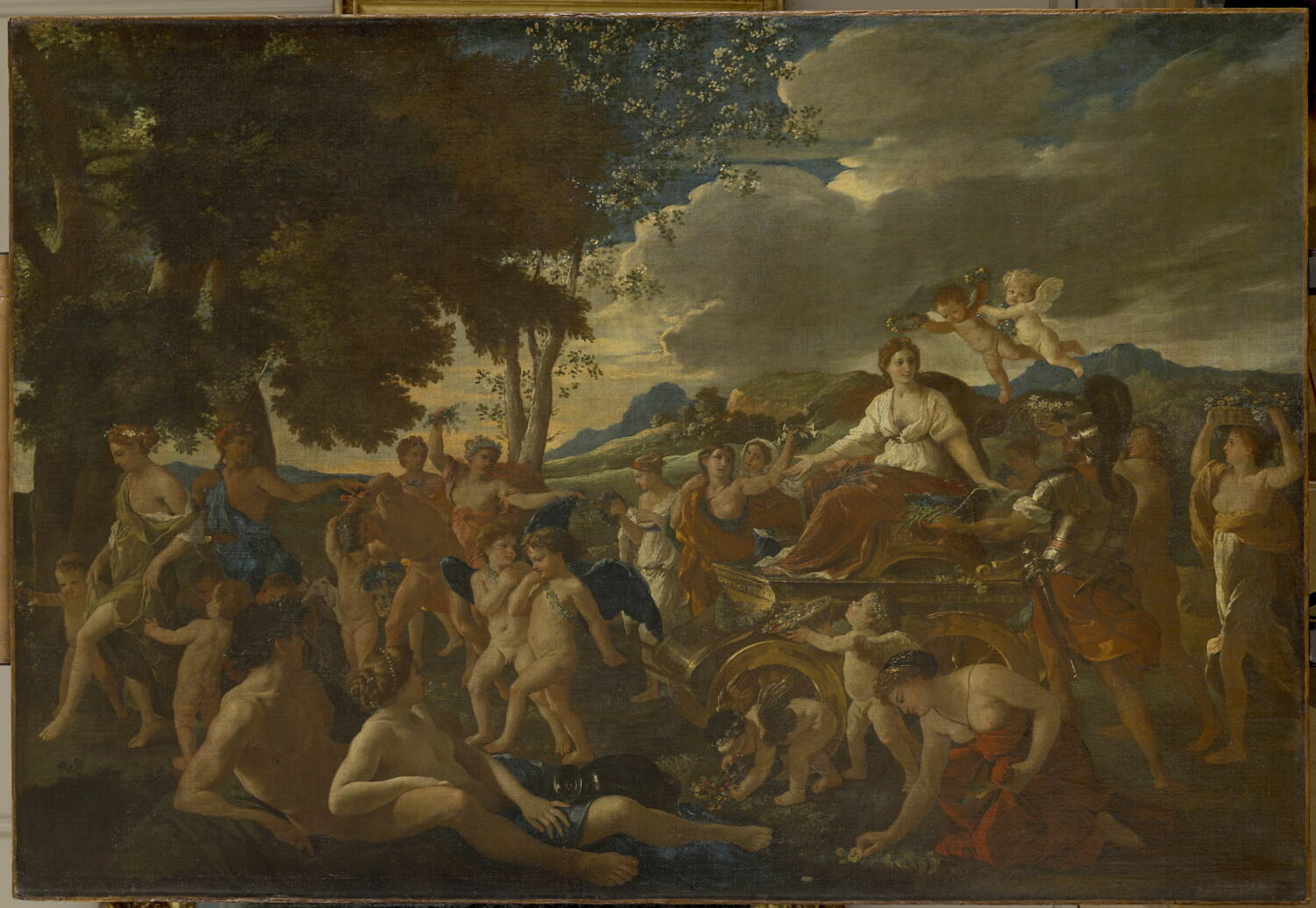
Le Triomphe de Flore
お目にかかれますか?
はい、お客様をお迎えしています

一般公開されています。裏付けとなる出典は下に記しています。
- 確認
- 9 日前
- この状態になった日
- 2026年9月26日
- 出典
- 美術館自身の所蔵データ
About the painting
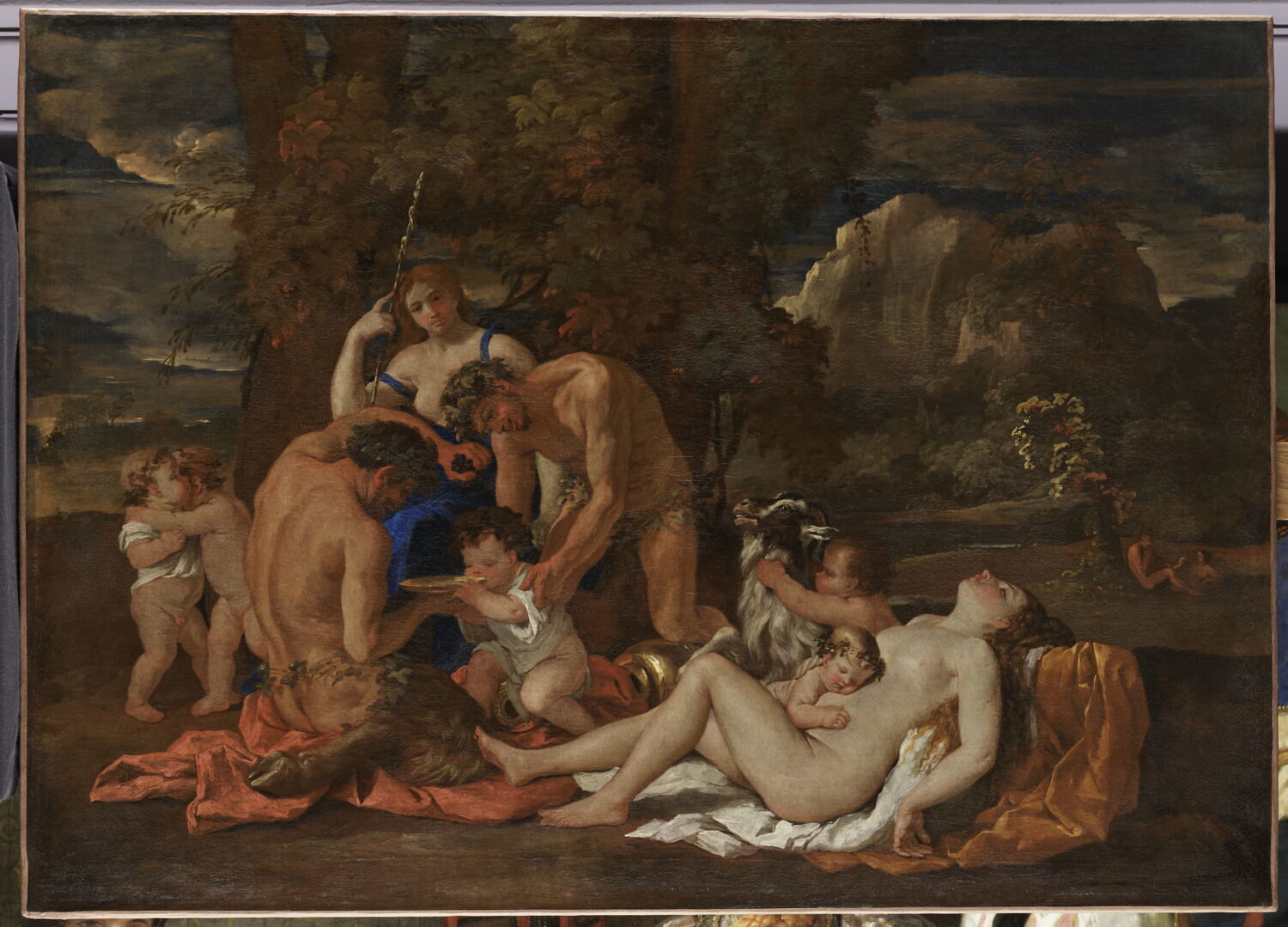
『フローラの勝利』(フローラのしょうり、仏: La Triomphe de Flore、英: The Triumph of Flora)は、17世紀フランスの巨匠ニコラ・プッサンが1627年ごろ、キャンバス上に油彩で制作した絵画である。ローマ神話の花の女神フローラがプットたちの引く戦車に乗っている姿が表されている。ルイージ・アレッサンドロ・オモデイ 枢機卿のために描かれたが、1685年にフランス王ルイ14世に取得され、現在、パリのルーヴル美術館に所蔵されている。
作品データ
- 収蔵番号
- INV 7298
出典
- ルーヴル美術館: the museum's own open data · 9 日前に取得
- 画像: ルーヴル美術館 — © 2014 GrandPalaisRmn (musée du Louvre) / Tony Querrec
その頃、Nicolas Poussinの人生では
生涯をすべて見る1620s
The Cavaliere Marino takes the painter under his wing
Poussin’s work caught the attention of the Italian poet Cavaliere Marino, then living in France; his patronage let the thirty-year-old painter work in peace. According to Bellori the poet took him into his house and helped him with the invention of subjects and the rendering of emotion, and in Marino’s house Poussin gained access to a library with treatises by Alberti and Dürer and manuscripts and drawings by Leonardo.
1626
Friends in Rome: Claude Lorrain, Stella, the Duquesnoy brothers
In 1626 Pierre Mellin and the brothers François and Jérôme Duquesnoy lodged in his studio; he was close to Claude Lorrain and kept company with Jacques Stella and Jean Lemaire. The circle was united by a pull towards classical antiquity; despite all his disagreements with French painters, it was this milieu that helped Poussin keep his national roots.
c. 1629
A grave illness: the Dughet family nurses Poussin
Around 1629 Poussin fell gravely ill and was nursed by the family of the French pastry-cook Dughet; on recovering he became engaged to the eldest daughter, Anne-Marie. The wedding in the church of San Lorenzo in Lucina took place on 1 September 1630.
1630
Gives up monumental commissions
In 1630 the commission headed by Domenichino and d’Arpino gave the decoration of the Chapel of the Immaculate Conception in San Luigi dei Francesi to the Lorrainer Charles Mellin, not to Poussin. After that he firmly renounced the monumental genre and turned to “cabinet painting” for private patrons.
1630年8月9日
Married: Anne-Marie Dughet
1630s
Cassiano dal Pozzo — his chief patron
Poussin’s flowering coincided with his complete abandonment of church commissions: he gathered a circle of patrons around him but strove for independence, accepting commissions from connoisseurs without binding himself to any of them permanently. The most important was Cassiano dal Pozzo; in the surviving correspondence the relationship comes close to servitude, although the painter did not live in his house.