Salvator Rosaイタリア, 1615–1673
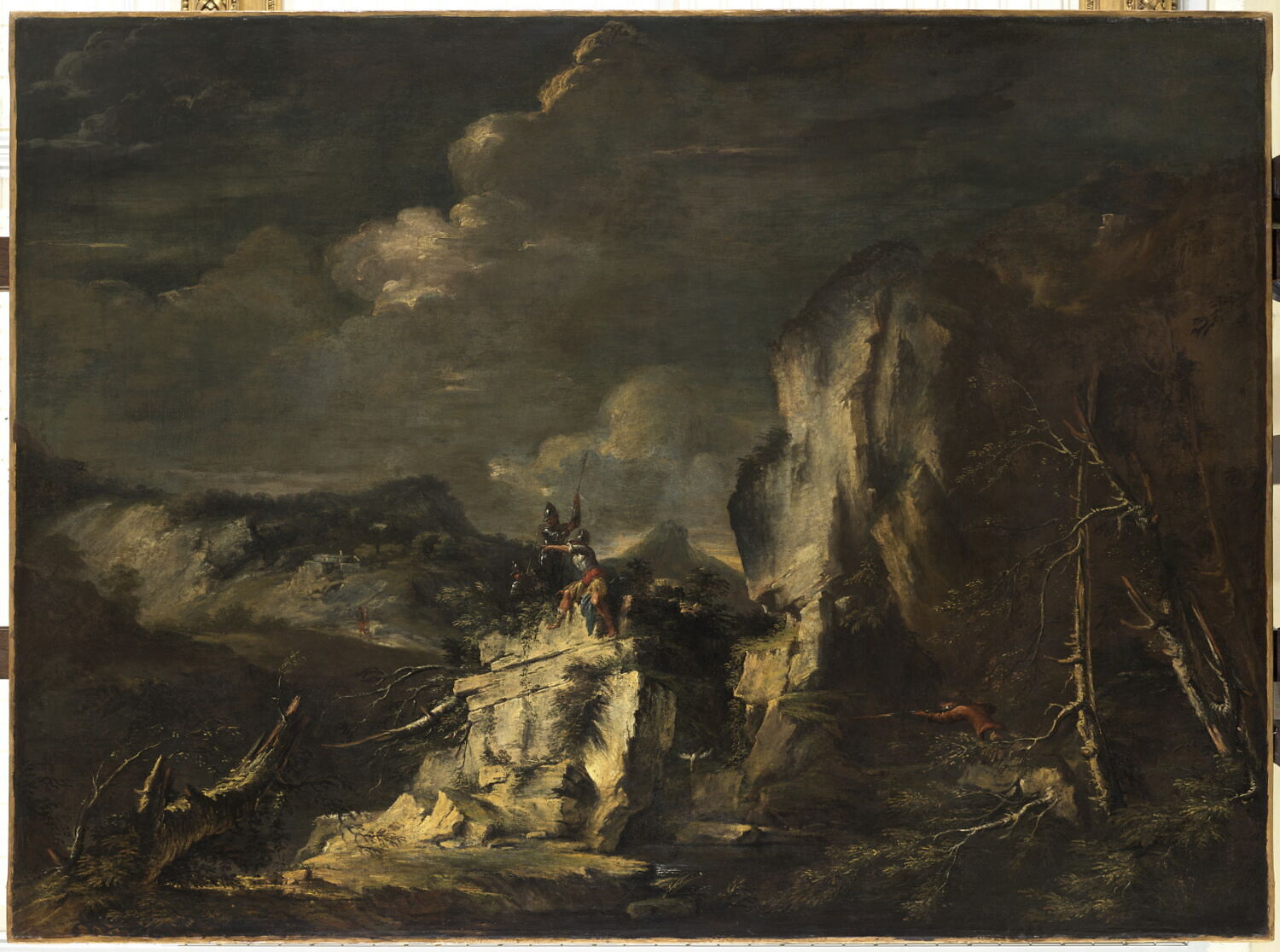
Landschap met lezende monnik
見られますか?
不明
『Landschap met lezende monnik』は今どこに? 所蔵: アムステルダム国立美術館, アムステルダム. 不明.

アムステルダム, オランダ
所蔵者は判明していますが、現在展示中かどうかは不明です。
- 出典
- 美術館
作品について
美術館の言葉で — オランダ語
Onder een rots en een oude boom zit een klein weergegeven monnik of kluizenaar met een boek in zijn hand.
アムステルダム国立美術館
作品データ
- 収蔵番号
- RP-P-2018-1226
描かれているもの
カタログ収録
出典
- アムステルダム国立美術館
- 画像: アムステルダム国立美術館 — public domain
その頃、Salvator Rosaの人生では
生涯をすべて見る1638
Move to Rome under the Protection of Cardinal Brancaccio
He settled in Rome under the patronage of the influential Cardinal Francesco Maria Brancaccio, a lover of the arts and theater who was close to the Barberini family.
1640
Meeting Lucrezia Paolini
In Florence he met Lucrezia Paolini, who had been abandoned by her husband; she became his lifelong companion and was probably the model for the allegory of Music (c. 1641).
1640–1649
Florentine Period at the Medici Court
After scandalous quarrels with Bernini and his failure to gain admission to the Accademia di San Luca, he moved to Florence at the invitation of Giovanni Carlo de' Medici, where he remained until 1649.
1640s
Founding of the Accademia dei Percossi in Florence
In Florence he founded the Accademia dei Percossi — a combination of studio and salon of poets, playwrights, and painters, where satires and comedies were read at dinners.
1640s
The Satires "Music," "Poetry," "Painting," and "War"
While staying with the Maffei brothers in Volterra, he wrote four satires — Music, Poetry, Painting, and War; at the same time he painted the picture Philosophy (now in the National Gallery, London).
1641
Birth of His First Son, Rosalvo
Rosa and Lucrezia had their first son, Rosalvo, probably in Volterra; at least four more of the couple's children born between 1641 and 1657 were given up to foundling homes.