René Magritteベルギー, 1898–1967
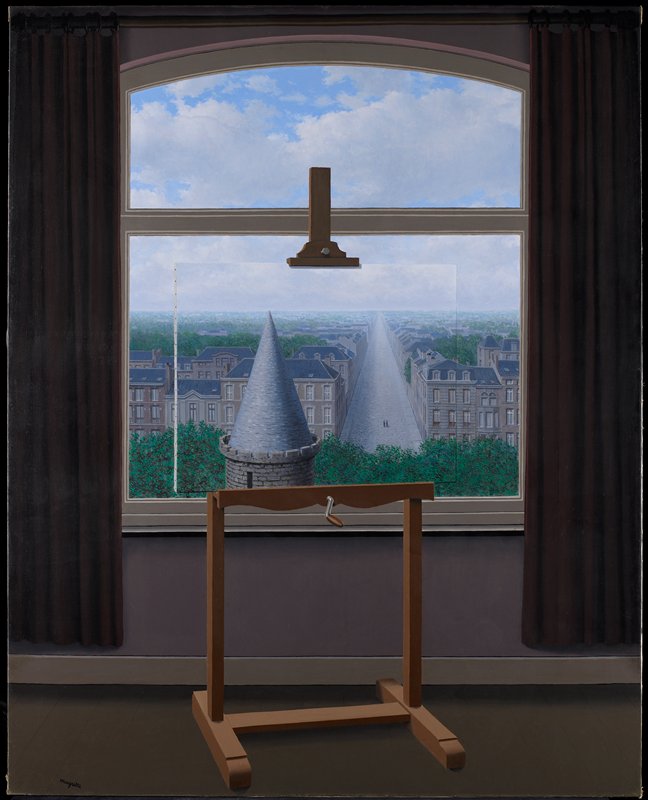
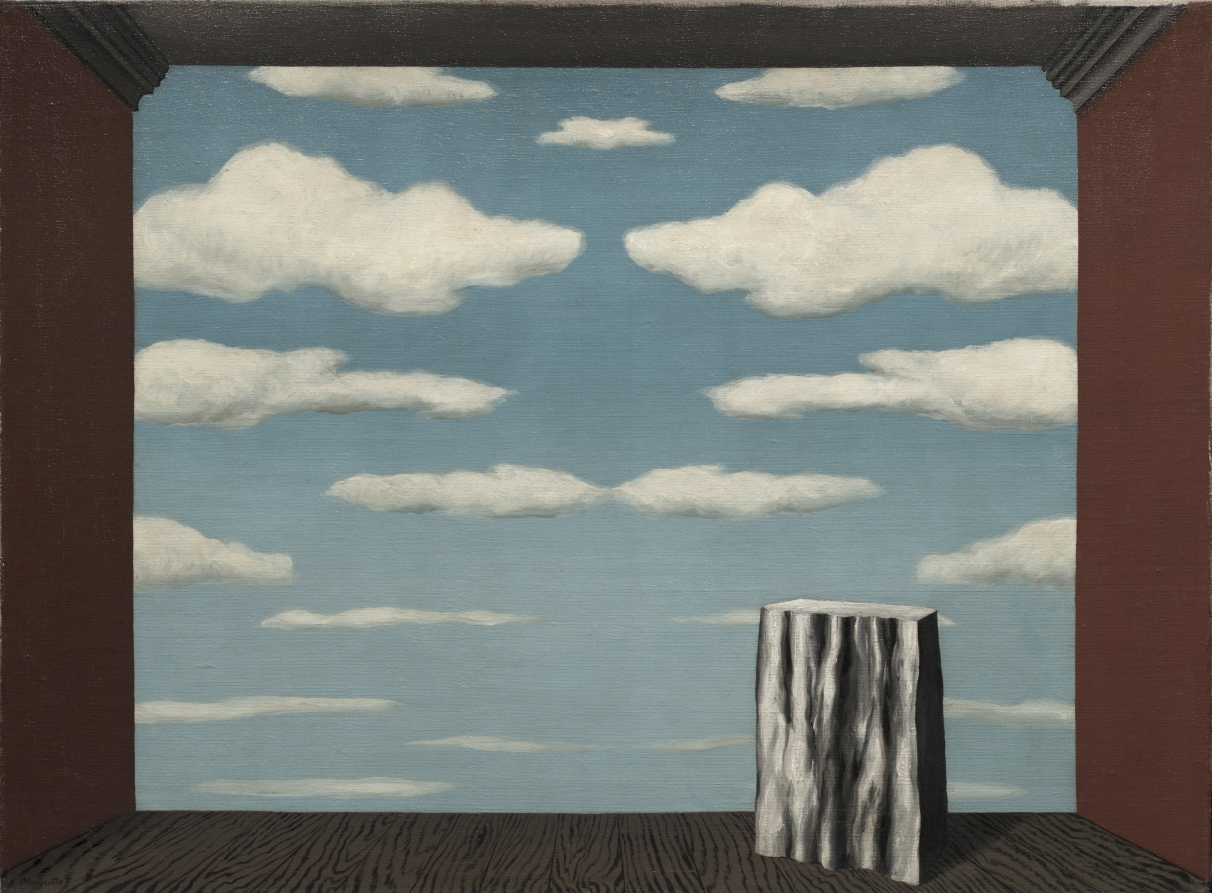
La condition humaine
見られますか?
はい、現在展示中
『La condition humaine』は今どこに? ナショナル・ギャラリー, 展示室 415B · 東館, 上層階, ワシントンD.C. はい、現在展示中. 確認 2026年9月29日.

開館中· 17:00まで
一般公開されています。
- 確認
- この状態になった日
- 出典
- 美術館
作品データ
- 収蔵番号
- 1987.55.1
描かれているもの
カタログ収録
出典
- ナショナル・ギャラリー
- 画像: ナショナル・ギャラリー — © the artist or rights holder
その頃、René Magritteの人生では
生涯をすべて見る1930–1932
No exhibitions, no sales: a stipend from Claude Spaak
Between 1930 and 1932 Magritte had no exhibitions and sold no work; he was supported by a monthly stipend arranged by the Belgian playwright Claude Spaak.
1930s
The patronage of Edward James
The British Surrealist patron Edward James let Magritte stay rent-free in his London home, where he studied architecture and painted; James is depicted in two paintings of 1937, “The Pleasure Principle” and “Not to Be Reproduced”.
1930–1954 · 居住
René Magritte House
1932
Joins the Communist Party of Belgium
Holding left-wing views, he apparently joined the party twice before the war — in 1932 and 1936 — and left both times over disputes about the role of art in propaganda: party members criticised “The Red Model” for misrepresenting communists and rejected his poster designs for the textile workers’ centre.
1934
Alice Lorge buys “Black Magic”
Suzanne Spaak’s sister Alice Lorge bought “La Magie noire” — the first of a series of eleven paintings showing Georgette Berger in a classical nude pose; Claude Spaak commissioned portraits of his wife and children from Magritte.
1934–1937
Film posters under the pseudonym Emair
From 1934 to 1937 he drew film posters under the pseudonym Emair for the German sound-film distributor Tobis Klangfilm; seven of them are preserved in the Leuven City Archive.