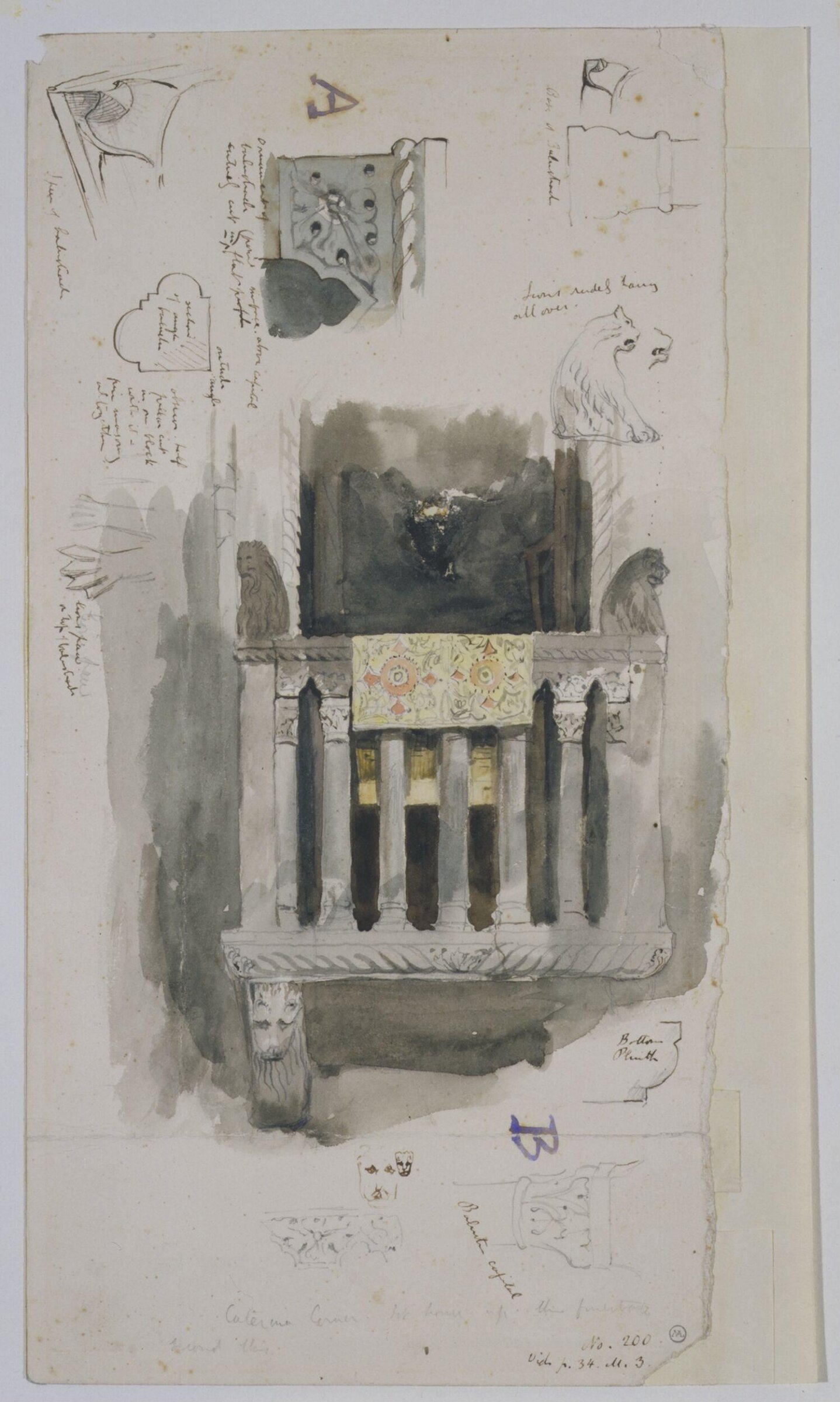
John Ruskinイングランド, 1819–1900
Kustlijn met kliffen
お目にかかれますか?
不明
『Kustlijn met kliffen』は今どこに? 所蔵: アムステルダム国立美術館, アムステルダム. 不明.

アムステルダム, オランダ
所蔵者は判明していますが、現在展示中かどうかは不明です。
- 出典
- 美術館
作品データ
- 収蔵番号
- RP-P-1942-556
描かれているもの
カタログ収録
出典
- アムステルダム国立美術館
- 画像: アムステルダム国立美術館 — public domain
その頃、John Ruskinの人生では
生涯をすべて見る1834–1900 · 活動地
Great Britain
1850s
Patron of Hunt, Rossetti and Burne-Jones
Ruskin continues to support Holman Hunt and Rossetti, provides an annuity of £150 in 1855–57 to Rossetti's wife Elizabeth Siddal (and pays for Henry Acland's medical care of her), and gives critical and financial help to John Brett, John William Inchbold and Edward Burne-Jones, whom he calls “Brother Ned”. His father disapproves of such friends — a further cause of tension between them.
1851–1853
The three-volume “Stones of Venice”
Growing from a technical history of Venetian architecture, from the Byzantine to the Renaissance, into a broad cultural history, the work is a warning to contemporary England about the moral and spiritual health of society: Ruskin explains the decline of Venice by the loss of true Christian faith. The chapter “The Nature of Gothic” from the second volume — a critique of the division of labour and industrial capitalism — will be published by William Morris as a separate book.
summer 1853
Millais paints Ruskin's portrait at Glen Finglas
In the summer of 1853 Ruskin and Effie take Millais and his brother to Scotland: at Glen Finglas the painter paints the closely observed landscape background of gneiss rock to which, as had always been intended, he later adds Ruskin's portrait. In these years Ruskin supports Millais as patron and mentor.
1853
First public lectures, in Edinburgh
In November 1853 Ruskin gives his first public lectures, on architecture and painting, in Edinburgh; from the 1850s he becomes an increasingly popular public lecturer.
April – July 1854
Effie leaves Ruskin and the marriage is annulled
Suffering from illness and from fierce quarrels with her husband and his overly protective parents, Effie goes to her own parents in Scotland; she and Millais have fallen in love, and her leaving causes a public scandal. In April 1854 she files a suit of nullity on grounds of non-consummation, which is granted in July; Ruskin does not even mention it in his diary.