 Man Rayアメリカ合衆国, 1890–1976
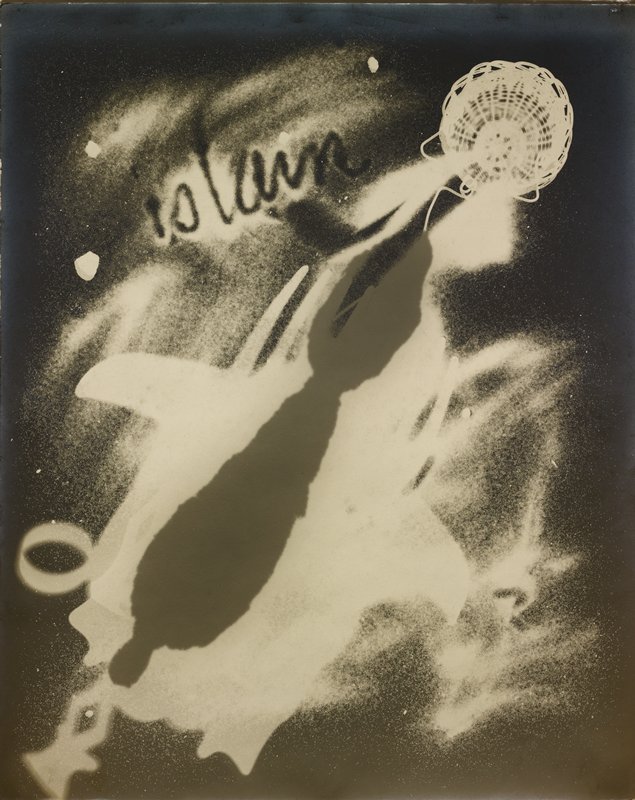
. . . istan/islam
お目にかかれますか?
ただいまはお迎えしていません

ミネアポリス美術館
ミネアポリス, アメリカ合衆国
コレクションに属していますが、現在は展示されていません。
- 確認
- この状態になった日
- 出典
- 美術館自身の所蔵データ
作品について
Man Ray was a great contributor to the Dada and Surrealist movements, early 20th century avant-garde art movements, and spent most of his artistic career in France. He experimented with photograms, or photographs made without a camera, which he also called “rayographs”. These images were made in a darkroom by placing objects directly on photographic paper, where light was exposed. He would then develop the print resulting in an image with numerous intermingling silhouettes.
This piece, among many others in his career, is purposefully vague. The dreamlike quality to his photographs is highlighted by his statement that “I do not photograph nature. I photograph my visions.”
ミネアポリス美術館
作品データ
- 収蔵番号
- 96.24
カタログ収録
出典
- ミネアポリス美術館: the museum's own open data · 6 日前に取得
- 画像: ミネアポリス美術館 — © Man Ray Trust / Artists Rights Society (ARS), NY / ADAGP, Paris
その頃、Man Rayの人生では
生涯をすべて見る1920s
A photography studio: portraits of Paris bohemia
Convinced that he cannot make a living from his art alone, Ray buys a camera and opens a studio; he creates a series of famous photographic portraits of Erik Satie, James Joyce, Gertrude Stein and Jean Cocteau.
1920s
Discovering Eugène Atget with Berenice Abbott
Together with his assistant Berenice Abbott, Ray discovers the photography of Eugène Atget, bringing it to the attention of the Surrealists and a wider public.
1922
The album “Champs délicieux” with Tristan Tzara
Ray and Tristan Tzara publish in Paris the album of photographs Champs délicieux.
1924
René Clair's “Entr'acte” and Léger's “Ballet Mécanique”
In René Clair's film Entr'acte Ray appears in a brief scene playing chess with Duchamp; the same year, 1924, he personally operates the camera on Fernand Léger's Ballet Mécanique.
1925
The first Surrealist exhibition at the Galerie Pierre
Ray is represented in the first Surrealist exhibition at the Galerie Pierre in Paris, alongside Jean Arp, Giorgio de Chirico, Max Ernst, Georges Malkine, André Masson, Joan Miró and Pablo Picasso.