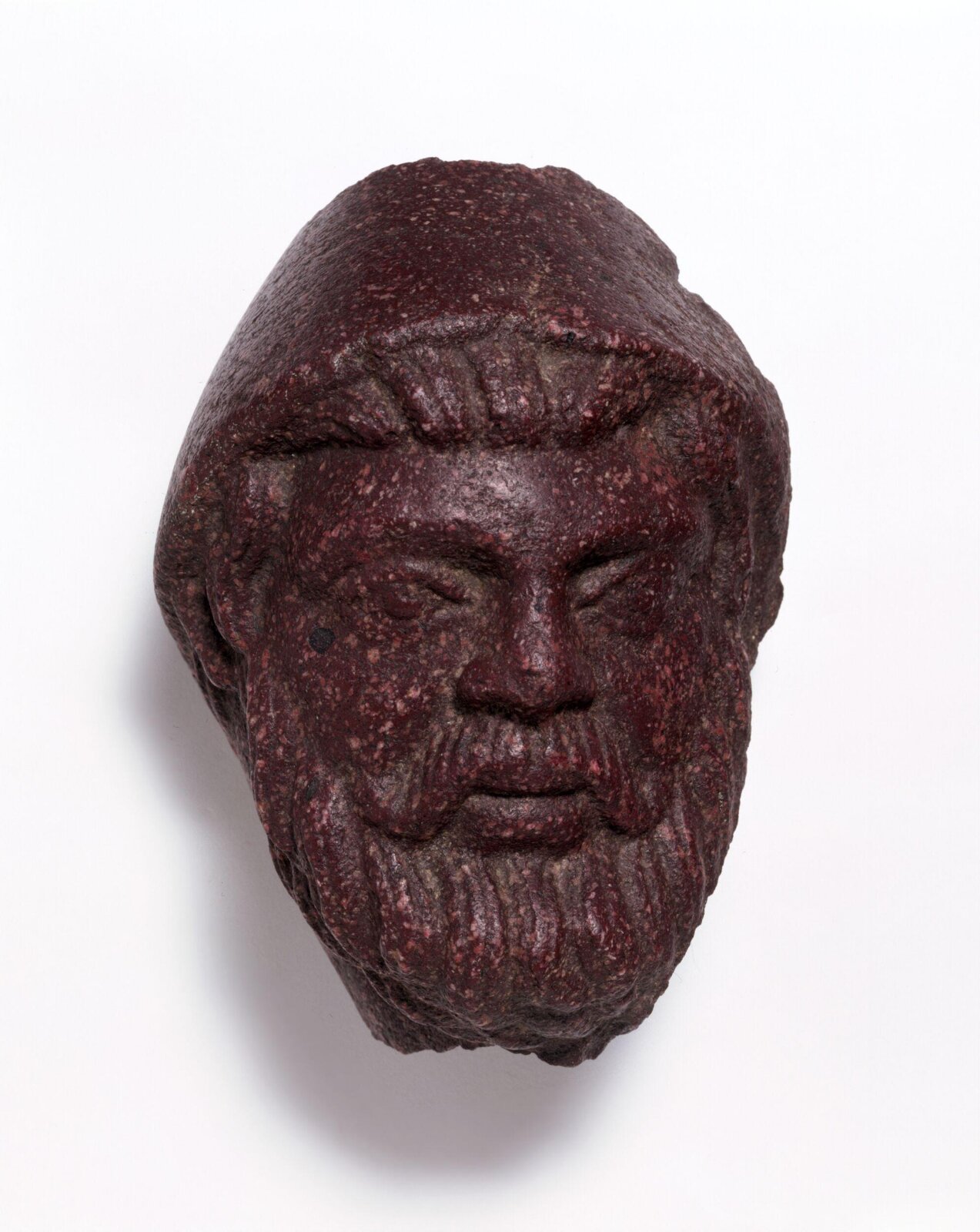
Head of a Warrior
お目にかかれますか?
はい、お客様をお迎えしています

一般公開されています。裏付けとなる出典は下に記しています。
- 確認
- この状態になった日
- 出典
- 美術館
この彫刻について
This head represents a Goth or Persian warrior. It may come from the sarcophagus of St Helena, mother of Emperor Constantine, which is preserved in the Vatican. Because of its purple colour, porphyry was used both for statues depicting the imperial family and for their sarcophagi.
続きを読む
The site of the ancient porphyry quarries from which this stone originates, after being long lost, was discovered in the Nineteenth century by Burton and Wilkinson at Gebel Dokhan, situated in the Red Sea mountains of eastern Egypt. The purple Imperial Porphyry is found nowhere else in the world, except in these mountains (together with other types of Porphyry) and the Romans went to extraordinary lengths to acquire substantial amounts of it. The environment around the mines was harsh with little readily available water - the present day climate can reach 114 degrees Fahrenheit and there would have been no local source of food with wildlife extremely scarce. The extraction of porphyry from this inhospitable terrain was a considerable logistical feat.
The material could only be extracted in workable blocks from the tops of four mountains, from whence it was transported down narrow zig zag paths and slipways which are still preserved. On reaching the wadi bed the archaeological evidence of the transportation continues in the form of a cistern and animal lines and then a great loading ramp 8km futher on, where it is believed the the stone would be loaded on to carts for the journey to the Nile, 150km away, going via Badia on a road delineated by cairns that are still visible today. The site of the mines was explored and excavated by a team lead by Dr Peacock of Southampton University in the Imperial Porphyry Mines Project.
ヴィクトリア&アルバート博物館
作品データ
- 収蔵番号
- A.102-1956