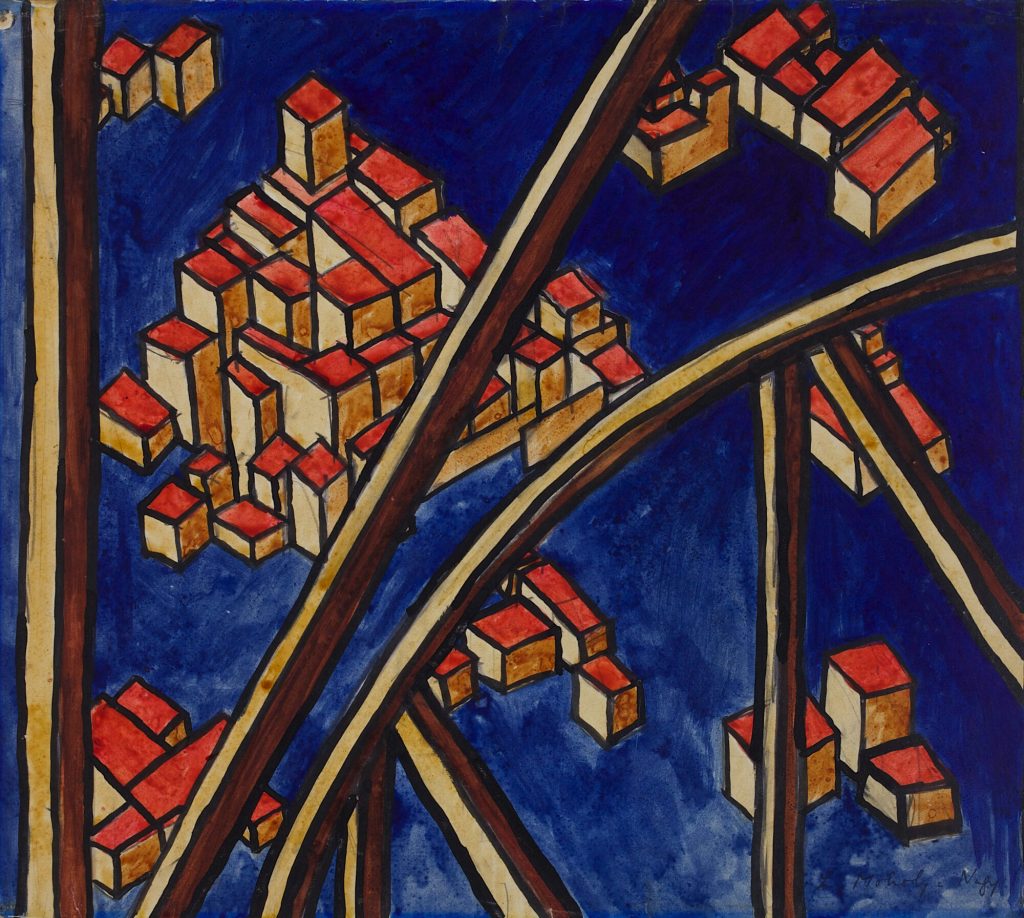
László Moholy-Nagyアメリカ合衆国, 1895–1946
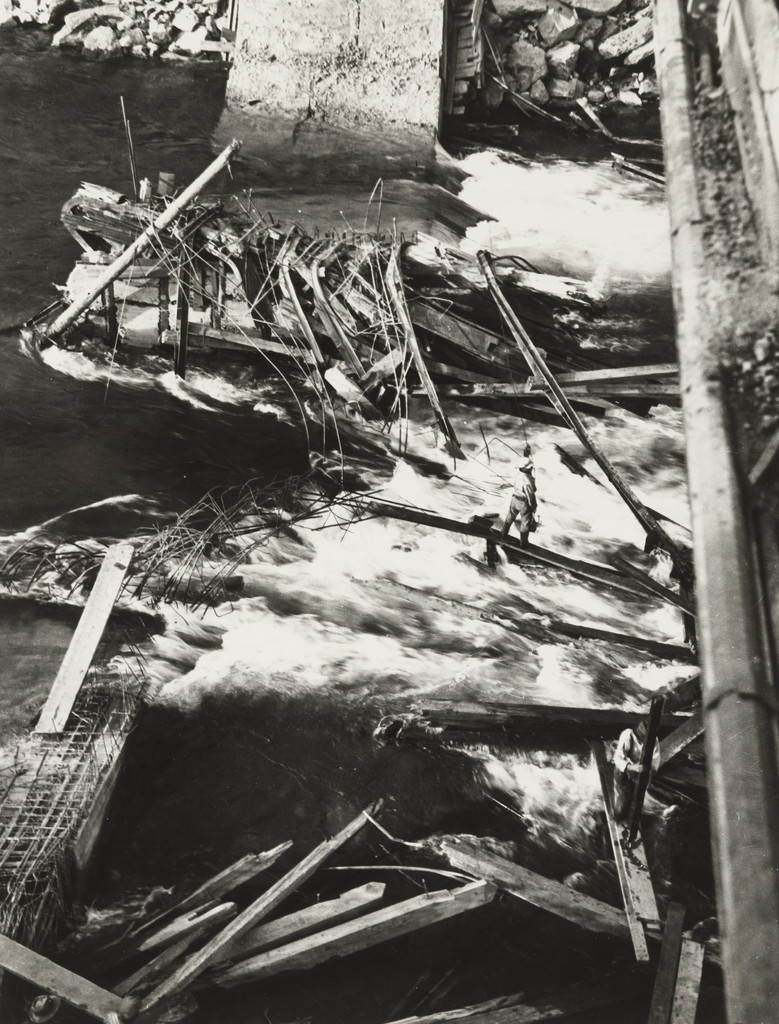
Gezicht vanaf de Pont Transbordeur
見られますか?
不明
『Gezicht vanaf de Pont Transbordeur』は今どこに? 所蔵: アムステルダム国立美術館, アムステルダム. 不明.

アムステルダム, オランダ
所蔵者は判明していますが、現在展示中かどうかは不明です。
- 出典
- 美術館
作品について
This may well be the penultimate example of Modernism as expressed in photography in the 1920s. Moholy-Nagy climbed to the top of the Marseille transporter bridge and photographed straight down. The rhythm of the metal construction, printed dark, contrasts with the circular concrete pillar. Two triangular sails of a ship passing by prevent the photograph from turning into an entirely abstract entity.
アムステルダム国立美術館
作品データ
- 収蔵番号
- RP-F-2010-1
描かれているもの
カタログ収録
出典
- アムステルダム国立美術館
- 画像: アムステルダム国立美術館 — public domain
その頃、László Moholy-Nagyの人生では
生涯をすべて見る1920–1933 · 居住
Berlin
1928
Leaves the Bauhaus for his own Berlin studio
In 1928 Moholy-Nagy left the Bauhaus (Marianne Brandt took over the metal workshop) and set up his own design studio in Berlin, employing István Seboek, György Kepes and Andor Weininger. He designed sets for operatic and theatrical productions (including Erwin Piscator's political theatre) as well as exhibitions and books, ad campaigns and films.
1929
Helps organise “Film und Foto” in Stuttgart
Moholy-Nagy was brought in to help organise the famous “Film und Foto” exhibition in Stuttgart.
1929
Separates from Lucia
In 1929 Moholy-Nagy separated from his first wife Lucia, photographer and collaborator in his photogram experiments.
summer 1931
A trip to Finland as Alvar Aalto's guest
In the summer of 1931 Moholy-Nagy travelled to Finland with his then girlfriend, the actress Ellen Frank (Walter Gropius's sister-in-law), as the guest of the architect Alvar Aalto. There he visited the Holy Cross Church in Hattula — and in 1933 he named his first daughter Hattula.
1931
Meets Sibylle Pietzsch
Moholy-Nagy met the actress and scriptwriter Sibylle Pietzsch, who became his wife and companion for the rest of his life and later an art and architectural historian. Together they made the now-classic film “A Lightplay: Black White Gray”, based on the Light-Space Modulator, as well as “Gypsies” and “Berlin Still Life”.