John Heartfieldドイツ, 1891–1968
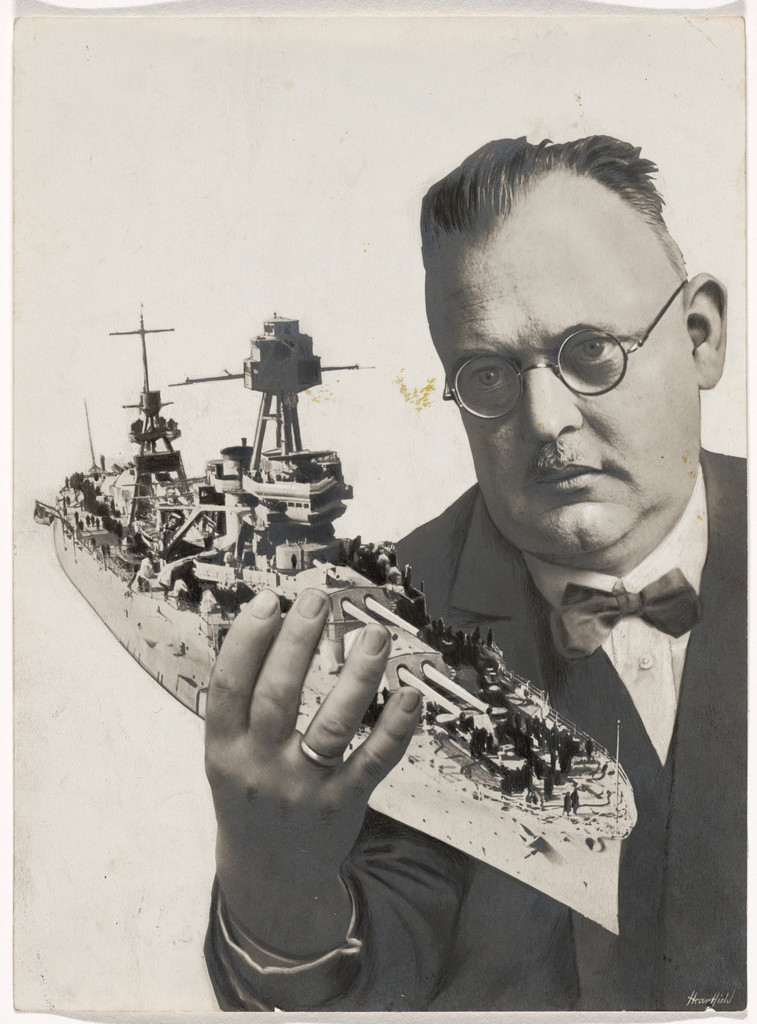
Г. Гринько. Пятилетний план Советского Союза
見られますか?
不明
『Г. Гринько. Пятилетний план Советского Союза』は今どこに? 所蔵: プーシキン美術館, モスクワ. 不明.

モスクワ, ロシア
所蔵者は判明していますが、現在展示中かどうかは不明です。
- この状態になった日
- 出典
- 美術館
作品データ
- 収蔵番号
- ГП-1877
カタログ収録
出典
- プーシキン美術館
- 画像: プーシキン美術館 — © Pushkin State Museum of Fine Arts
その頃、John Heartfieldの人生では
生涯をすべて見る1920s
Photomontages, book jackets and stage sets
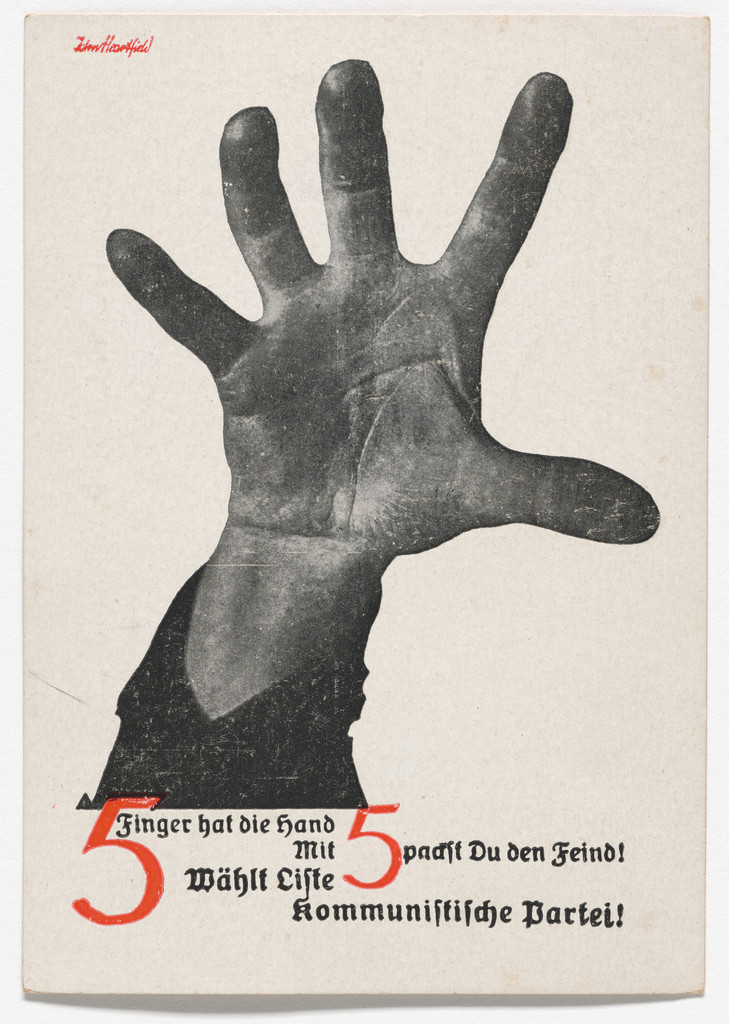
During the 1920s Heartfield produces a great number of photomontages, the first political photomontages, many of them reproduced as dust jackets for books such as Upton Sinclair’s “The Millennium”; he works mainly for the daily Die Rote Fahne and the weekly Arbeiter-Illustrierte-Zeitung (AIZ), and also builds theatre sets for Erwin Piscator and Bertolt Brecht.
1930–1938
Montages on the covers of the AIZ
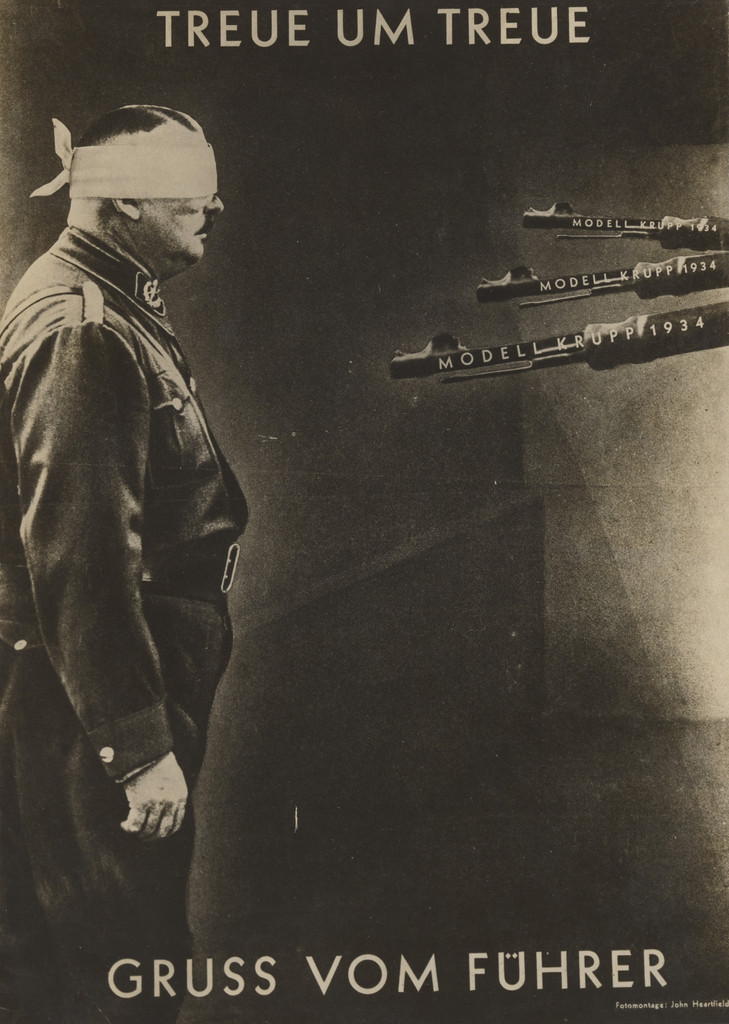
From 1930 to 1938 Heartfield’s political montages regularly appear on the cover of the Arbeiter-Illustrierte-Zeitung, a popular weekly whose circulation, as many as 500,000 copies at its height, rivalled any other contemporary German magazine. In these years he creates 240 political photomontages, mainly criticising fascism and Nazism: satirising Hitler and the Nazis, he subverts Nazi symbols, above all the swastika, in order to undermine their propaganda message.
1932–1933
Montage posters on the streets of Berlin
Through rotogravure, an engraving process whereby pictures, designs and words are engraved into the printing plate or cylinder, Heartfield’s montages in the form of posters are distributed in the streets of Berlin from 1932 until the Nazis come to power in 1933.