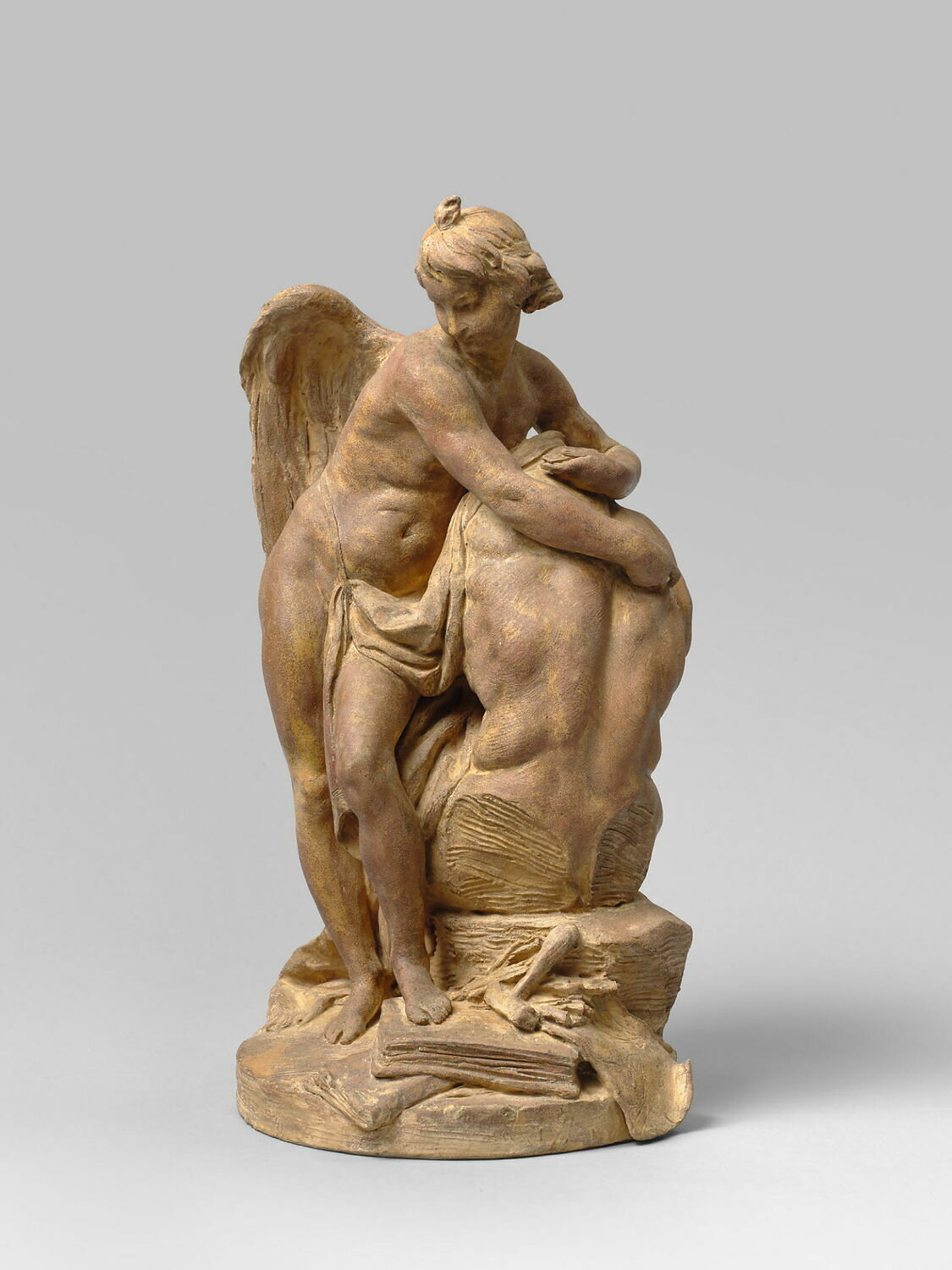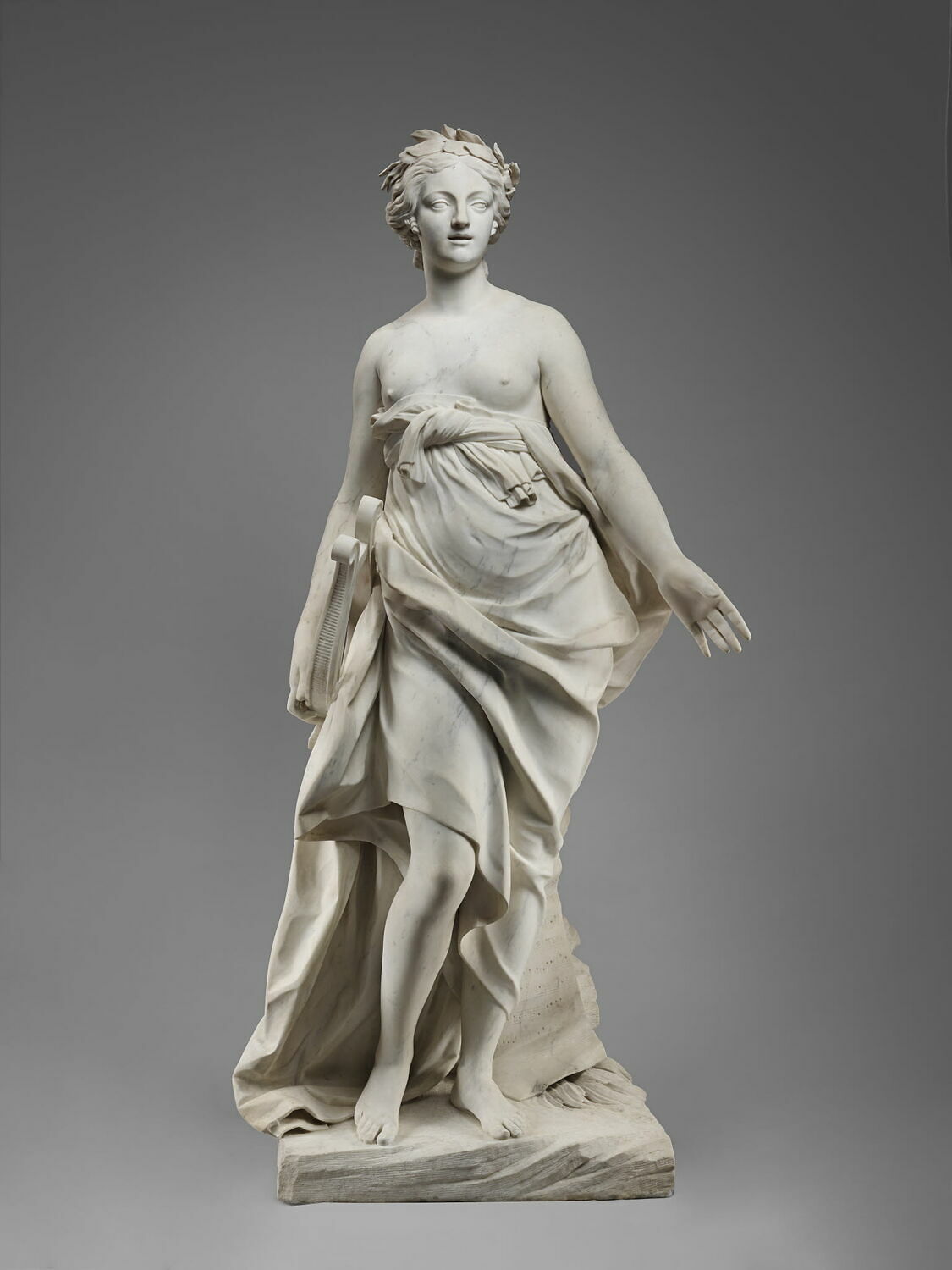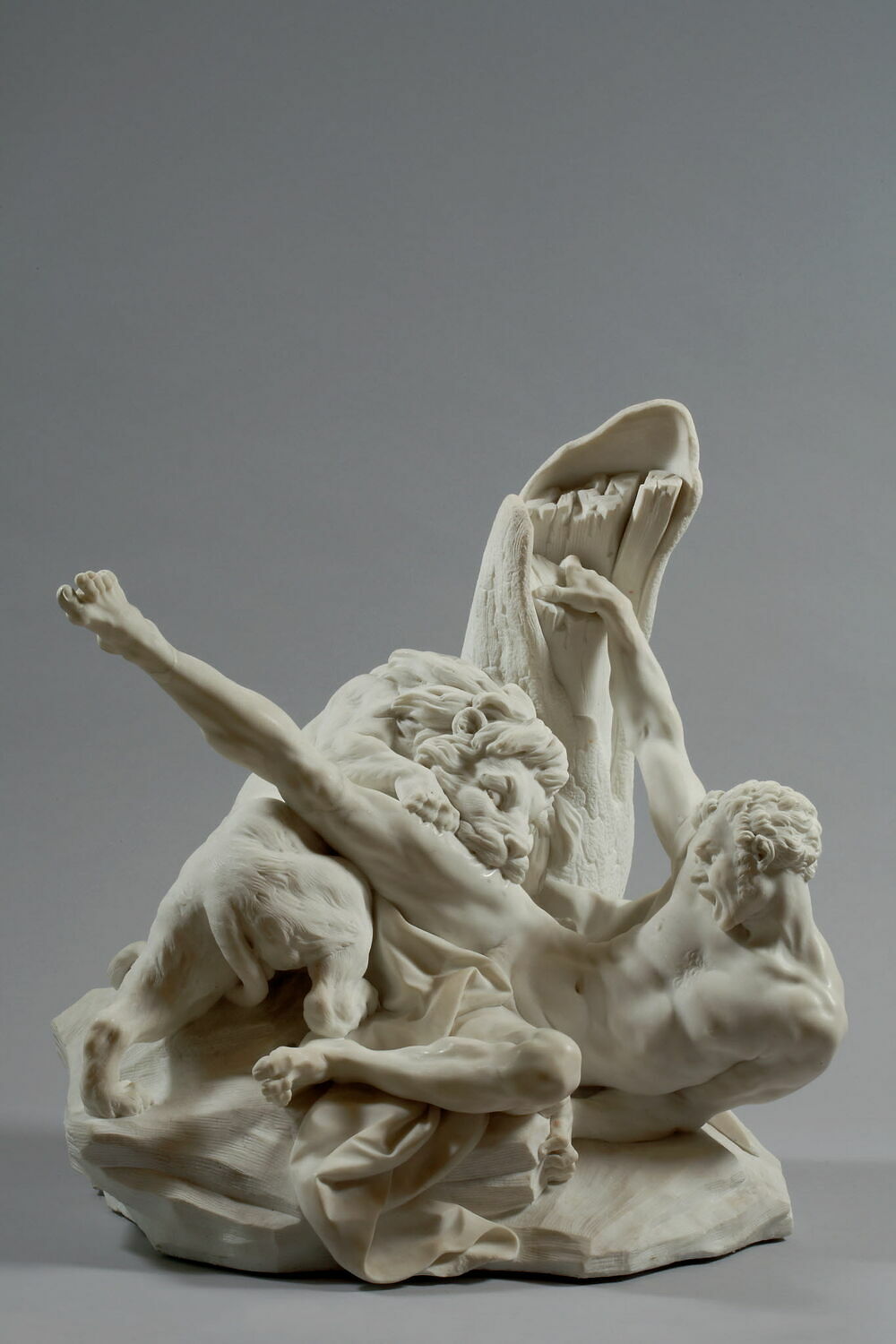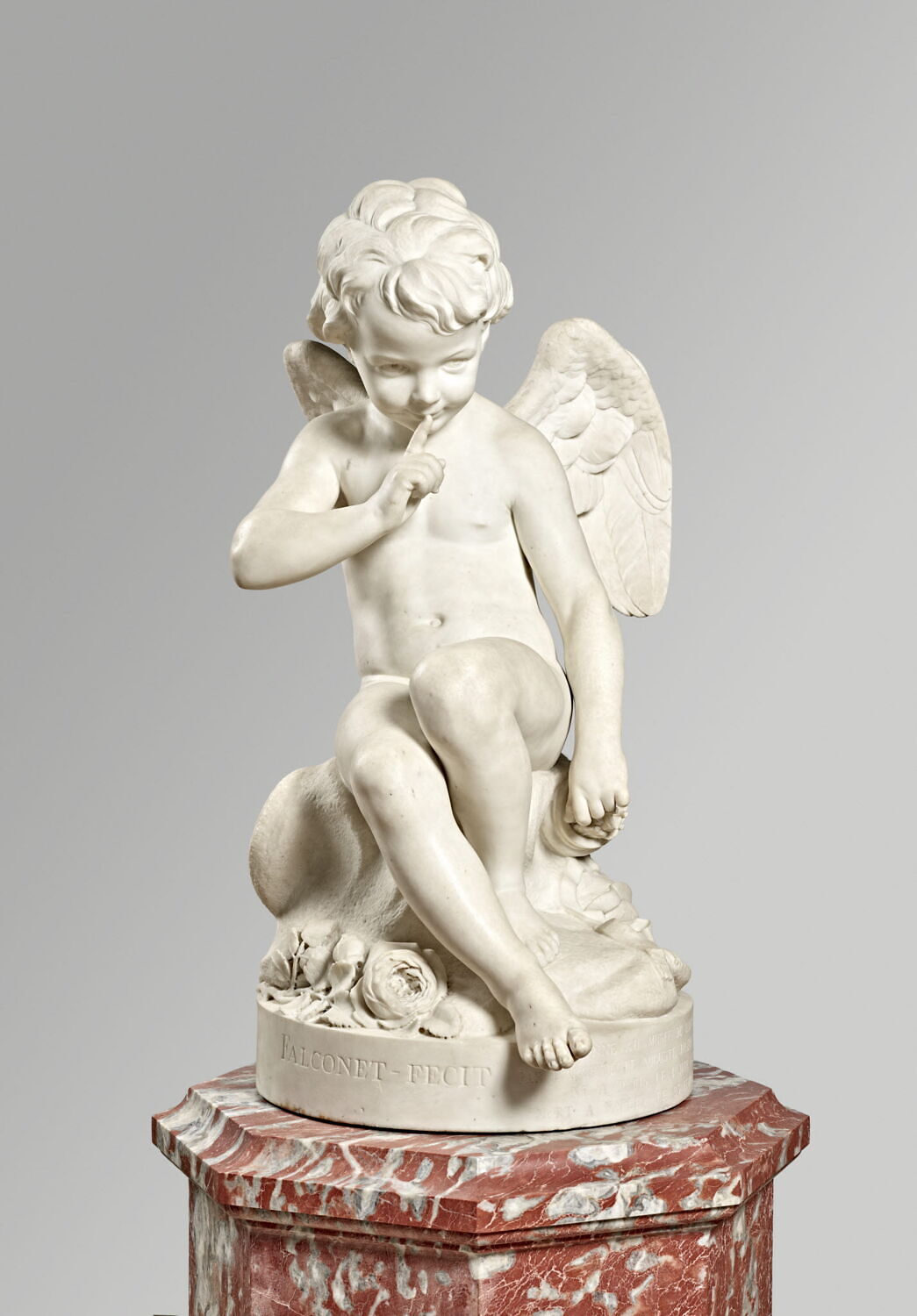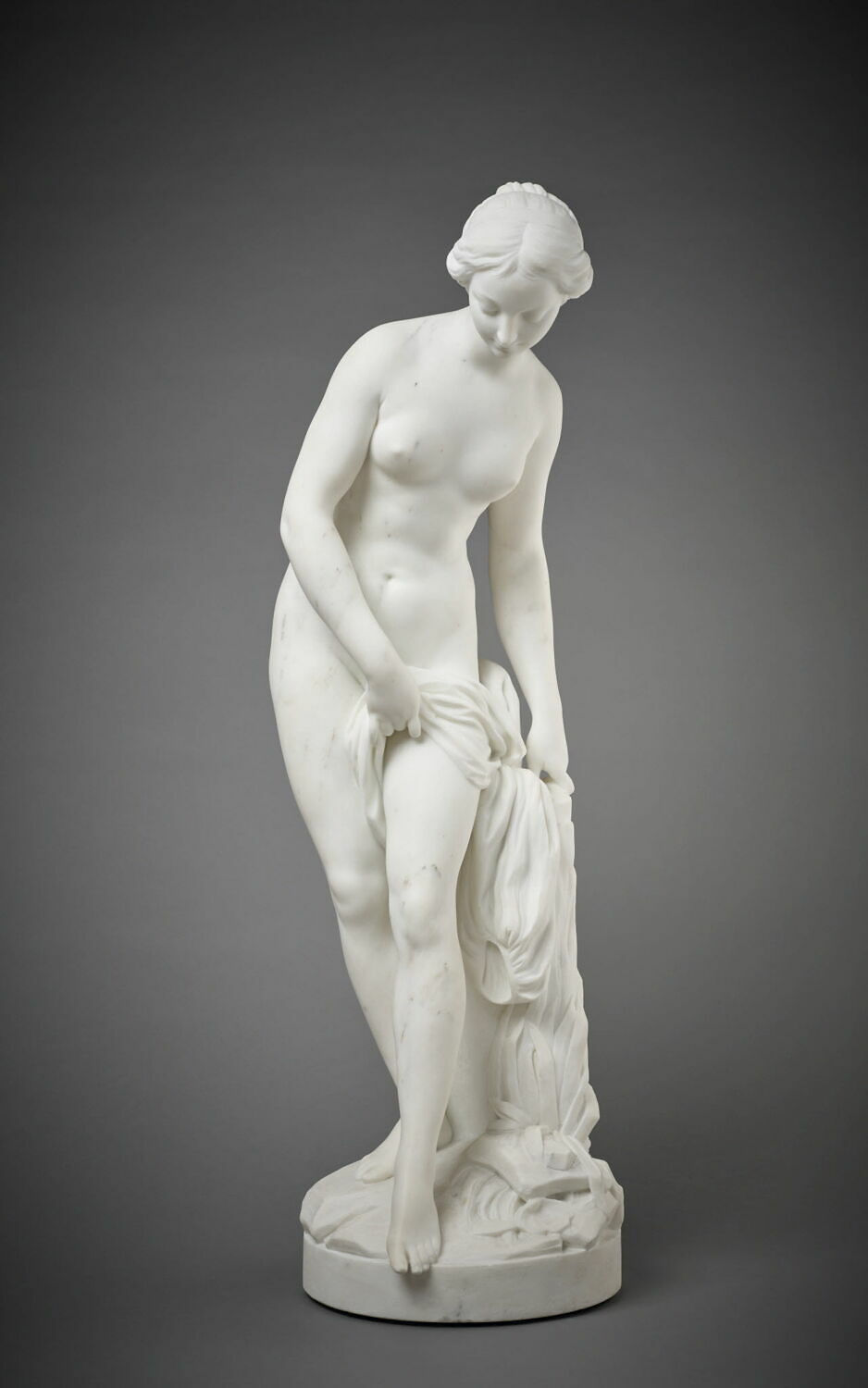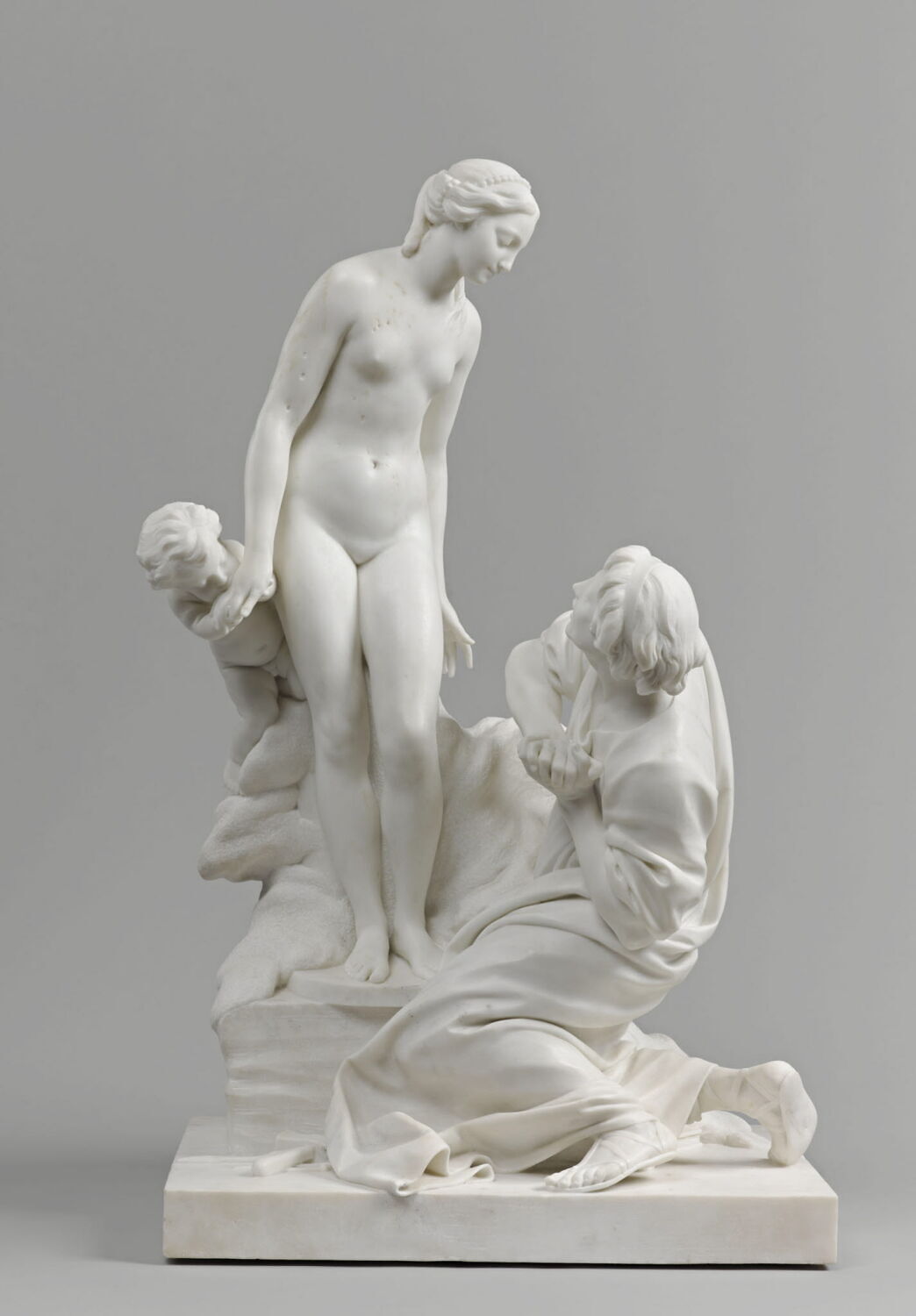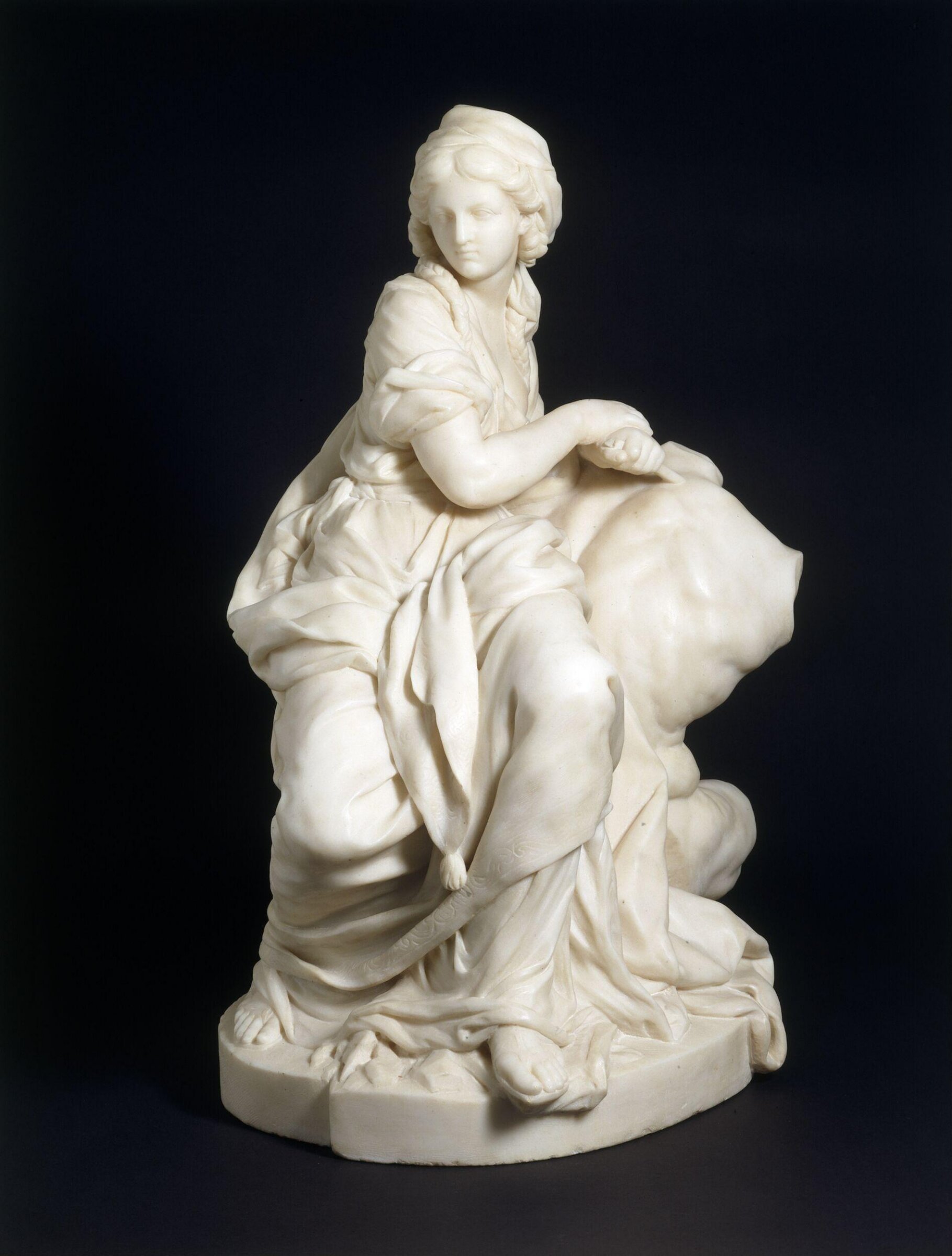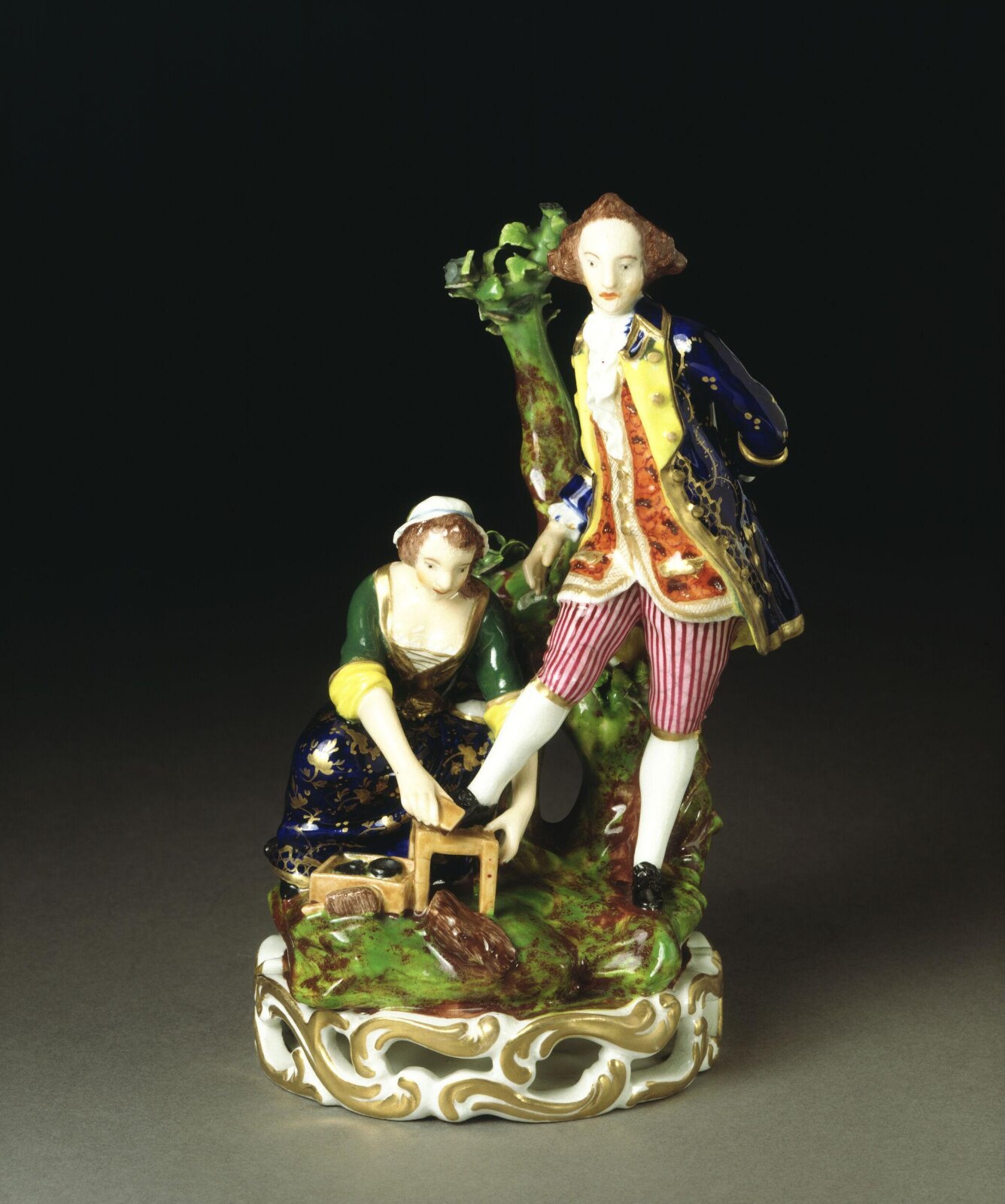
 Etienne-Maurice Falconetフランス, 1716–1791
Figure group
お目にかかれますか?
はい、お客様をお迎えしています

一般公開されています。
- 確認
- この状態になった日
- 出典
- 美術館
この彫刻について
Object Type
From about 1740 sets of porcelain figures were first made as table decorations for the dessert course of grand dinners. They were used in place of, or alongside, decorations modelled in sugar paste or wax. Unglazed ('biscuit') porcelain figures were considered especially suitable for the dessert course.
This group and the companion ones of a stocking-mender and a hairdresser, were copied from biscuit figure groups made around 1756 at Sèvres, the Royal French porcelain factory. By this time porcelain figures were also being used in interior decoration. It is most likely that the glazed porcelain versions that Derby made in the 1770s, and which they reissued in the early 19th century, were intended for use in interiors.
People
続きを読む
The Sèvres porcelain originals on which this group and its companions were based were modelled by Etienne-Maurice Falconet (1716-1791), a leading French sculptor. Falconet was the director of modelling at the factory between 1757 and 1766.
Materials & Making
Like most Derby figure groups, this one is formed by slip-casting. In this process a mixture of clay and water is poured into a set of hollow plaster moulds. The water evaporates, leaving a thin layer of clay. The moulds are then taken apart and the figure parts removed and assembled before firing.
ヴィクトリア&アルバート博物館
作品データ
- 収蔵番号
- C.1303-1919
描かれているもの
カタログ収録
出典
- ヴィクトリア&アルバート博物館
- 画像: ヴィクトリア&アルバート博物館 — © Victoria and Albert Museum, London