 Etienne-Maurice Falconetフランス, 1716–1791
Figure
お目にかかれますか?
ただいまはお迎えしていません

ヴィクトリア&アルバート博物館
ロンドン, イギリス
コレクションに属していますが、現在は展示されていません。
- 確認
- この状態になった日
- 出典
- 美術館
この彫刻について
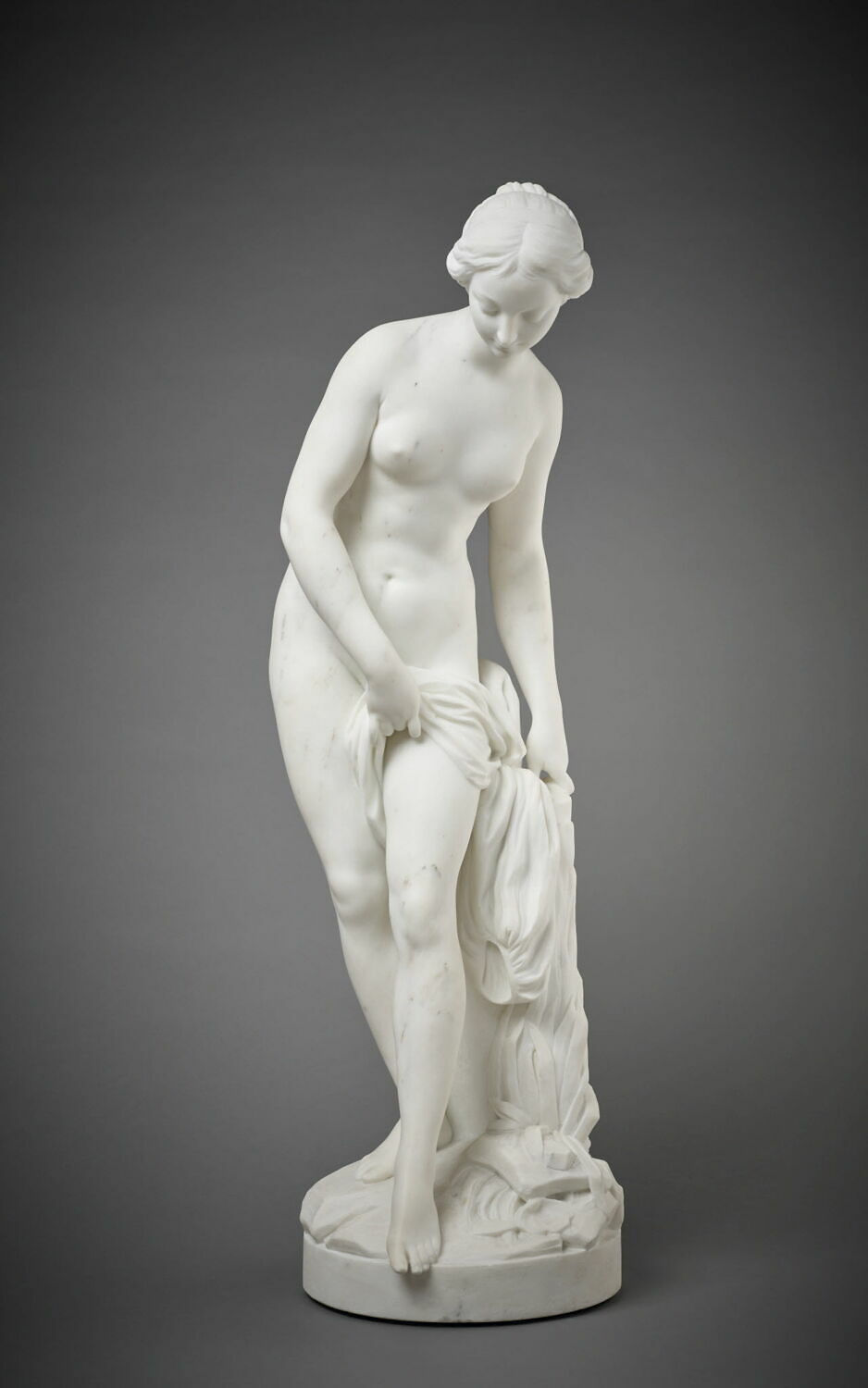
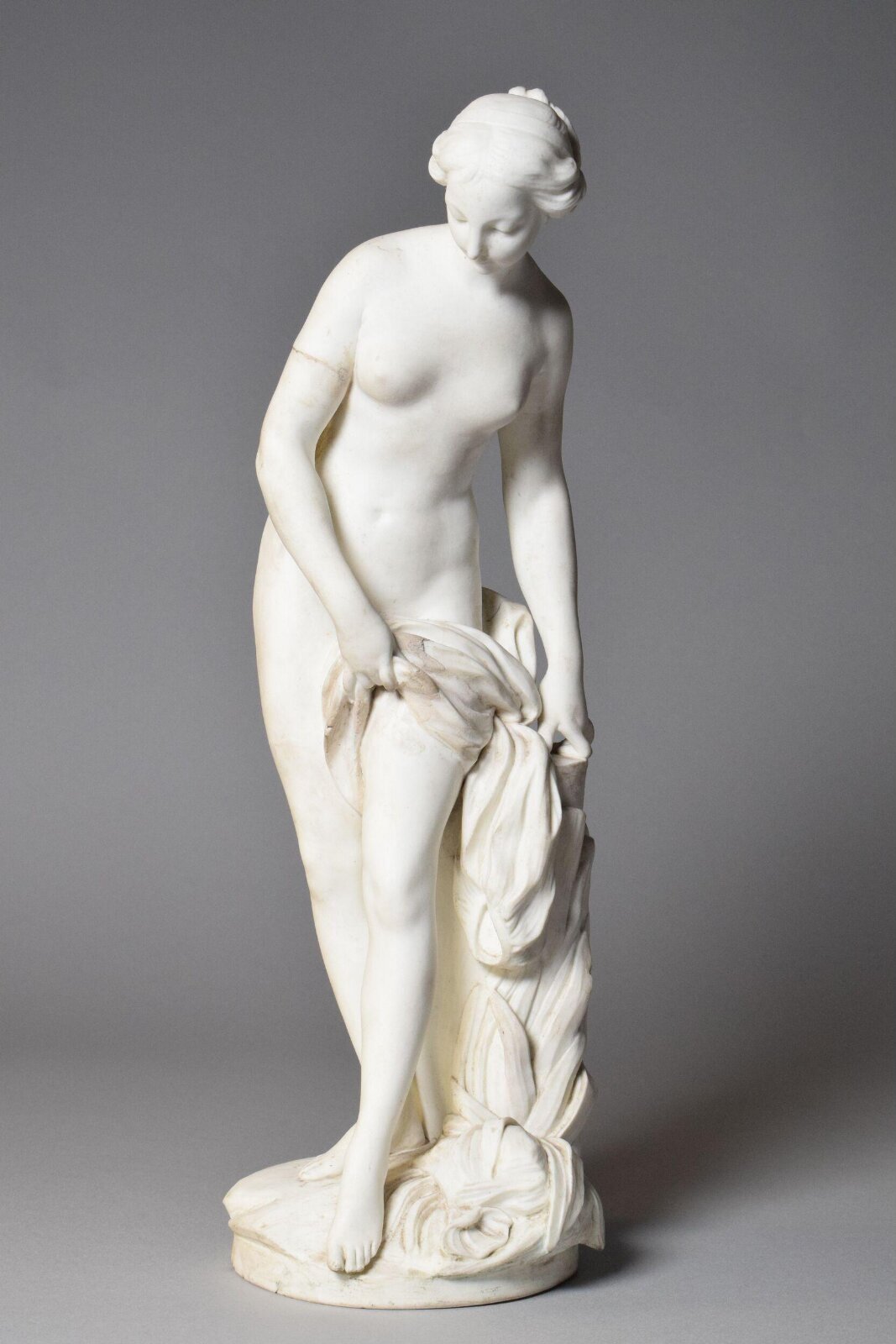
Étienne-Maurice Falconet (1716–1791) was director of the modelling workshop at Sèvres porcelain manufactory 1755-1766. He was inspired by various classical sources, including ancient Roman marble sculpture, and work by the French Rococo artist François Boucher. This figure is based on Falconet’s marble sculpture, La Baigneuse, or Nymphe qui descend au bain, exhibited in the Paris Salon in 1757, and now in the Louvre.
続きを読む
Porcelain figures were typically made from moulds with various parts that were meticulously assembled before the first firing. They were created as table decorations, evolving from the tradition for wax or sugar statuettes. Biscuit porcelain was first produced around 1751, and was considered a good substitute for sugar sculptures specifically. As biscuit porcelain was unglazed and unpainted, faults and blemishes were difficult to conceal which made it both highly valued and highly expensive.
ヴィクトリア&アルバート博物館
作品データ
- 収蔵番号
- 383-1874