Figure
お目にかかれますか?
ただいまはお迎えしていません

ヴィクトリア&アルバート博物館
ロンドン, イギリス
コレクションに属していますが、現在は展示されていません。
- 確認
- 7 日前
- この状態になった日
- 2026年9月25日
- 出典
- 美術館自身の所蔵データ
About the sculpture
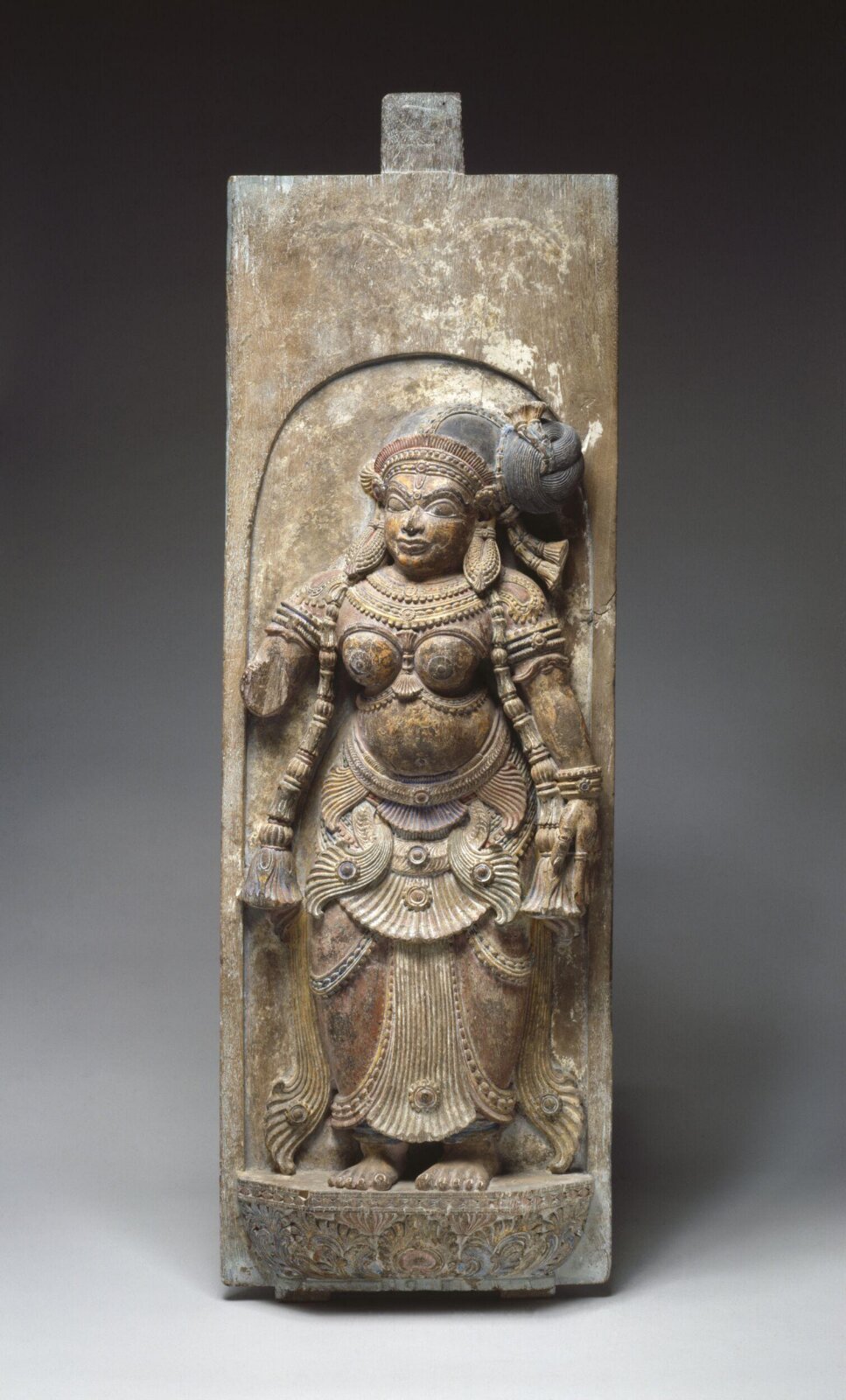
This voluptuously carved figure, elaborately dressed with an ornate headers and magnificent coiffure, is a splendid representation of devadasi ('slave of god'), the professional caste of temple servants who, alongside the brahmin priests, attended to the needs of the deity. The devadasi attended to the lamps and sang celebratory songs. They provided entertainment for the deity by dancing and singing auspicious and laudatory songs (stotra) in praise of god. When a portable image was taken on daily procession within the temple enclosure, they accompanied singing devotional songs. At the bedchamber puja, performed around 10 p.m., they sang lullabies as the god was lulled to sleep. Throughout these ceremonies, the deities were treated like royalty, and celebrated in the eulogising language normally reserved for kings.
Read on
This wooden panel, still with traces of the brightly coloured polychrome which once decorated it, may have once formed part of a temple chariot (ratha) in which portable images of the presiding deity and his consorts would be paraded during temple festivals. From 7th and 8th century descriptions of such festivals contained in the devotional poetry of the bhakta poet-saints, these processions were accompanied by the sound of drums and conches, and the dancing of young woman devotees belonging to the god. Panels such as this also served as decoration on the interiors and verandas of Keralan temples, often being used as ceiling struts, forming an angled bracket between pillar and sloping ceiling.
ヴィクトリア&アルバート博物館
作品データ
- 収蔵番号
- IS.95-1987
カタログ収録
出典
- ヴィクトリア&アルバート博物館: the museum's own open data · 7 日前に取得
- 画像: ヴィクトリア&アルバート博物館 — © Victoria and Albert Museum, London