 Auguste Rodinフランス, 1840–1917
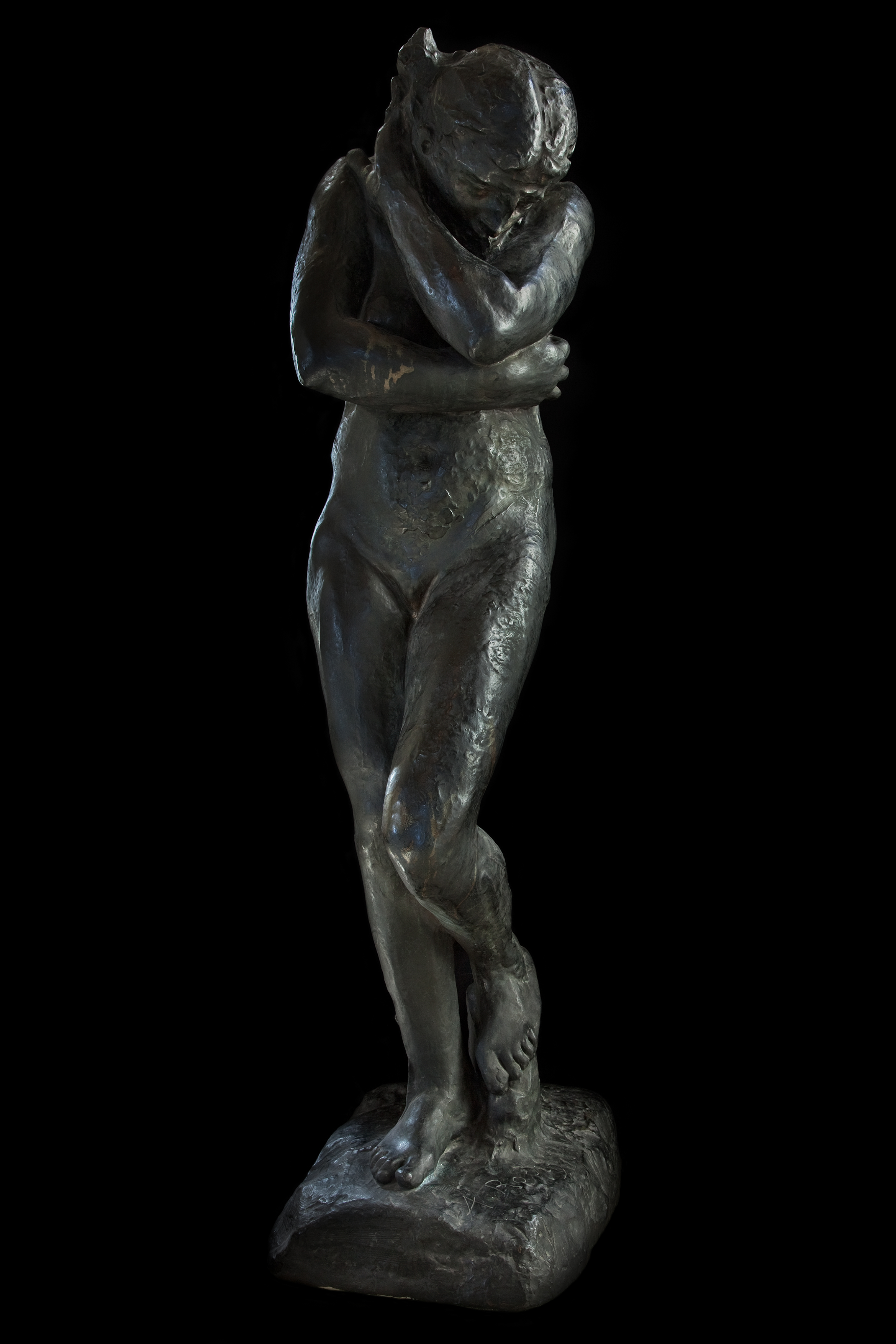
Eva
お目にかかれますか?
不明:美術館は黙して語らず

オーストリア・ギャラリー
ウィーン, オーストリア
所蔵者はわかっています。いま展示されているかどうかは美術館が公表しておらず、当て推量は私どもの流儀ではありません。
- この状態になった日
- 2026年9月27日
- 出典
- 美術館自身の所蔵データ
About the sculpture
In sich gekehrt steht sie da: Eva, die Urmutter allen Lebens auf Erden. Ihren Kopf verbirgt sie schamhaft in den Armen. Da Rodin die Natur zeitlebens als wichtigstes Vorbild ansieht, arbeitet er immer nach dem lebenden Modell. Für seine Eva wählt der französische Bildhauer eine junge Frau, die schwanger ist. Er weiß nichts davon, beobachtet aber genau und fügt so lange Material hinzu, bis ihm sein Modell von der Schwangerschaft erzählt. Die Eva bleibt unvollendet, und Rodin verbringt viele Jahre mit ihr in seinem Atelier. Dann endlich stellt er sie aus und gräbt ihre Füße in Sand ein. Als erste Plastik der Moderne begegnet Eva ihrem Publikum auf Augenhöhe und löst damit eine Revolution in der Kunstwelt aus.
オーストリア・ギャラリー
作品データ
出典
- オーストリア・ギャラリー: the museum's own open data · 5 日前に取得
- 画像: オーストリア・ギャラリー — CC BY-SA 4.0
その頃、Auguste Rodinの人生では
生涯をすべて見る1880
Receives the commission for “The Gates of Hell”
His first state commission was a sculptural portal for a planned Museum of Decorative Arts; with it Rodin received two studios on the Rue de l'Université. The museum was never built and “The Gates of Hell” remained unfinished: they were first cast in bronze after the master's death.
1880
The 1880 Salon: third prize
Rodin showed “St. John the Baptist”, which won third prize. In the same Salon “The Age of Bronze” was exhibited a second time, now cast in bronze.
c. 1880 – 1881
Juliette Adam's salon and first recognition
Rodin was received at the salon of the writer Juliette Adam, where he was presented to Gambetta; Gambetta recommended him to Antonin Proust, the minister of fine arts, who bought “St. John the Baptist” for the state. It was the first recognition to reach a sculptor who was already forty.
1881
London: meeting William Ernest Henley
Rodin's friend Alphonse Legros introduced him in London to the poet William Ernest Henley, who did more than anyone to win him a British audience. Through Henley Rodin met Robert Louis Stevenson and Robert Browning.
1882
“St. John the Baptist” at the Royal Academy
A bust of St. John the Baptist, a version of the statue bought by the French government, was shown with success at the Royal Academy. A year earlier Henley, who had become editor of the Magazine of Art, had published several articles on Rodin there.
1883
Meets Camille Claudel
Standing in for Alfred Boucher, who was away, Rodin supervised his students' course and met the eighteen-year-old Camille Claudel. She became his assistant, model, lover and creative rival.