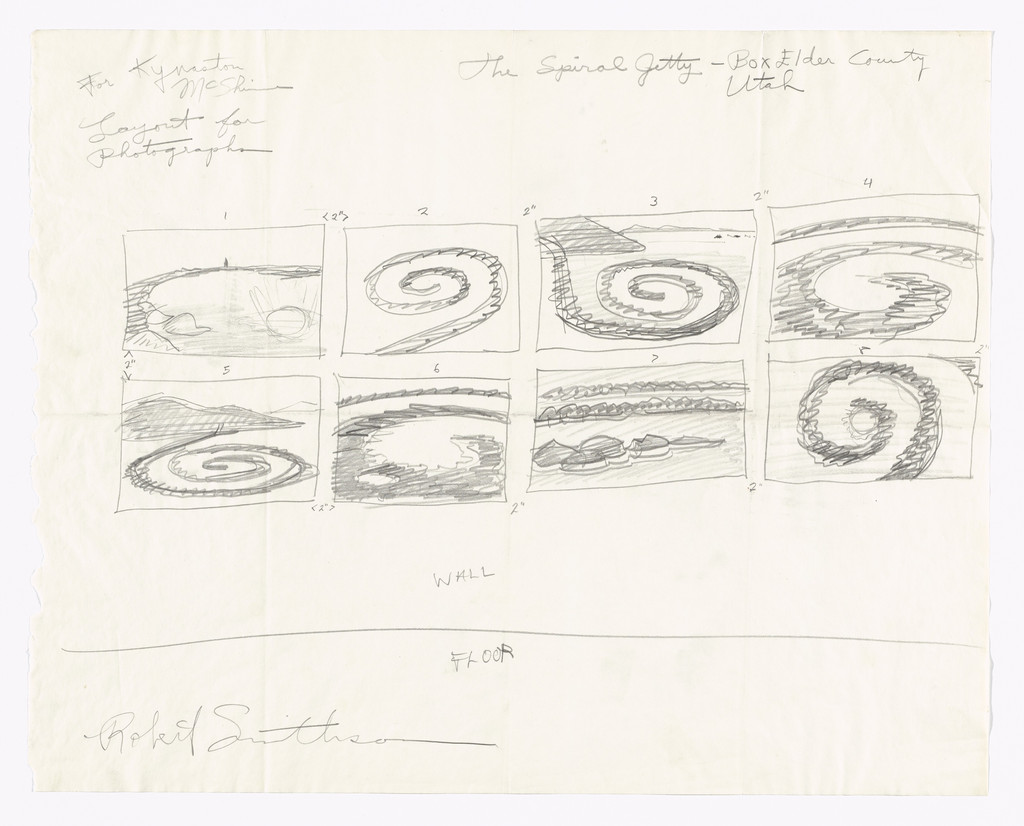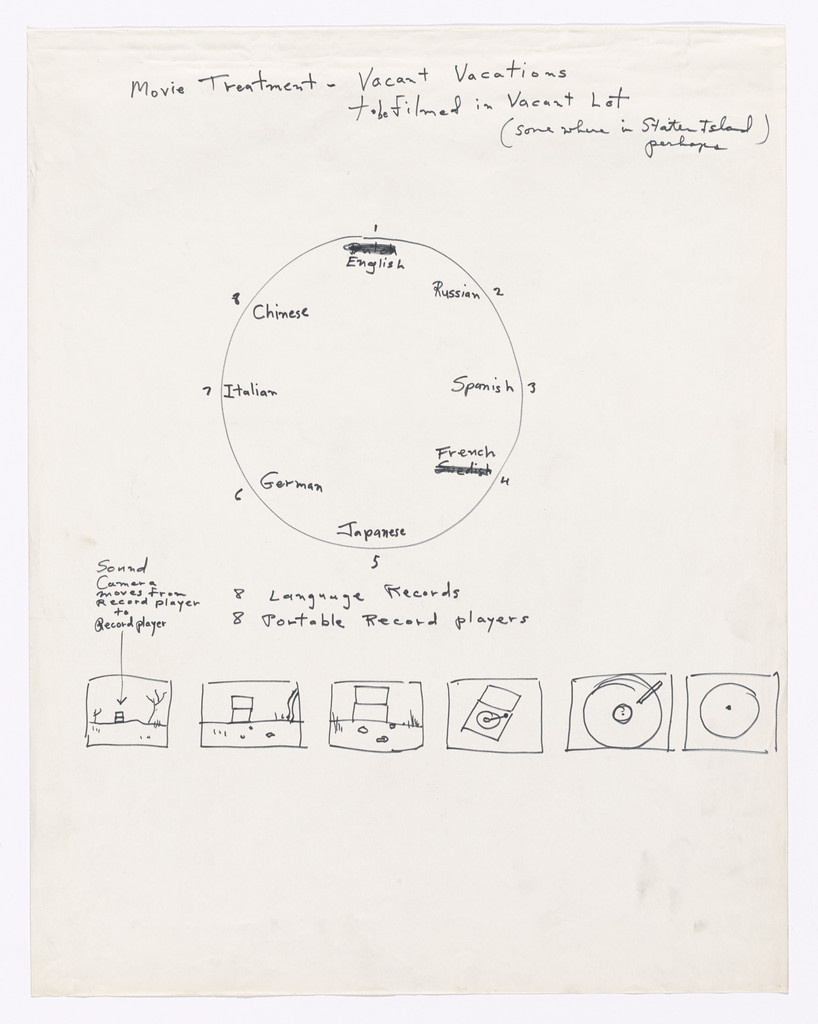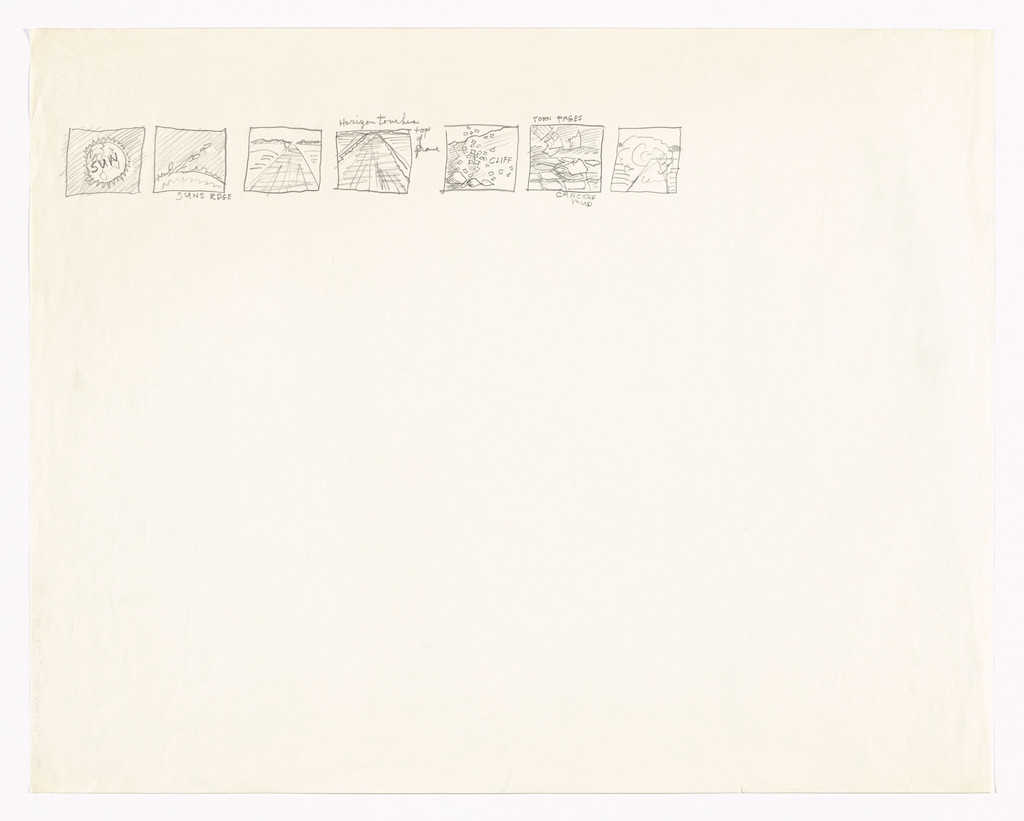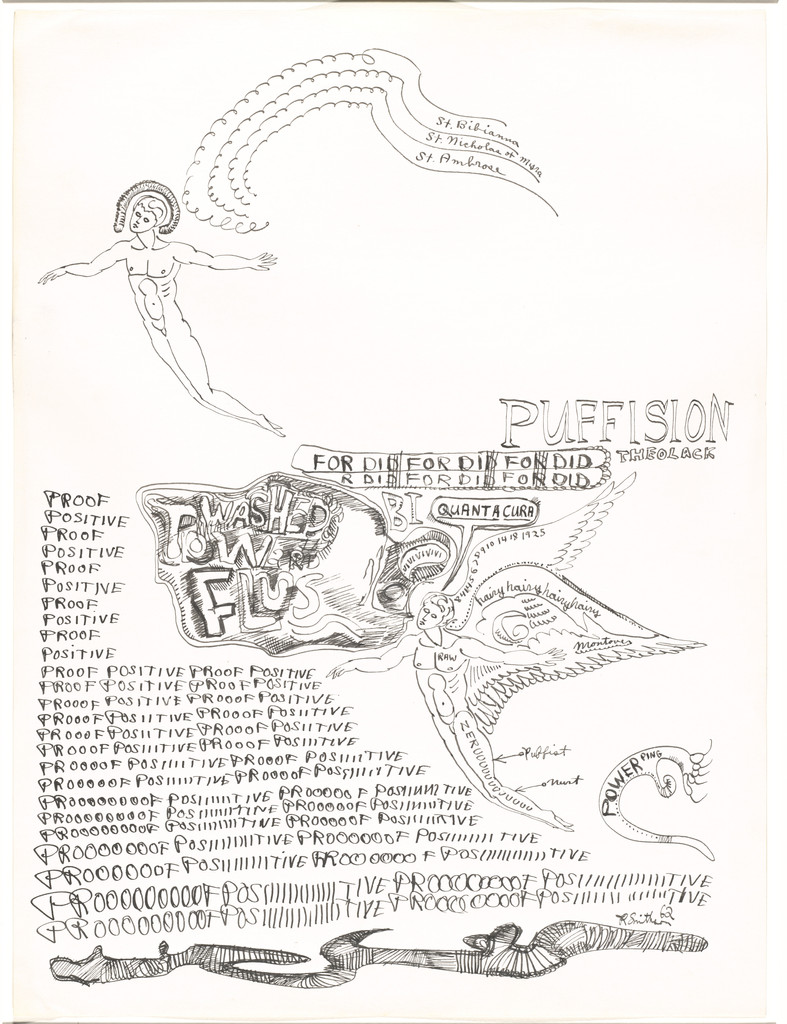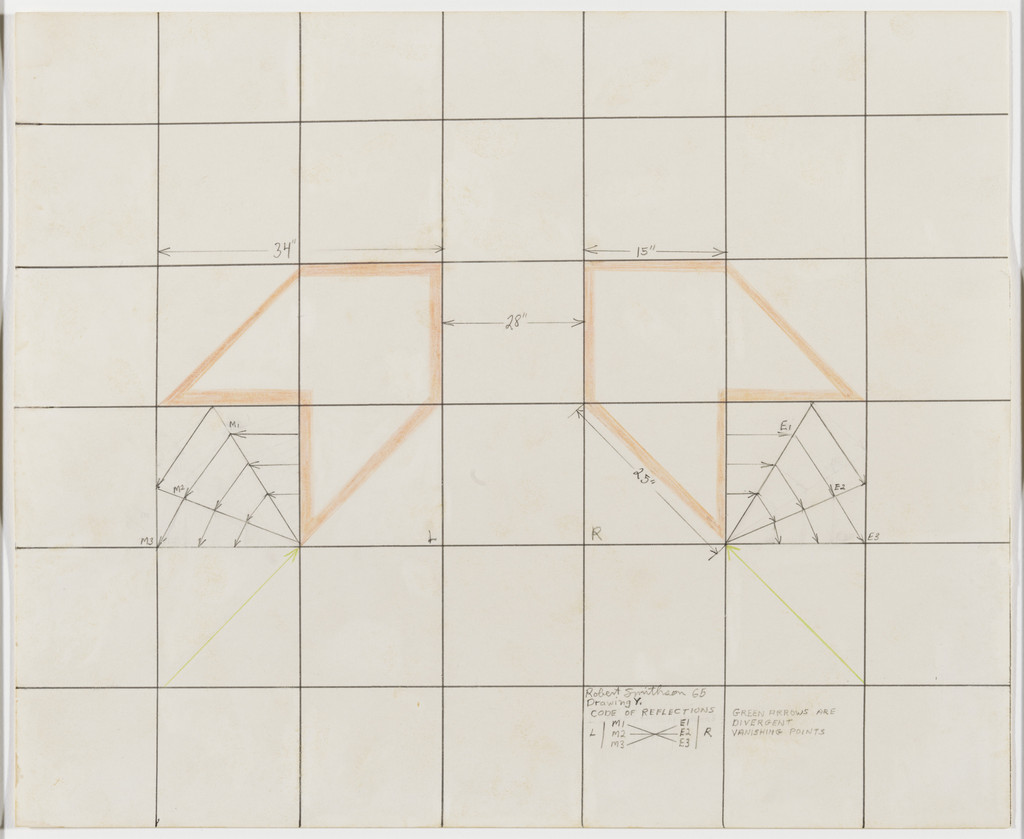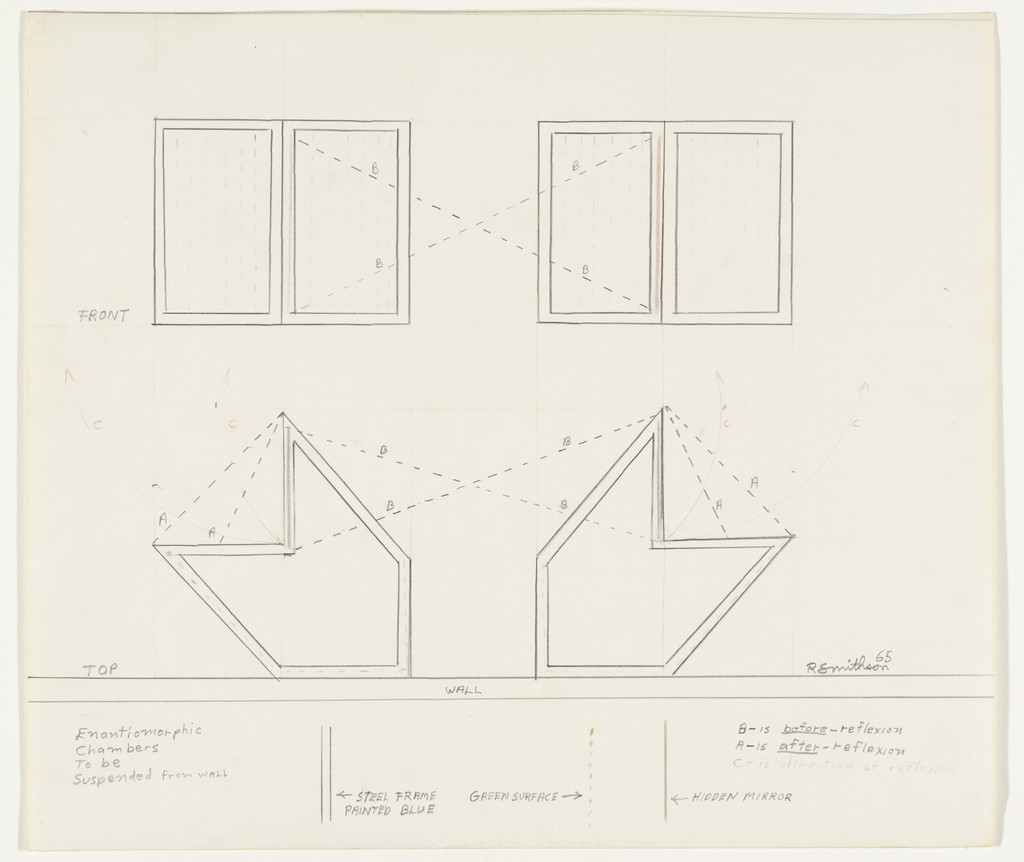
Drawing of Enantiomorphic Chambers
見られますか?
現在は展示されていません
『Drawing of Enantiomorphic Chambers』は今どこに? 所蔵: ニューヨーク近代美術館, ニューヨーク. 現在は展示されていません. 確認 2026年9月22日.

ニューヨーク, アメリカ合衆国
コレクションに属していますが、現在は展示されていません。
- 確認
- 出典
- 美術館
作品データ
- 収蔵番号
- 38.2011
カタログ収録
出典
- ニューヨーク近代美術館
- 画像: ニューヨーク近代美術館 — © the artist or rights holder
その頃、Robert Smithsonの人生では
生涯をすべて見る1964
Returns to art as a Minimalist
After a break from the art world, Smithson reemerges in 1964 as a proponent of minimalism: his new work abandons the earlier preoccupation with the body, and he uses glass sheet and neon tubes to explore visual refraction and mirroring — as in the wall-mounted sculpture “Enantiomorphic Chambers”, of steel and mirrors, which produces the optical effect of a pointless vanishing point. He becomes affiliated with artists of minimalism and Primary Structures — Nancy Holt (whom he marries), Robert Morris and Sol LeWitt — and later joins the Dwan Gallery, whose owner Virginia Dwan is an enthusiastic supporter of his work.
1966–1967
Proposals for the Dallas–Fort Worth airport
In 1966–1967 Smithson produces proposals for the Dallas–Fort Worth Regional Airport as concepts for “aerial art” — monumental-scale earthworks to be seen by air travellers. They were never realised.
1967
Explores the industrial areas of New Jersey
In 1967 Smithson begins exploring industrial areas around New Jersey: dump trucks excavating tons of earth and rock fascinate him, and in an essay he describes them as the equivalents of the monuments of antiquity. This gives rise to the series of “non-sites” — earth and rocks collected from a specific place are installed in the gallery as sculptures, often combined with mirrors or glass; he considers the best sites for “earth art” to be those disrupted by industry, reckless urbanization or nature’s own devastation.