Democritus
見られますか?
はい、現在展示中
『Democritus』は今どこに? ヴィクトリア&アルバート博物館, Display area east of Grand Entrance at base of stairs to room 62, ロンドン. はい、現在展示中. 確認 2026年9月25日.

閉館· 10:00に開館
一般公開されています。
- 確認
- この状態になった日
- 出典
- 美術館
この彫刻について
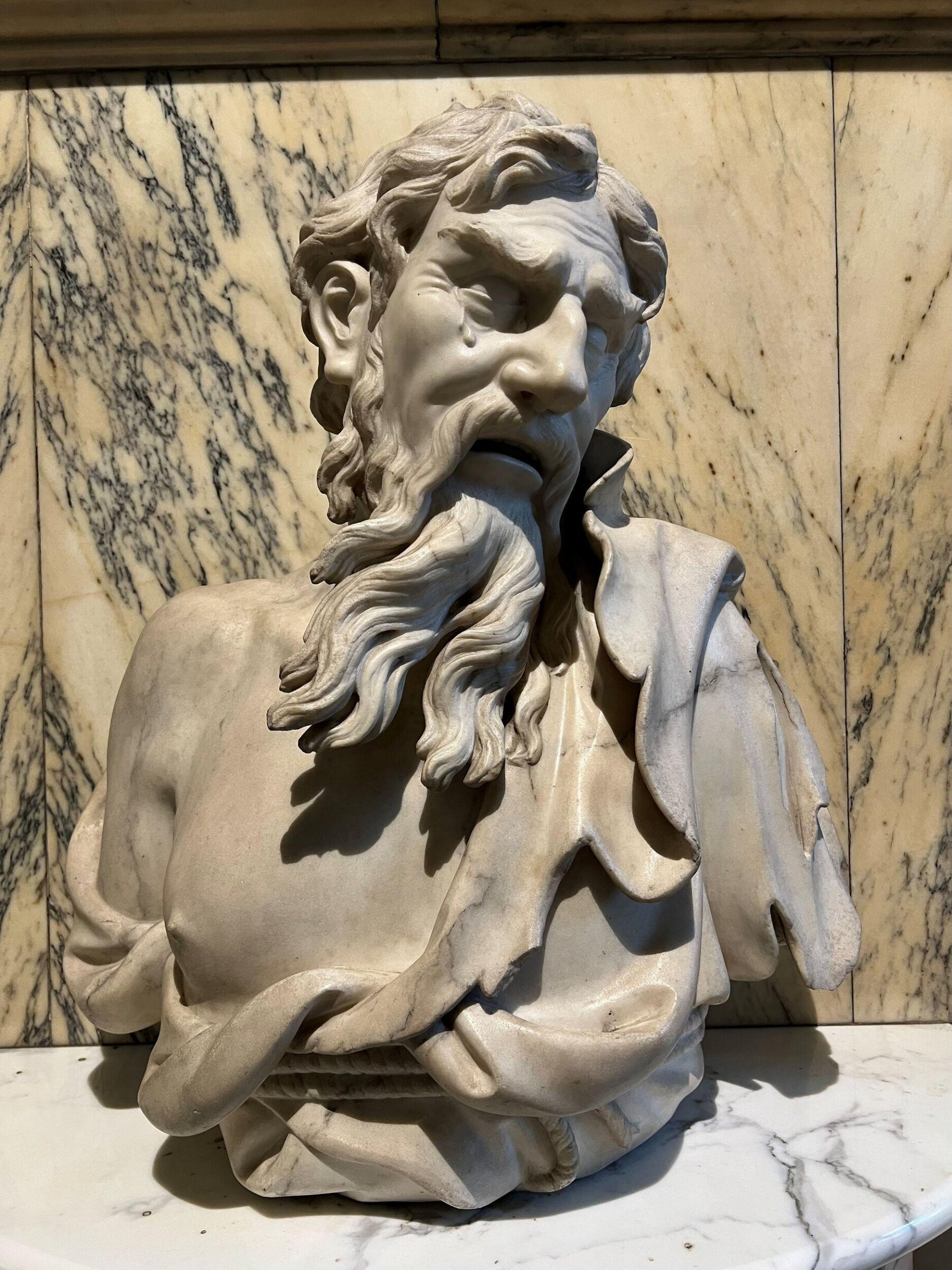
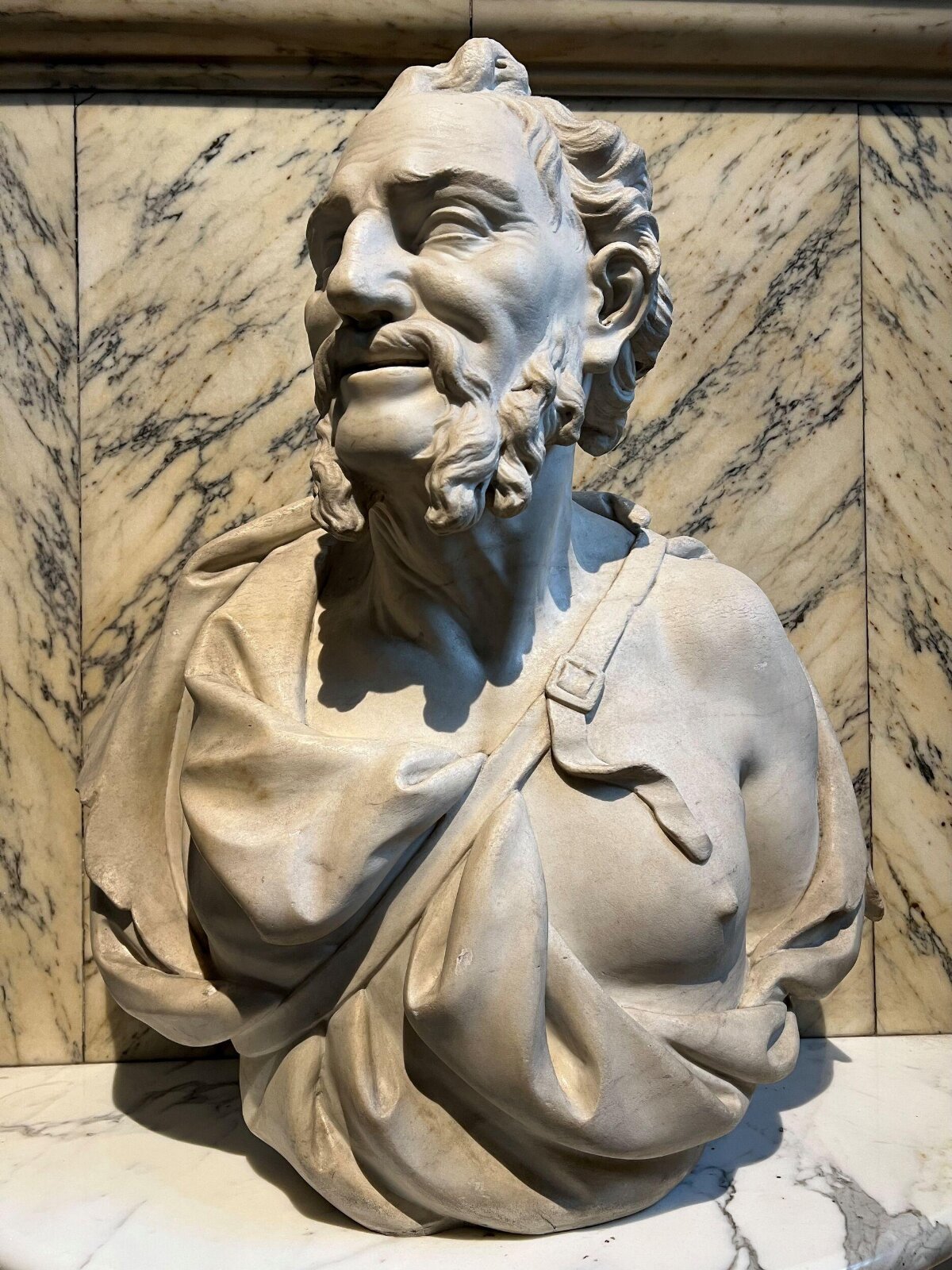
This bearded middle-aged man laughing is a representation of the ancient Greek philosopher Democritus. In the 17th and 18th centuries, he was often paired, in contrast, with a representation of another Greek philosopher, Heraclitus, known as the ‘obscure’ or ‘weeping’ philosopher.
続きを読む
Busts of philosophers became particularly popular in Venice during the second half of the 17th century, as demonstrated by the recurring presence of this type of subjects in palaces inventories of the time and by the number of works that have survived. The images of philosophers represented introspective thinking and invited the viewers to reflect on the meaning and fragility of life, in a similar manner as the depiction of Vanitas. Among the various philosophers represented, not all identifiable, the Heraclitus and Democritus pairing became most frequent and of clearer moralising intent: one crying, the other one laughing at the vanity of the human condition (see Guerrieri 2002, pp. 82-88).
One of the earliest sets is the Heraclitus/Democritus pair carved by Michele Fabris (c. 1644-c. 1684) and Giusto Le Court (1627-1679), formerly at Palazzo Mocenigo in Venice and now in the Museo de Arte in Ponce, Puerto Rico. This pair formed a prototype followed by other artists such as Giacomo Piazzetta, Melchior Barthel, Giovanni Toschini, Giuseppe Torretti.
Many of the Venetian philosopher busts were often attributed to Orazio Marinali, one of the most renown sculptor of those days. This pair had however remained anonymous until it was convincingly attributed to Alvise Tagliapietra (1670-1747) by Simone Guerriero (2002). The context of their commission remains unknown.
ヴィクトリア&アルバート博物館
作品データ
- 収蔵番号
- A.40-1947
描かれているもの
カタログ収録
出典
- ヴィクトリア&アルバート博物館
- 画像: ヴィクトリア&アルバート博物館 — © Victoria and Albert Museum, London