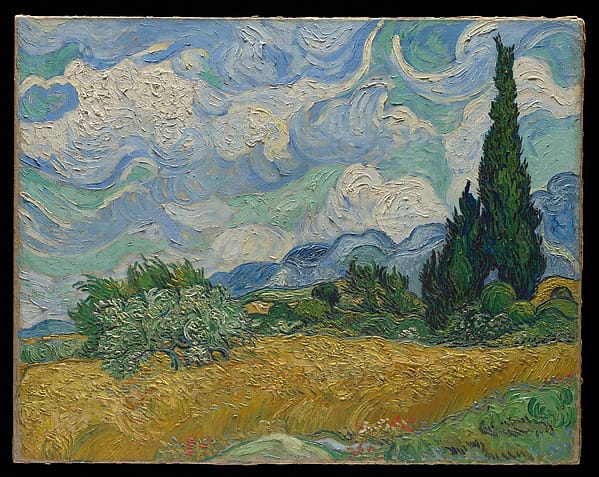
Max Liebermannドイツ, 1847–1935
Das Kohlfeld (Kohlfeld in Noordwijk)
見られますか?
不明
『Das Kohlfeld (Kohlfeld in Noordwijk)』は今どこに? 所蔵: アルベルティーヌム, ドレスデン. 不明.

ドレスデン, ドイツ
所蔵者は判明していますが、現在展示中かどうかは不明です。
- この状態になった日
- 出典
- 美術館
作品データ
描かれているもの
カタログ収録
出典
- アルベルティーヌム
- 画像: アルベルティーヌム — In Copyright
その頃、Max Liebermannの人生では
生涯をすべて見る1909–1910
The Wannsee villa — his “castle on the lake”
In 1909 Liebermann bought a plot on the shore of Lake Wannsee, where the architect Paul Otto August Baumgarten built a country house modelled on Hamburg patrician villas; he first moved in during the summer of 1910. The large garden, which he designed together with Alfred Lichtwark, dominated his painting for the rest of his life.
1910
The Secession board rejects 27 Expressionist paintings
The generational conflict between Impressionists and Expressionists came to a head when the board under Liebermann rejected 27 Expressionist canvases: the former rebel who had fought academicism now appeared a conservative spokesman. That same year the Secession showed Picasso, Matisse, Braque and the Fauves for the first time.
1910
The conflict with Nolde and the birth of the New Secession
Emil Nolde accused Liebermann of hostility to progress and of dictatorial power within the Secession; a general assembly voted 40 to 2 to expel Nolde, although Liebermann himself voted against the expulsion. The split could not be stopped: the New Secession was formed, and its first exhibition on 15 May was titled “Rejected by the Secession Berlin 1910”.
16 November 1911
Steps down as president of the Secession
After criticism of his leadership that came even from his own ranks, Liebermann resigned; Max Beckmann, Max Slevogt and August Gaul left with him. The general assembly elected him honorary president and entrusted the leadership to Lovis Corinth — a decision that foreshadowed the end of the Secession and the decline of German Impressionism.
1912
House Order of Orange, honorary doctorate and the Academy senate
In The Hague Queen Wilhelmina presented Liebermann with the House Order of Orange, the University of Berlin awarded him an honorary doctorate, and the Academy of Arts at last invited him into its senate. The art academies of Vienna, Brussels, Milan and Stockholm made him a member.
1913
Leaves the Secession after Cassirer's election
Liebermann tried to prevent the election of a non-artist, Paul Cassirer, as chairman; Cassirer barred from the 1913 exhibition the members who had voted against him, and when Corinth unexpectedly sided with them, Liebermann and the other founders left the Secession. In February 1914 the Free Secession was founded, continuing the tradition of the original Secession.