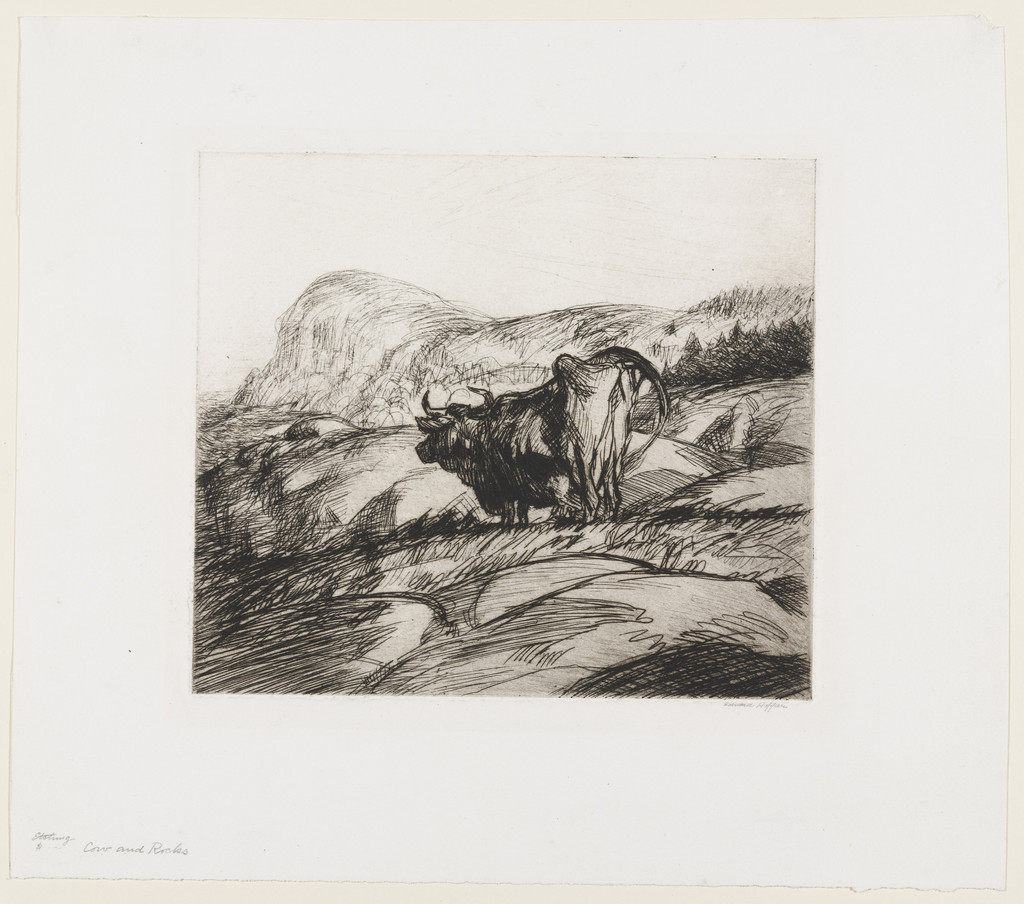
 Edward Hopperアメリカ合衆国, 1882–1967
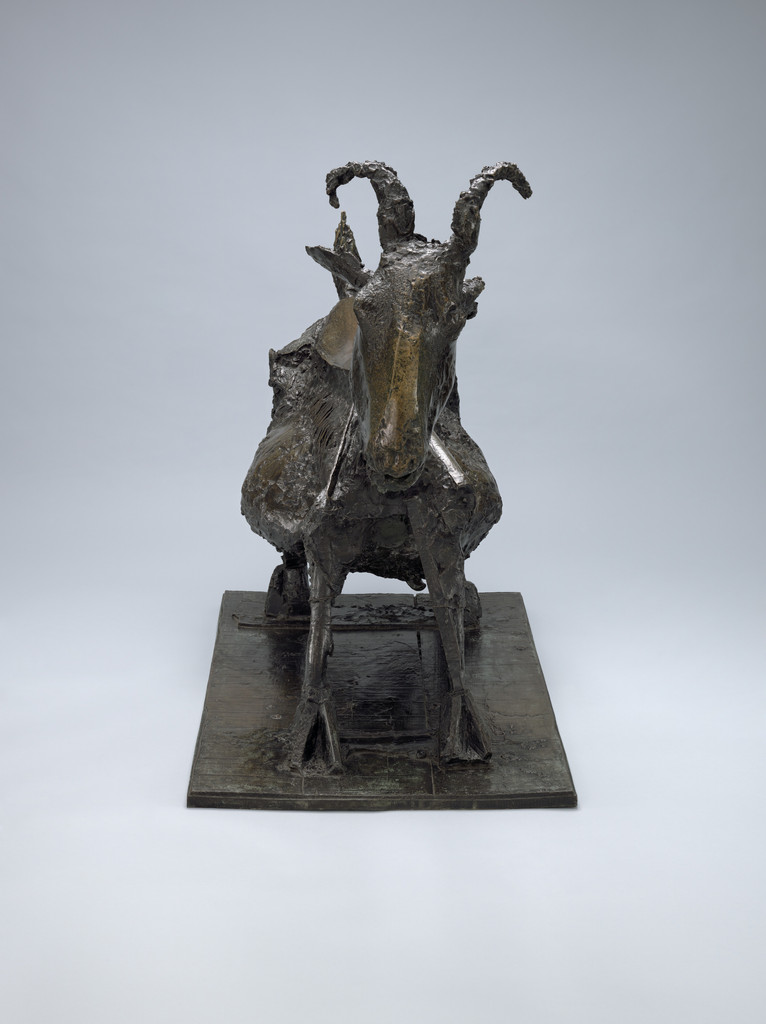
Cow and Rocks
お目にかかれますか?
ただいまはお迎えしていません

ニューヨーク, アメリカ合衆国
コレクションに属していますが、現在は展示されていません。
- 確認
- 出典
- 美術館
作品データ
- 収蔵番号
- 623.1959
カタログ収録
出典
- ニューヨーク近代美術館
- 画像: ニューヨーク近代美術館 — © the artist or rights holder
その頃、Edward Hopperの人生では
生涯をすべて見る1915–1923
Turning to etching
At an impasse over his oil paintings, in 1915 Hopper turns to etching; by 1923 he has produced most of his approximately 70 etchings, many of them urban scenes of Paris and New York, as well as some posters for the war effort.
1916–1919
Monhegan Island: seascapes
Hopper paints the majority of his pure seascapes of rocks, sea and beach grass on Monhegan Island between 1916 and 1919, mostly in strong light and fair weather.
1918
The Shipping Board Prize for “Smash the Hun”
In 1918 Hopper is awarded the $300 U.S. Shipping Board Prize for his war poster “Smash the Hun”.
January 1920
A one-man show at the Whitney Studio Club
In January 1920 a one-man exhibition of Hopper's work is held at the Whitney Studio Club, the precursor to the Whitney Museum; earlier, in 1917, he took part in a show of the Society of Independent Artists, and in 1922 he exhibits again at the Whitney Studio Club.
early 1920s
His etchings gain recognition
During the early 1920s Hopper's etchings begin to receive public recognition; they express some of his later themes: a couple in silence (“Night on the El Train”), a solitary female (“Evening Wind”) and a simple nautical scene (“The Catboat”).