 Ary Schefferフランス, 1795–1858
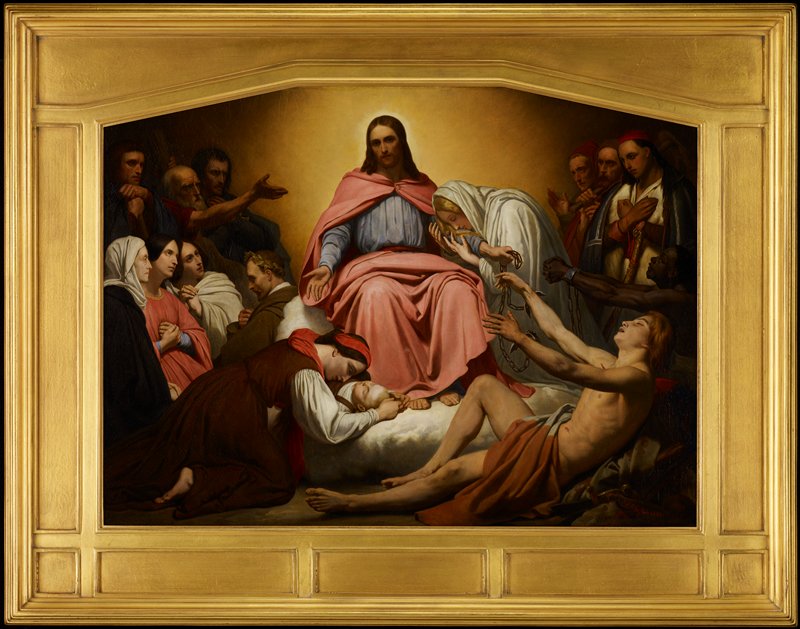
Christus Consolator
見られますか?
はい、現在展示中
『Christus Consolator』は今どこに? ミネアポリス美術館, G357, ミネアポリス. はい、現在展示中. 確認 2026年11月23日.

ミネアポリス, アメリカ合衆国
閉館· 明日10:00に開館
一般公開されています。
- 確認
- この状態になった日
- 出典
- 美術館
この絵画について
Christ releases a dying man's chains in Ary Scheffer's Christus Consolator of 1851, at the Minneapolis Institute of Art in Minneapolis. The subject draws on Luke's account of comfort for the sorrowful and freedom for prisoners. On the left, a mother kneels beside her dead child; nearby are an exile and the imprisoned poet Torquato Tasso. Oppressed figures gather on the right, including an enslaved African and a Greek independence fighter. The dying man represents Poland, with broken weapons beside him. Mary Magdalene kneels next to Christ. This version reached Boston in 1852. On view in gallery G357.
美術館の言葉で
Ary Scheffer was a renowned French painter active during the first half of the nineteenth century. Christus Consolator was one of his most celebrated compositions, of which numerous versions exist. The subject was inspired by Luke 4:18: I have come to comfort those who are brokenhearted and to announce to the prisoners their deliverance; to liberate those who are crushed by their chains. The brokenhearted are depicted to the left. A kneeling woman mourns her dead child, while in the background (from left to right) we see an exile with his walking stick, a castaway with a piece of ship's wreckage in his hand, and a suicide with a dagger. Placed near these groups are Torquato Tasso, a sixteenth-century poet imprisoned as a madman, and figures representing the three ages of women.
続きを読む
To the right of Christ are the oppressed of both the past and present, among them a Roman slave, a medieval serf, a Greek independence fighter, and a fettered African slave. With his left hand Christ releases from his shackles a dying man, who personifies Poland with the shattered weapons of his failed 1832 insurrection against Russia by his side. The repentant Mary Magdalene kneels beside Christ.
Christus Consolator became one of the most popular Christian images throughout the Western world during the middle decades of the nineteenth century. And it is probably no coincidence that this version of the picture, with its potent reference to African slavery, found its way to Boston in 1852 at the height of the Antebellum Period.
ミネアポリス美術館
作品データ
- 収蔵番号
- 2008.101
カタログ収録
出典
- ミネアポリス美術館
- 画像: ミネアポリス美術館 — public domain